Japanese haiku qualify as formal verse in Japanese, and in some ways in English. Traditionally they have three standard aspects as explained in Wikipedia:
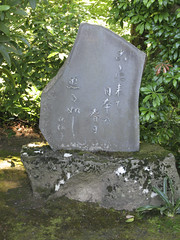
The essence of haiku is “cutting” (kiru). This is often represented by the juxtaposition of two images or ideas and a kireji (“cutting word”) between them. This is the equivalent of the volta in a sonnet, the turn from the initial argument or exposition to its extension or contradiction.
Traditional haiku often consist of 17 “syllables” in three phrases of 5, 7, and 5. This is not standard in English verse, where the number of stressed syllables (i.e. the number of feet) has always been more important than the total number of syllables. Even where there are a fixed number of syllables in the foot of the particular meter being used, the feet overrule the syllables.
A kigo (seasonal reference), usually drawn from an extensive but defined list of such terms. English verse is by no means hostile to seasonal references, but is considered superior when it uses fresh words rather than drawing on a predefined list.
In addition, there is no value placed on rhyme, on the meter of the lines, or on the inclusion of either alliteration or assonance. It may be verse in Japanese, but in English the haiku (as defined above) will normally be a sentence of prose that has been artificially broken into three lines.
HAIKU ON VERSE
Haiku challenge my
Fundamental sense of verse:
(Insert last line here).
The above was published in Snakeskin in April 2017. And it doesn’t even have a kigo.

 publications where a poet can place material that some of the more delicate magazines would blush to read. Edited by Roderick (“Rick”) Bates since 2014, and by founder David M. Harris before that, it is defined by the editor as “an online poetry journal whose editorial fancies are no more arbitrary than any other; they are simply more overtly so. I publish what I like.”
 Founded over ten years ago by Martin Parker, it is now edited by Jerome Betts – both of them being accomplished formal poets, of course. They and the magazine are very English (reflected, to the bemusement of Americans, in some of the spelling, rhymes, slang and references) but contributors come from around the globe. Their front page states:
 Perfectly competent, and with interesting trivia and useful background notes by
  Light, the “journal of light verse since 1992”, has just published its
  Bewildering Stories is a weekly magazine of sf and speculative fiction (mostly) and poetry (some), created and managed by Don Webb and half a dozen others. Because it does a Quarterly Review and an Annual Review of the editor’s choice, it produces about 47 issues a year of original material (or predominantly original – it allows previously published material). It is now coming up on issue number 800. I’ll leave it to you to figure out how long it has been in existence… for an online magazine, it is truly venerable.
 Form in Formless Times