Category Archives: Resources

Sonnet: “The Quincentenarian Looks Back”

“Twentieth century”! – hard to think it through,
remember details in that distant view…
At her tenth birthday party, why’d I throw
her in the pool, all dressed up? Still don’t know.
Later we lived together overseas;
I had no clue of female hygiene needs,
never bought tampons, she used toilet paper.
Later she had a child. Mine? I wonder.
I’d left, we lived with others, better fit…
or did we marry, and have kids, then split?
I married once or twice, had kids, I’m sure.
Sent her too rude a joke, and heard no more.
We knew so little in those small young lives…
I miss you, though, my girl, or wife, or wives.

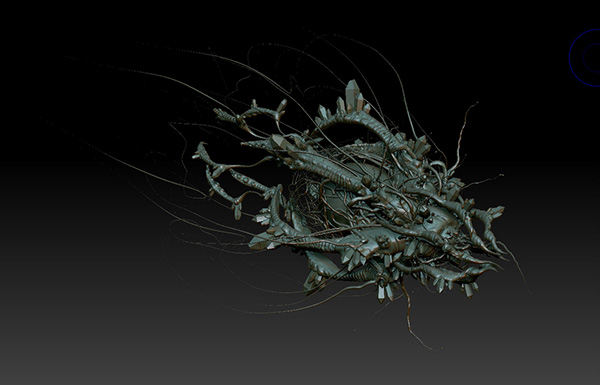
This science fiction sonnet, maybe a little flippant, was published recently in the Rat’s Ass Review edited by Roderick Bates. But what will happen when people live longer and ever longer? At what point will be stop bothering to remember things that were once essential to our lives? And the photo is a little flippant, too – if we start living to 500, it can only be because we can reverse aging. There may be a few eccentrics who choose to maintain their bodies as “old”, like in the photo, but I think most people would opt for something in the biological 20s.

And, really, it’s not so much a sonnet as 14 lines rhymed in pairs. And even the rhymes are pretty iffy. Oh well. But so long as you amuse or otherwise engage Rick Bates, you have a good chance of being published in RAR. His basic advice for anyone who has something they are dithering about sending out is: “Go ahead and submit.”
 

Poem: “4 God Limericks”

God

Christian idea of God

God made Heaven, earth, plants, people, fleas
In six days, and then rested at ease;
Then He thought: “In those stones
“I’ll hide dinosaur bones!!”
(He was always a bit of a tease.)

God looked out a Heavenly portal
And what He saw made Him just chortle:
Some dude, on a cross,
Claiming he was the Boss!
For his hubris, God made him immortal.

God, blessed with what one must call humour,
Decided to start up a rumour
That Himself as a dove
Came to Mary with love
And begat an Immaculate Tumour.

God saw how Religion had deadened
And said to His host, “Armageddon’d
“Look good on this lot”
For His plans were all shot
And His angels teased Him till He reddened.

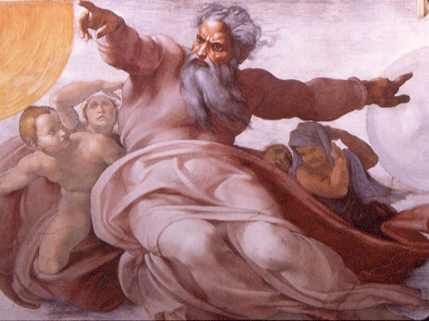
As with the previous post, “4 Guru Limericks”, this was first published in Ambit No. 196, Spring 2009. (Hence the English spelling.) Like the previous post on gurus Buddha, Jesus, Marx and Hitler, you shouldn’t expect anything serious from a limerick. But this flippancy can have a purpose: by tackling a serious subject in a completely unserious way, you can undermine preconceptions and unthinking assumptions, and suggest alternative views and approaches.

With this in mind, consider the idea that religious belief correlates negatively with analytical thinking, but positively with moral concern and empathy. Research into this was summarized in The Independent in 2016, after more complete reporting in the science journal PLOS ONE. Limericks by their iconoclastic nature appear to be low in moral concern and empathy – but often it is some form of moral concern that has driven the limerick’s creation, although its rudeness and fresh viewpoint tends to favour analytical thinking over empathy.

Limericks are the clowns, the fools, of the poetry world. The best of clowns and fools go into stealth mode to make useful observations.

Poem: “Said Poor Mrs. Owen”

Wilfred Owen

(“Futility” by Robbie Kerr) 

Said poor Mrs. Owen
To her son Wilfred
Why must you always
Write of the trenches?
Why can’t you write
Like that nice Mr. Wordsworth
Of flowers?

Said Mrs. Picasso
To her son Pablo
Why must you always
Paint so distortedly?
Why can’t you paint
Like that nice Mr. Monet
Some flowers?

Because we don’t always
Create what we celebrate,
Sometimes we model the
Things that we’d like to change,
Things we don’t like, or just
Things that we think about –
Thoughts of ours.

This poem was published in The Road Not Taken – a journal of formal poetry that is edited by Kathryn Jacobs in connection with Texas A&M University at Commerce, TX.

Technically the poem lacks some aspects of what we tend to assume is “form”, notably extensive rhyme, alliteration or assonance. But each of the stanzas has the same seven-line form, with two stressed syllables in each of the first six lines and a shorter seventh line. The first two stanzas have virtually identical structure, though one deals with poetry and the other with painting, and the third stanza answers them. The last lines repeat and rhyme.

It is really the natural rhythm of the poem that allows it to be included in a journal of formal poetry. In the sense that “form” is any trick of verse that allows it to be remembered word for word, form can be a lot broader than some of the narrow definitions of formal verse.

Poetry Resource: “SF&F Poetry Association”; Sonnet: “On a Dead Spaceship”

Spaceship

(“Golconda Uranium (2012)” by Alexey Kashpersky)

On a dead spaceship drifting round a star
The trapped inhabitants are born and die.
The engineers’ broad privileges lie
In engine room and solar panel power.
The fruit and vegetables and protein coops
Are run by farmers with genetics skills:
The products of their dirt and careful kills
Help service trade between the several groups.
Others – musicians, architects – can skip
Along the paths of interlinking webs.
Beyond these gated pods that the rich carve
For their own selves (but still within the ship),
In useless parts, are born the lackluck plebs.
Heard but ignored, they just hunt rats or starve.

This sonnet was published in Star*Line, the official journal of the Science Fiction & Fantasy Poetry Association, a quarterly edited by poet and English prof Vince Gotera. Each issue contains a vast diversity of sf&f poetry. Not much of it is formal, but that is all part of the diversity which is appropriate to its genre.

So a sonnet is fine. And this one, like so much sf, is a metaphor for Earth today: circling the Sun, carrying highly unequal societies.

Technically, it is a sonnet to be sneered at by purists: it rhymes ABBA CDDC EFGEFG, the second quartet failing to rhyme with the first, making it a flawed Petrarchan sonnet. In addition, rhyming “star” with “power” is a bit of a stretch, one syllable against two, and none of them sharing quite the same vowel… Oh well, it’s only Science Fiction…

Poetry Resource: “Shot Glass Journal”, Poem: “In the Metal Box”

You sit in the humming metal box
And the unlikely landscape rolls
Beneath you in its crumpled seas and rocks
Seen from some miles above on long papyrus scrolls.

This little poem was recently published in Shot Glass Journal, whose motto is “… brevity is the soul of wit …” Accepting only short verse (although “16 lines or less” seems overly generous for “short”) in either free or form, it is remarkable for an American institution in reserving half its space for non-US poets. In the current issue, the left-hand column of 21 US poets is balanced by the right-hand column of 21 poets from Australia, the Bahamas, Canada, India, Ireland, Israel, New Zealand, South Korea, Turkey and the UK. This in itself adds richness and interest to the journal, all the more tasty and accessible in a short-form environment.

Normally edited by Mary-Jane Grandinetti, the current issue (#29) is guest-edited by poet R.G. Rader, the poet and playwright who founded Muse-Pie Press. Muse-Pie Press publishes Shot Glass Journal, as well as two other idiosyncratic magazines, Bent Ear Review of spoken poetry (audio or video submissions only, naturally) and the fib review of Fibonacci poetry. All are open to both formal and free verse.

Technically, this might or might not be a “throwaway poem”. That’s how I would describe it, meaning just a casual thought in verse; but on the other hand some people use the term to mean hand-written thoughts (usually not well-formed) on scraps of paper left behind on public transit or in the park. This one has a bit of form: rhyme, meter, and the last two lines lengthening in imitation of the endlessness of air travel and of the landscape that is being flown over.


Sonnet Contest: Cash prizes, no entry fee!

poetry magazine, Better than Starbucks logo

Better Than Starbucks has just opened its annual sonnet contest, an opportunity for all lovers of formal poetry to practice their skills and show off their best work.

Open through October and November (closes December 1), the contest has no entry fee but awards prizes of $100, $50 and $25 for the top three sonnets, which will be published in the magazine along with seven runners-up.

Expect the competition to be fierce! Better Than Starbucks already has a solid following among formal poets. Last year’s competition drew 560 sonnets, this year’s will undoubtedly see more. And you can only send two sonnets. Make sure they are good!

What “good” means can be gleaned from looking at last year’s results in the January 2019 issue, and more sonnets on the Formal Poetry page in March 2019. There are explanatory notes on the contest page, showing some leniency in the definition, and clarifying that previously-published work is acceptable:

This contest is for a metrical sonnet.
Your sonnet can be shakespearean, petrarchan, spenserian, rhymed, or slant-rhymed.
Blank verse is fine, as long as the sonnet form is clearly identifiable.
We’ll consider tetrameter, hexameter, etc. as well as pentameter.
Some metrical variation is fine, but don’t forget the volta!
As always, we do accept previously published work.

Good luck!

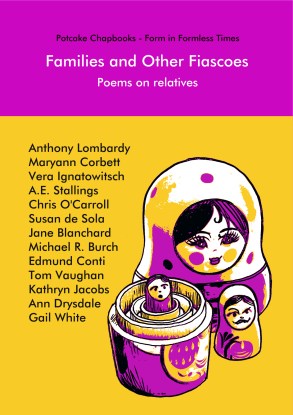
Formal Launch: Potcake Chapbook 4 – Families and Other Fiascoes

The fourth Potcake Chapbook is now launched into the wide world, with its contributors coming from England, Wales, Greece, the Netherlands, Canada, and coast to coast in the US.

04 Families and Other FiascoesPoets new to this series are, in order of appearance, Maryann Corbett, Vera Ignatowitsch, Kathryn Jacobs, Anthony Lombardy, Susan de Sola, Jane Blanchard and Michael R. Burch.  A glance at their profiles in Sampson Low’s Potcake Poets page will show you they include editors at Able Muse, Better Than Starbucks, The Hypertexts and The Road Not Taken, as well as various prizewinners.
Returning contributors are A.E. Stallings, Ed Conti, Tom Vaughan, Ann Drysdale, Gail White and Chris O’Carroll, who of course can boast their own editing and prizewinning. And returning as well is the artwork of Alban Low.

It’s hard to do justice to families in a mere chapbook. Not only are there dozens of possible family relationships (and the number is actively increasing thanks to both social changes and biotech developments), but each of those relationships can close or distant, sweet or bitter, simple or complex, present or merely remembered. It requires science fiction to describe an individual entirely without a family.

This chapbook touches on a great deal, but by no means all, of what “family” means. Send a copy to someone who appreciates the bittersweetness that accompanies family love, up and down the generations.

Poetry Resources: The Economist’s ‘Johnson’ blog

You may be surprised to hear of The Economist magazine as a poetry resource, but it is a much wider-ranging weekly than most people realise. Start from the back with its chosen Obituary (eccentric and eclectic, it has included Alex the African Grey parrot, writers such as Ray Bradbury written up in their own style, and dictators, deposed kings, and UFO abductees). Move forwards into the Books and Arts section, further into Science and Technology… there’s a lot there, before you get to the finance, business and politics that is the purpose of it all.

Apart from the half dozen book reviews (eccentric and eclectic, of course), the weekly ‘Johnson’ column or blog post covers all things word and language related. The current edition’s Johnson is headed ‘Degrees of Separation’ in the print edition, while online it calls itself ‘Words, like people, have tangled and extensive family trees – surprising connections emerge if you look back far enough’.


The article is focused on Proto-Indo-European’s development into the whole range of modern languages from Gaelic to Bengali; how different the origins may be of words that have identical spelling and pronunciation and have apparently related meaning (a pawn and to pawn); and the surprising common ancestry of apparently unrelated words (such as ‘divine’ and both halves of the word ‘Tuesday’).

Inasmuch as writing relies for much of its power on the richness of words and their ripples of meaning, association and derivation, The Economist’s Johnson column is a worthwhile and engaging weekly read for all writers, and especially poets.

Poetry Resources: A.Word.A.Day

One of the greatest resources for any lover of words is the (free) email subscription to A.Word.A.Day from wordsmith.org, founded by Anu Garg in 1994. Of course, you may well be getting this already as one of the 400,000 subscribers in 170 countries, enjoying the definition, pronunciation, etymology, usage and visual illustration of a not-quite-random word five days a week. Added bonuses include a quotation from a writer on their birthday, and limericks, anagrams and puns in the readers’ comments on the weekend.

This week’s theme is words used by singer-songwriter Roy Zimmerman, and is the trigger for my posting about A.Word.A.Day. Roy Zimmerman, as guest editor for A.Word.A.Day, writes:

“When my wife Melanie and I write a song, the Idea is out in front. People often ask which comes first, the melody or the lyrics. We say the Idea, with a capital I. The Idea takes shape as a hook — a little snatch of lyrics and melody — and the hook gives birth to a tune, a meter scheme, and a rhyme scheme.

We both love words. We’re both aware that words do real work in the world, especially words that rhyme and meter well. That’s what we’re trying to do with these songs — provide context, history, laughter, and encouragement for the work of social justice.

The description of the sequence for songwriting is virtually identical to that for writing poetry – and although poetry doesn’t necessarily have a tune, poetry definitely has a tone, a mood, that forms in the same place. Songs and poetry are very close siblings. Sometimes songs are forgiven weak lyrics because of a strong melody; sometimes poems are forgiven their lack of rhythm and rhyme because of their strongly expressed ideas and images. But at their most memorable they fuse as catchy songs that can also be fully enjoyed as poems without the music.

In either case, they are completely dependent on words. And to prod your word awareness, there is nothing simpler than the daily email from Anu Garg.

New Poem: “Buried in the Garden”

I have a poem published in May’s Snakeskin which (shock, horror!) is not formal.

Snakeskin logo

Buried in the Garden

Now I lie dead, buried in the garden,
And the plants take over.
Two hibiscus bushes grow from my eyes,
Oleander from my nose,
A sapodilla will fruit from my mouth,
Casuarinas grow to sigh from my ears.
From my chest a love vine straggles out
And black crabs live in the cavities of my lungs.
A chicken boa curls around and hunts up and down
And from my private parts grows
That least private of plants, a coconut palm.
From my feet termites are building tunnels out around the world.
So is my body divided, reused, and the birds take hair for their nests
And the calcium of bones and teeth for their eggs
And the body, the body is gone.
And what am I, but a body? What would remain in your sieve if you sift my remains?
Only some thoughts, others’ memories of some thoughts,
Blown away on the wind when the rememberers themselves are gone.

At a stretch, you could claim it has elements of formality. It has a structured sequence of appropriate tropical plants and other creatures growing from body parts – the most visually arresting from the eyes, the most highly scented from the nose, and so on. It has a volta, a turn in the argument from the description of transformation as positive, to the dismissal of that process as being mere erasure.

But are those things enough to make the whole piece word-for-word memorable? Because that is my test of poetry. And I think the answer is no. So no, it is not real poetry. There may be one or two memorable phrases, but that’s not enough. The underlying concept may be memorable, the images may be memorable; still not enough. Only if the entire piece is easy to recite because of the actual expression of the words, I argue, can it be called poetry.

Should you then put your time into transforming the images into formal verse, creating perhaps a Shakespearean sonnet, iambic pentameter and all?

Buried in the Garden (Take 2)

In garden buried, I sprout from my eyes
Hibiscus; oleander from my nose;
From mouth, a sapodilla; a pine sighs
From out my ear; from chest a love vine grows;
Black crabs in lungs, small boa in my guts;
From feet, ants tunnel out around the world;
My privates sprout a palm with coconuts.
Birds peck my bones, my teeth, hair that once curled,
For calcium for eggs and for a nest…
Sift my remains: what remains in your sieve?
Of my whole body I’ve been dispossessed,
Only the memory of some thoughts still live
Within the thoughts of others’ memories;
When those rememberers go, all traces cease.

So we come back to the old questions of poetry: is the expression itself richer or poorer for having been put into verse? And is the formal verse expression (whether richer or poorer) more memorable than the non-formal expression? What do you think?

I wonder if Snakeskin editor George Simmers has an opinion.