Tag Archives: formal verse

Sonnet: ‘One True Religions’

No vision brings the whole world to its knees.
Jains, Hindus, Buddhists, Mithraists, Parsees,
Moses, Muhammad, Jesus or St. Paul,
One True Religions never conquer all.
Humans are simply too cantankerous
for any one belief to anchor us.

Success at once leads into sects and schisms:
the One Pure Ray of Light hits human prisms,
and egos, power grabs, love of dispute,
traditions, curiosity, all loot
the intellectual wealth of strong belief.
This year’s great guru’s merely last year’s thief.

Control’s maintained by sword and flame, not thought.
In failure, drink the Kool Aid or get shot.

Well, maybe 14 lines rhymed in pairs isn’t really a sonnet, even if it’s in iambic pentameter. But when you’ve got a structure that works for a poem, I don’t think it’s worth trying to hammer it into a different shape just to try to reach a “higher” standard. Anyway, sonnet or not this poem was published in Rat’s Ass Review – as you could guess from the journal’s name, editor Roderick Bates publishes whatever appeals to him, with no apologies for treading on other people’s sensibilities, religious, poetic or anything else. It’s a good place to submit a poem that other journals might be squeamish about, and a good place to read a wide range of outspoken poetry.

“Jonestown massacre” by johndavison883 is marked with CC PDM 1.0

Call for Submissions: Christmas etc holiday poems

It has been suggested that the Potcake Chapbooks really ought to include one for the Christmas season, as people already send out some of the chapbooks in place of greeting cards to friends and family. Well, it’s August – if I can find a wide enough assortment, perhaps we can get a chapbook out by the beginning of November… otherwise, we should be able to do it by next year.

What I’m looking for, of course, is a diversity of poems in a diversity of forms, but all with rhythm and rhyme. Not too long, because there will only be 13 pages of poetry – two to 20 lines preferred. With a mix of attitudes: sentimental, cynical, happy, rueful, whatever, but preferably elegant and witty. And not just Christmas, but all holidays of the season: Hanukkah, Divali, Kwanzaa, Festivus, New Year’s Eve, office parties, skating parties, special meals and drinks, customs and habits… (And of course I can only take 12-15 poems anyway.)

That’s a lot to ask for a little chapbook, we’ll have to see if it’s workable. If you have something you think I might like, on this or any other topic, preferably previously published, please send poems in the body of the email or as a single attachment to robinhelweglarsen@gmail.com. Contributors receive five copies.

Photo: “Christmas Cookies” by Kiss My Buttercream is licensed under CC BY-NC-SA 2.0

Resources: Goodreads

Goodreads’ stated mission is to help people find and share books they love, and to improve the process of reading and learning throughout the world. (That was crafted before they were bought by Amazon, so their mission may have a somewhat more mercenary aspect these days.) Founder Otis Chandler got the idea when looking at a friend’s bookshelf, and wishing there was a way to share discoveries and opinions of books online. Launched in January of 2007, by December it had 650,000 members–clearly it was on to something! And by the end of 2019 (i.e. pre-Covid) it had 90 million members, a number that can only have grown since then.

It’s a place where you can spend your time in a variety of ways: making shelves of the books you’ve read, sorting them by topic, giving them 1 to 5 stars, writing reviews of them… Developing a list of friends to follow or to share reviews with, joining a group with topics that you like, using the site to find books you are likely to enjoy… Setting a goal of how many books to read in the coming year, and having Goodreads track your progress, praising you or nagging you depending on whether you’re ahead of schedule or behind.

More completely, “Goodreads,” says Wikipedia, “is an American social cataloging website that allows individuals to search its database of books, annotations, quotes, and reviews. Users can sign up and register books to generate library catalogs and reading lists. They can also create their own groups of book suggestions, surveys, polls, blogs, and discussions.”

Because my main reading these days is formal poetry (of course–though leavened with Simenon, Le Guin and thick works of history) I have been looking to see what kind of poetry groups operate in Goodreads. I only found one of formal verse, with half a dozen members, and dormant for over a year. So I have started a new one called ‘Formal Verse – Mostly’. If you, reading this, are interested in reading, writing or discussing formal poetry, old or new, your own or that of others, then consider joining us.

But even if you don’t want to be that active, don’t want to join a group, Goodreads still offers a range of benefits for all readers. I’ve been reading more each year for the last few years, largely thanks to the Reading Challenge and being nagged when (as now) I’m behind schedule.

Photo: “My Books” by Jennerally is licensed under CC BY-NC-ND 2.0

Sonnet: ‘Marion Campbell of Kilberry, 1919-2000’

In winter’s broken skies, in spring’s thin drizzle,
The gardens wall in sun to warm the ground,
Can still be worked: vegetables grow year-round.
Fingers are cold – but hearths will crackle, sizzle.
It’s drear – but through a week’s rain, and two fair
Days’ sun, daffodils flood the world with light.
Otters slide down rocks, lambs jump in delight,
Rooks tumble, jump and slide, in empty air…
You love their flight; but, grounded, here you stand.
The summer dry and hot, sea almost warm,
Unpeopled heather hills, long days, no storm.
And you, embodying castle and land:
Stone walls and floors, trophies and weaponed walls,
Books read, books written, haunting ancestral halls.

Marion Campbell was a truly remarkable archaeologist, author and cultural activist. Her enormous store of memory of history and lore blended with personal experience, together with her desire to share her knowledge through writing books and creating local museums, is summed up in a charming anecdote at the start of her obituary in The Herald:

Two days before her death, as she lay apparently unconscious in the hospital at Oban, I was telling someone in the same ward about a lost standing-stone at Ballymeanach and remarking that nobody knew when it had fallen. Suddenly a muffled voice from behind the oxygen mask said: ”Well, I know! It was in 1943, when a Shetland pony was sheltering against it from the storm. The poor beast was nearly scared to death.”

She was a cousin of my mother’s, and I was fortunate enough to spend weeks and months with her at Kilberry in my teens and 20s. This sonnet, written in fond tribute, was published in The Orchards Poetry Journal a couple of years ago.

Short poem: ‘Golden Childhood’

Golden girl on a sunset beach
With a dog and a horse,
Golden boy spears a silver shark
Under the sea;

Is such a dream forever in reach
Or forever false?
We stumble, emotional, through the warm dark
Back to the sea.

I wrote this in my 20s when I was saying goodbye to the Bahamas – my father had died, my mother had sold the house and moved back to Europe. For the next few decades I lived in Denmark, Canada, the US… but eventually came back to the sea.

The poem was originally published in Candelabrum. I always had difficulty with that seventh line. Originally it had “emotionally”, and I sort of justified it with the line itself being a stumble… but it’s a bad line, too many syllables, too many consonants. Sometimes when I submit a poem to a magazine, the editor points out a flaw, and more rarely, offers a useful alternative. Poems can always be tinkered with.

Photo cropped from “Girl riding a horse at sunset on Bali” by Jimmy McIntyre – Editor HDR One Magazine is licensed under CC BY-SA 2.0

Poem: ‘Nymph’

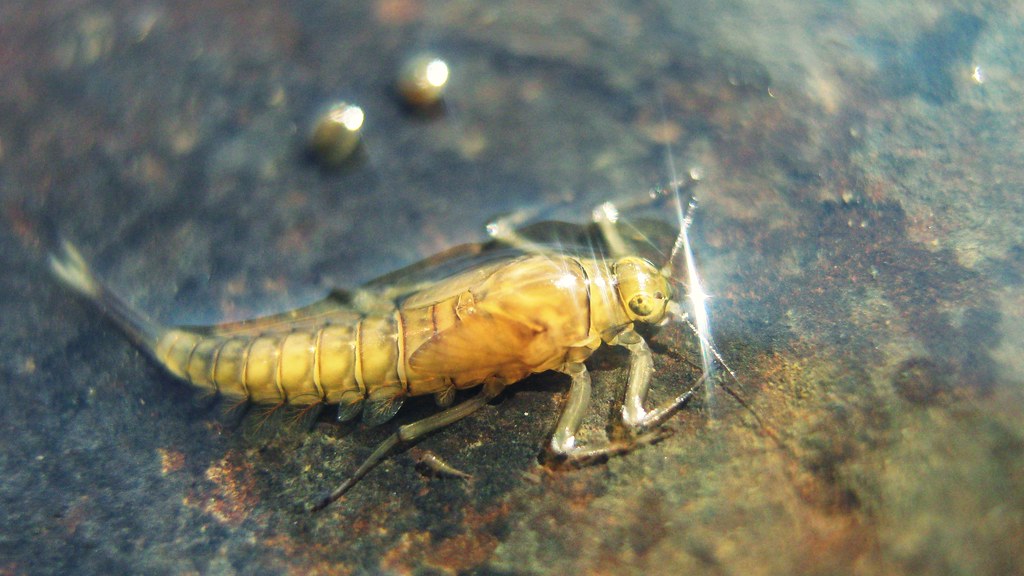
A mayfly nymph, in water for a year,
transforms into a beauty of the air
for just one day – one day to mate, breed, die.
The essence then’s the nymph, and not the fly
which we see only thronging in death throes,
death throes of riotous sex. Everyone knows,
though, that the fly’s the cycle’s pinnacle
to artists, if not to the clinical.
Though humans for long eons lived on land,
at Science’s Nietzschean precipice we stand,
transform to things that freely live in space,
or formless Cloud-based online lives embrace…
and may survive but briefly in that state,
but, dying, will seed new worlds as we mate.

Nature poem? Piece of science fiction? The observation of how nature works and a hypothetical extrapolation of human nature into the future are not really two different things – it’s all part of life, the universe and everything… though that future will be is anyone’s guess. The only thing for sure is that tomorrow is not going to be like today.

Is a 14-line poem in iambic pentameter a sonnet, if it just rhymes as couplets? I think not. This poem has a volta after the eighth line, but it still doesn’t feel like a sonnet to me. The feel comes from a couplet closing the poem out after a series of three quatrains, or from the shift from ABBAABBA to CDCDCD. That finalising shift, that sense of completion, is integral to the feel of the sonnet. This poem fails to meet that criterion.

‘Nymph’ was first published in the Orchards Poetry Journal, whose latest issue has just come out – free online, or available in print.

Photo: “mayfly” by ian boyd is licensed under CC BY-NC 2.0

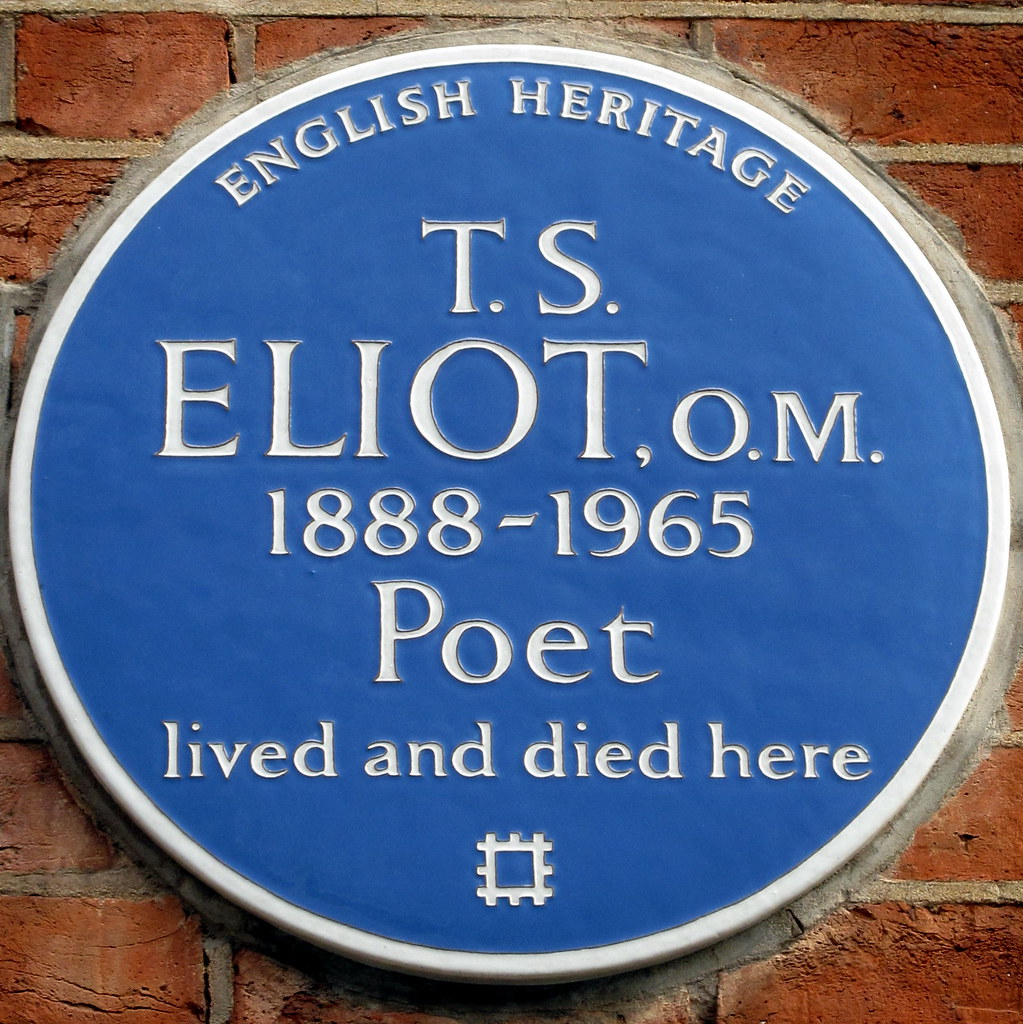
Short Poem: ‘For Eliot’

I guess
Success
Not elation
Or creation
Alone may men not mock;

God bless
T.S.,
Spared the temptation
Of our generation —
Writing rhymes for rock.

First published in Metverse Muse in India. As you might guess, I wrote this before Andrew Lloyd Webber set that “Old Possum” T.S. Eliot‘s rhymes to music for the West End and Broadway hit Cats, disturbing everyone (except the Poetry Foundation)’s understanding of both Eliot and musicals.

Photo: “T.S. Eliot” by duncan is licensed under CC BY-NC 2.0

Potcake Poet’s Choice: Kathryn Jacobs, ‘The Innocent’

They trust us, and they shouldn’t: butterflies
and earnestly pursuing preschoolers
careen among us, prone to accidents,
disasters in the making. Both of them

incapable of short-cuts, see-sawing
oblivious among the negligent,
convinced that we know best, who disregard
how short their legs and lives are.

Some of them
(the lucky and unswatted) mobilize
their stubby forces to stay out of reach,

But most of them launch headlong, more afraid
of being left behind or swallowed, than

of damaged wings and feelings, wedged against
rude curb-stops or cupped hands –

Kathryn Jacobs writes: “I am choosing The Innocent because it reminds me of what I’ve lost: of my son Raymond in particular (though he is not in the poem overtly). Ray died at 18. I am sending a photo of Ray with his twin: it’s a photo that reminds me of more Innocent days.”

Kathryn Jacobs is a professor at Texas A&M-C and editor of The Road Not Taken. Her fifth book of poetry (Wedged Elephant) appeared in Kelsay Books. Her poems have appeared in Measure, The New Formalist, Southern Poetry Anthology, Mezzo Cammin, etc. Currently she is working on a book of Dan.
http://journalformalpoetry.com/

Poem: ‘Oxford’

Purple voices, rich and rare,
Glowing in the jeweled air,
Handling esoteric themes,
Mysteries like running streams
Dammed with unexpected care
Into almost-answered prayer
Where you’d think no calmness could
In the wildest of the wood.
Thoughts and unknown meanings dance,
Wordwise weave you in a trance,
Darkly glowing, rich and rare,
Purple voices, glowing air.

This was first published in Candelabrum, the now-defunct journal dedicated to keeping formal/traditional poetry alive in the UK through the darkest days of free verse, i.e. from 1970 to 2010. I only discovered the magazine in 2004, better late than never–I had almost given up writing poetry, having been unable to publish anything at all up to that point. I remain grateful to its editor Leonard McCarthy, the Anglo-Irish formalist poet.

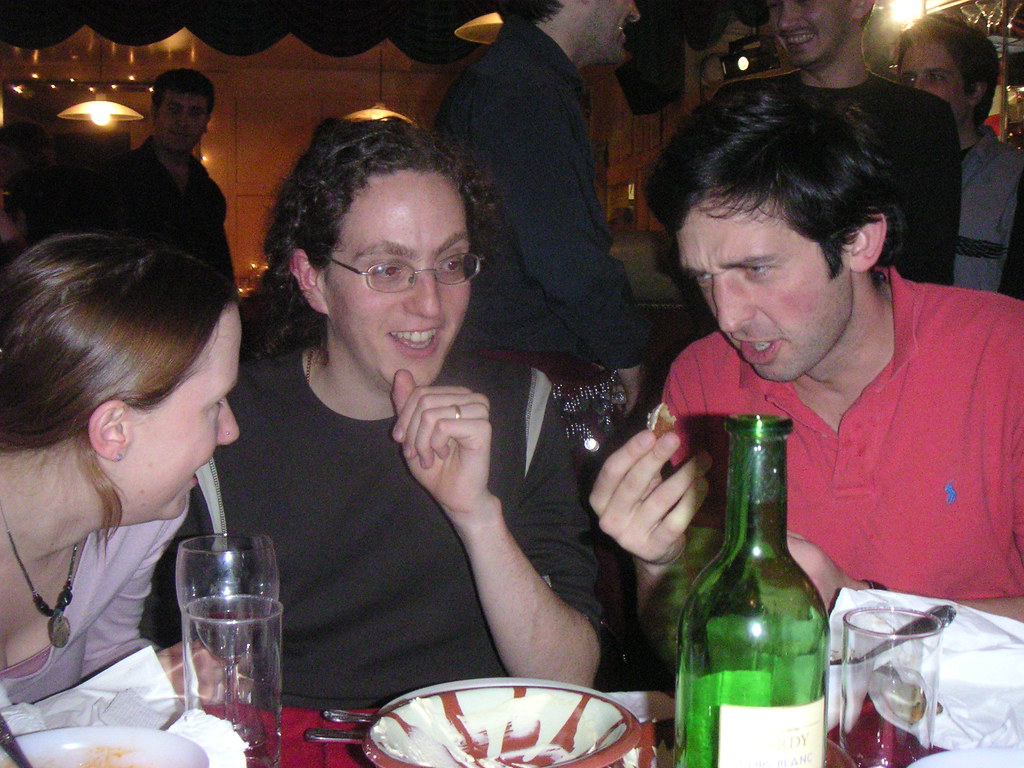
Photo: “Deep in conversation” by NatBat is licensed under CC BY-NC-SA 2.0

Potcake Poet’s Choice: John Beaton, ‘Bedtime Story’

The sun has smouldered low. Its flaxen light
drizzles through the birches to the snow
where sheep stand still as hay-bales, beige on white.
A shepherd with a shoulderful of straw,
brindled by the shadows, softly walks.
The sheep flock round; he swings his load to strew
the strands on pillowed drifts like yellow locks,
then hastens homewards bearing sustenance
against the ghostly dark. He holds small hands
and spins his children tales of happenstance
and golden fleeces in enchanted lands.
Their minds woolgather. Snuggled down in bed,
they drift on snowy pillows; yellow strands
of hair glow like the hay their father spread.

John Beaton writes: “My wife and I have five children and one of my great delights was reading to them in bed when they were little. We covered a lot of ground, from Shel Silverstein’s poems and Roald Dahl’s stories to whole books like “Watership Down” and “The Old Man and the Sea.” This poem came to me when I was looking at the painting “Shortening Winter’s Day” by Joseph Farquarson (shown above). It was reminiscent of the place where I grew up in Scotland. The image of the shepherd feeding sheep in the gloaming light evoked the feeling of security and contentment that imbued those evenings of reading. I recite my poetry and tend to write for sound almost as much as for sense. I like the sounds of this one. Also, when picking subjects for poems, I’m more drawn to happiness and beauty than to sadness and misery. All in all, this poem fits my preferences quite nicely.”

John Beaton’s metrical poetry has been widely published and has won numerous awards. He recites from memory as a spoken word performer and is author of Leaving Camustianavaig published by Word Galaxy Press. Raised in the Scottish Highlands, John lives in Qualicum Beach on Vancouver Island.

https://www.john-beaton.com/