You wake and see dew on the grass in spring But I see futures present changes bring: Global warming replacing dew with drought, Nanotech replacing grass with grout, A.I. replacing people’s minds and thought, Genetic mods replacing us—with what? In other words, our world’s about to pass. Poetry must be more than dew on grass.
I was honestly a little surprised when Light Poetry Magazine told me they would publish this poem. I mostly associate them with their snippy, jokey little poems that appear weekly on topical subjects, Poems Of The Week. Maybe this is unfair, as their full twice-yearly magazine profiles individual poets and has useful book reviews as well as poetry from a couple of dozen formal poets. Be that as it may, I felt this poem might be a little more Dark than Light.
Not that I’m pessimistic about the future. I’m intrigued, and resigned. Just as in William Golding’s ‘The Inheritors’ in which a tribe of early humans finds modern humans moving in and displacing them, so modern humans look like being displaced by something we can’t yet identify. We are like Native Americans when the Europeans started arriving, like White America as the demographic shifts to a more globally representative population, or like every generation that finds the children and grandchildren listening to unrecognisable music and using incomprehensible technology. Is any of this bad? It can be handled well or badly, but it is a natural and unending process.
And now we’re facing a variety of technologies that together can completely remake the human: genetic engineering, A.I., robotics, infinite data-crunching, nanotechnology… Will we casually and irresponsibly start remaking humans? Of course. It’s inevitable. If one country clamps down on it, it will simply happen elsewhere. And what is the likely outcome? I haven’t a clue, but I’m intrigued.
So Louise Glück has won the 2020 Nobel Prize for Literature, “for her unmistakable poetic voice that with austere beauty makes individual existence universal.” This is all very well–she has powerful insights, strong images, and these translate well into other languages. But as an advocate of the use of poetic tools inherent in language–rhyme and rhythm in particular, for English–I can’t classify the expressions of her poetic voice as poetry.
The simplest touchstone is this: How easy is it learn the passage by heart, to recite it word for word from memory? Because that is why we developed the tricks of poetry, the different rhythms for different moods, the different forms for different levels of complexity. Poetry is song with the emphasis shifted from the melody to the words; but the music is still there in shadow form.
It is very hard to keep the actual poetry when a poem is translated from one language to another. It is easy enough to translate the insights and imagery, but what of the music of the language? It can be done by a skilful translator, but the fidelity is often compromised to remake the poetry. Yeats was very free with the French of Pierre de Ronsard when he wrote
When you are old and grey and full of sleep, And nodding by the fire, take down this book, And slowly read, and dream of the soft look Your eyes had once, and of their shadows deep;
but he captured the poetry and made it into one of his own best-loved pieces. James Joyce translated the German of Gottfried Keller as
Now I have fed and eaten up the rose Which then she laid within my stiffcold hand. That I should ever feed upon a rose I never had believed in liveman’s land.
It’s Keller, but it’s also poetry, and with Joyce’s own voice. Glück indeed has a voice, but how simple is it to learn her work and recite it word for word, compared with the Yeats or Joyce work above? And if you learn it by heart, will you still be able to recite it verbatim years later? I think not. So I submit that her work is not poetry.
That doesn’t mean that it isn’t literature. It just means that we need a word for such work, writing that is too poetic to be called prose, but too prosaic to be called poetry. Poetry needs its undercurrent of song. When the Nobel Prize was being awarded for poetry, Bob Dylan was a far wiser choice than Louise Glück.
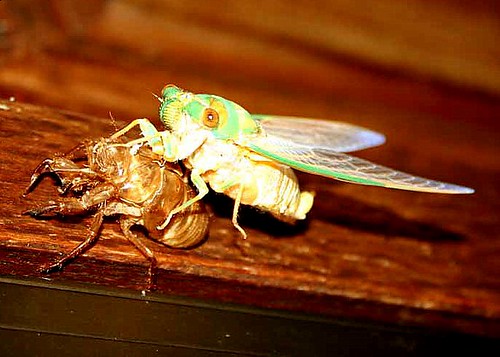
After a billion years of larval hit-and-miss humans emerged, stood up, and fed, and grew, started to build their city chrysalis from which, 3,000 years entombed, now formed anew, they burst in wild bright flight with wings deployed out to the stars. The egg case of this final birth, the Earth, was, naturally, destroyed.
We have good news and bad news. The bad news is that the rate of change is ever-increasing in all aspects of human life–from our bodies to our planet–and we will never return to the old normal. The good news is that this is the process by which life advantages to higher levels of organisation and intelligence.
This poem was originally published in Star*Line, one of the two magazines of the Science Fiction and Fantasy Poetry Association (SFPA). The other magazine is Eye to the Telescope (ETTT).
The poem rhymes and is written in iambics; but the rhymes are not structured to a pattern, and the lines are of uneven length. This casual form is used by Matthew Arnold and T.S. Eliot among others, in some of my favourite poems such asA Summer Night (I have always loved the three paragraphs beginning with:
For most men in a brazen prison live, Where, in the sun’s hot eye, With heads bent o’er their toil, they languidly Their lives to some unmeaning taskwork give, Dreaming of naught beyond their prison wall.)
and The Love Song of J. Alfred Prufrock. The form doesn’t have the musicality of more regular forms like the sonnet or limerick, but it provides all the memorising strength of rhythm and rhyme within a more conversational flow, and facilitates different lengths of thought including, if wanted, a punchline.
We live in difficult times, what with the unprecedented challenges of climate change, mass migration, infectious diseases, unpredictable technological advances in weaponry, and more. And the problems will continue to multiply and get larger, even as we develop solutions to the smaller, simpler ones. And from the inevitable destruction of our form of life will emerge… what? We cannot know, we probably cannot even imagine.
The poem ‘The Listeners’ is one of de la Mare’s best–evocative, ghostly, inconclusive, easy to read and to recite.
‘Is there anybody there?’ said the Traveller, Knocking on the moonlit door;
It justly appears in any short sampling of his work. Several of the other poems in this collection are of that quality, mostly those of portraits of individuals: Old Susan, Old Ben, Nod the Shepherd
Softly along the road of evening, In a twilight dim with rose, Wrinkled with age, and drenched with dew, Old Nod, the shepherd, goes.
and, at the other end of life, Little Louisa in ‘The Keys of Morning’:
The thinness of his coal-black locks, His hands so long and lean They scarcely seemed to grasp at all The keys that hung between:
Those poems are all at the beginning of the book, and after them the poems degenerate into unequal attempts to catch the evocative spirit.
De la Mare produced a lot of verse. If a dozen or two of his poems are memorable, that is a remarkable achievement that (almost) anyone writing verse would be proud of. And the way to reach those one or two dozen is to write down everything that occurs to you, good or bad, and then to work on it as best you can. There is no way to decide “Today I will write a good poem” and produce it unless you are already in an appropriate state of mind–inspired, or bemused as it were. But to not write when a line or thought occurs to you is to turn off the taps of creativity. So all must be written.
No one should fault a poet who has produced verse good enough to sell, when they a) continue to write material of uneven quality, b) continue to publish it. It is a good process for keeping the lines of communication open with the muse, and hopefully producing even better work in future.
As for this particular collection: I like the first 13 poems, and the title poem. I forgive the rest.
Mosquito bite yuman, Now e full a blood. Lizard eat mosquito Say, man dis is good.
Lizard help hatch mosquito, Raise dem up good. Send dem out like good daddy Fe go find yuman blood.
Mosquito so happy Dem eat plenty blood. Lizard so happy Dem mosquito taste good.
Politician same like dis: Yu clap an yu sing, Yu eleck im an den E tax yu ting an ting.
I don’t normally write dialect verse, but it seemed appropriate for this idea. It was originally published in Snakeskin, republished in both The Hypertexts and Better Than Starbucks. The Bahamian accent can sound impenetrable to foreigners, but the words and grammar are not so different from standard English. By the way, “ting an ting” is just the non-specific plural of “tingum”–unspecified “stuff” rather than a specific “thing”.
Photo: “Brutality against mosquitoes.” by Bobinson K B is licensed under CC BY-NC-SA 2.0
Les sanglots longs Des violons De l’automne Blessent mon cœur D’une langueur Monotone.
Tout suffocant Et blême, quand Sonne l’heure, Je me souviens Des jours anciens Et je pleure;
Et je m’en vais Au vent mauvais Qui m’emporte Deçà, delà, Pareil à la Feuille morte.
English translation: Autumn Song
The long sobs Of the violins Of autumn Wound my heart With a monotonous Languor.
All breathless And pale, when The clock strikes, I remember The old days And I cry;
And I go In the ill wind Which carries me Here, there, Like the Dead leaf.
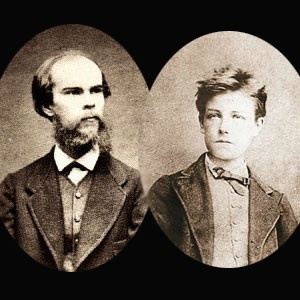
Published as part of his first collection ‘Poèmes saturniens’ in his early 20s, ‘Chanson d’automne’ has always been one of Paul Verlaine’s most popular poems. Even if a very young man saying “I remember the old days, and I cry” seems as questionable as the teenage Mary Hopkin singing “Those were the days, my friend”, the poem rings true. And Verlaine was certainly unsettled. Attracted to men, he soon married a young woman to try to “heal himself of the disease”. But then came Rimbaud.
Le Bateau ivre
Comme je descendais des Fleuves impassibles, Je ne me sentis plus guidé par les haleurs : Des Peaux-Rouges criards les avaient pris pour cibles Les ayant cloués nus aux poteaux de couleurs.
English translation: The Drunken Boat
As I went down impassive rivers, I no longer felt myself guided by the haulers: Yelling Redskins used them as targets Having nailed them naked to coloured stakes.
This is the first quatrain of Arthur Rimbaud’s 100-line poem The Drunken Boat, one of his very best, written when he was 16. It is technically traditional, written in alexandrine quatrains rhyming abab. Told in the voice of the boat itself on a river, the drunken boat is throwing off the restrictions and requirements of its old life, feeling an inescapable desire to follow the natural flow to its destiny, the sea. Some of the sights are appalling (like a dead whale rotting), some ecstatic (like phosphorescent waters), as the boat fills with water and the desire to be completely absorbed.
Earlier that year Rimbaud had explained his approach to poetry in a letter: “I’m now making myself as scummy as I can. Why? I want to be a poet, and I’m working at turning myself into a seer. You won’t understand any of this, and I’m almost incapable of explaining it to you. The idea is to reach the unknown by the derangement of all the senses. It involves enormous suffering, but one must be strong and be a born poet. It’s really not my fault.”
He then introduced himself to Verlaine by letter with various poems including The Drunken Boat. Verlaine, 11 years older than him, invited him to stay and fell for him completely. Rimbaud moved in, behaved scummily (belching and spitting at the table, talking with his mouth full) and made an immediate enemy of Mrs Verlaine who he only ever referred to as “the rat”. He had to leave. None of Verlaine’s friends could put up with him, so Verlaine rented rooms for him. Within a year Verlaine had effectively abandoned wife and young son, moving in with Rimbaud, and so together to London, then Brussels. Having fired a couple of pistol shots at Rimbaud in a fit of drunken jealousy, Verlaine was imprisoned for 18 months. Rimbaud moved on to new lovers and new countries–Java, Aden, Ethiopia, writing ever more experimental poetry, before returning to die in France at age 37. Verlaine taught in England for a few years, then taught English in France; he fell in love with one of his pupils, but lost him to typhus. He wrote increasingly symbolist poetry and sank into drug addiction, alcoholism (absinthe, of course) and poverty. He died five years after Rimbaud, aged 51.
And now the French government is grappling with a petition to relocate both poets from their comparatively obscure burial places to the Pantheon, “alongside other great literary figures like Voltaire, Rousseau, Dumas, Hugo and Malraux”. The Culture Minister is in favour of the idea, but there is an angry backlash. There is a BBC story here.
But there is no argument that the poetry itself is among the best produced by France.
Sure never yet was antelope Could skip so lightly by. Stand off, or else my skipping-rope Will hit you in the eye. How lightly whirls the skipping-rope ! How fairy-like you fly ! Go, get you gone, you muse and mope — I hate that silly sigh. Nay, dearest, teach me how to hope, Or tell me how to die. There, take it, take my skipping-rope, And hang yourself thereby.
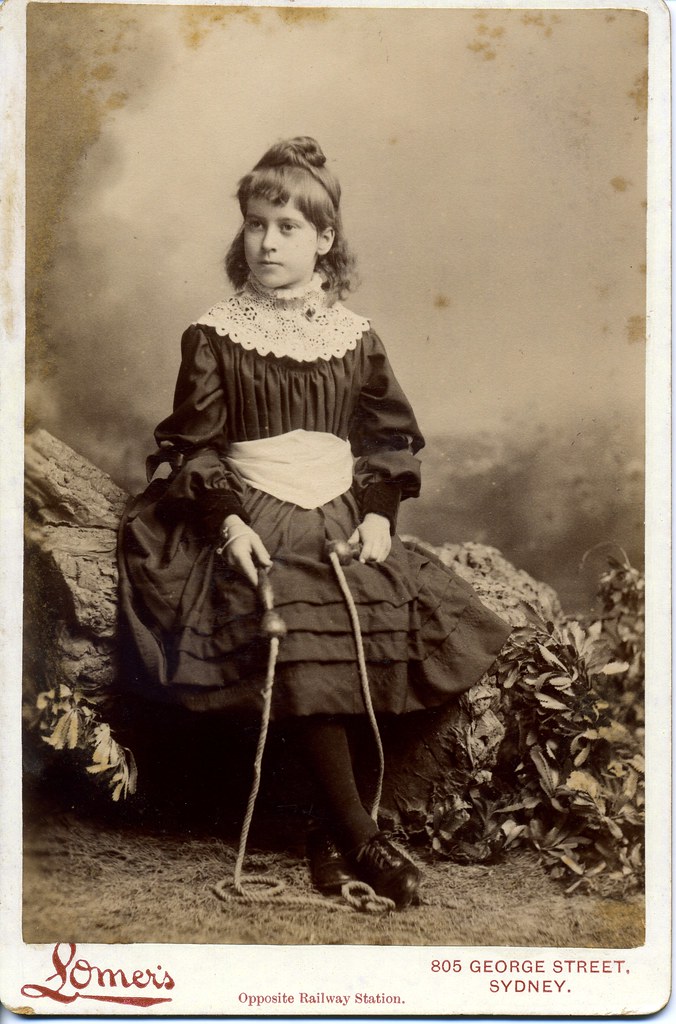
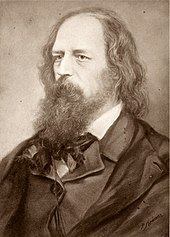
This odd little poem appeared in the 1842 ‘Poems by Alfred Tennyson’, and was reprinted in every edition until 1851 when it was suppressed. I’ve italicised one of the two speakers in order to make the poem easier to understand on first reading. There is no visual indication, otherwise, that this is a conversation between an admirer and the irritated rope-skipper.
The very simple structure, very regular iambics, and very repetitive rhyme scheme are perfectly in keeping with the monotonous activity of skipping. I’ve always found the poem charming and amusing in its bizarre way.
(The photograph is “Girl with skipping rope, Albert Lomer studio, Sydney” by Blue Mountains Library, Local Studies.)
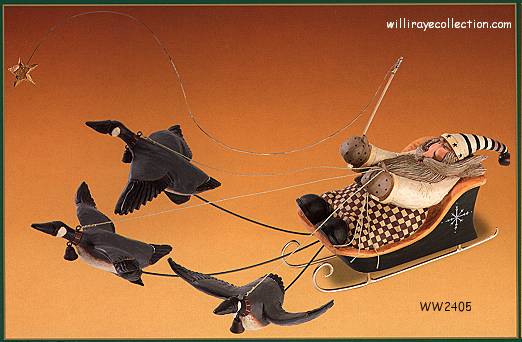
We dreamed we could fly to the moon With six grey geese pulling our sleigh. We dreamed we could fly to the moon – We can, but not in that way.
We dreamed we could see round the world With a magical mirror display. We dreamed we could see round the world – We can, but not in that way.
We dreamed we could live forever By doing whatever gods say. We dreamed we could live forever – We can, but not in that way.
It seems to me that anything that humans can imagine, some of them will try to achieve. Further, that the fairytale and fantasy dreams of preliterate days still continue, and they are indeed being achieved–though not necessarily as was originally imagined. Can we (or our descendants) attain indefinite lifespans? I think so, but probably not as the kind of human that we are today. After all, if you could halt ageing, if you could rejuvenate the body, what else would you think of tinkering with?
The sun comes out. Street-closing hills that climb Below the scoops of cumulus from Wales Are woodland backdrops lit for pantomime, Bright as the ribbons round the horses’ tails.
Where steam-frilled dung and strawy puddles mix In iron pens, the mud-scaled cattle groan; The auctioneers outbawl the rapping sticks And rattling bars and hobnails scraped on stone.
Lost in the din, the gaiters, boots and wheels, The lambs cry, unregarded. Overhead, The clock, white marble up in front, conceals That all behind is brickwork’s weathered red.
A stray dog pauses, sniffs, then, deaf to shouts, Swings up its leg against a net of sprouts.
Jerome Betts writes: “I’m attached to this piece, first printed in Pennine Platform, as it began as wispy free verse in university days and gradually metamorphosed over many years. The bellowing from the market punctuated lessons in a West Midlands cathedral city and other elements were attracted, like the ribbons in the horses’ tails and then a reminder of the street-ending hills in a small town in Castilla y León, and the closing couplet from another in the East Midlands.But, aided by the grappling-hook of rhyme, something unexpected emerged from the depths and took over with the lambs and the clock, often an intriguing result of struggling with formal constraints.”
Jerome Betts was born and brought up on the Welsh border, but now lives in South Devon, where he edits the quarterly Lighten Up Online. In addition to articles and verse in consumer and specialist magazines his work has appeared in Pennine Platform, Staple and The Guardian, as well as anthologies like The Iron Book of New Humorous Verse, Limerick Nation, Love Affairs At The Villa Nelle, and The Potcake Chapbooks 1 & 2, and online at Amsterdam Quarterly, Angle, The Asses of Parnassus, Autumn Sky Poetry Daily, Better Than Starbucks, The Hypertexts, Light, The New Verse News, Parody, The Rotary Dial, Snakeskin, and other sites.
On those days when, because you felt attacked, you just won’t speak, it’s like a dress rehearsal for one of us being dead. (So, a prehearsal?) Can’t speak for you, how you’d react, but for myself, if you die, I know only: I’d be lonely.
After the slow dispersal of the acquisitions of the years from yard sales, impulses, unfinished plans– after the children’s and grandchildren’s tears, (their own mortality foretold in Gran’s) there’d be an emptiness.
Routine unravels: I’d need an act of will to even shave– the dogs don’t care how I behave. All I need’s here in cupboards, shelves, on line. I’d be just fine… apart from growing restlessness.
I guess I’d restart travels. Meanwhile I’ve learned how it will be to live without you, just your memory, a silent apparition in this room and that, the ghost of one who used to laugh and chat.
Think of this as a melancholy love poem, written in a temporary (thank goodness) state of being that can occur in any relationship.
This poem was published this month in Snakeskin No. (or #) 276. I feel proud to be in the issue, as I rate it as one of the best ever in the 20+ years that George Simmers has been putting the magazine out. Though much of the poetry is formless (but still worth reading!), there is some truly impressive work by Tom Vaughan and Scott Woodland, with well-structured work by Robert West, Nick Browne and Jerome Betts, and with interesting innovations in form by Marjorie Sadin, Claudia Gary and George himself–in this last, the character of the verse becomes more lively as the character in the verse becomes more alive.
Technically the form of the poem–uneven lengths of iambics, all lines rhyming but not in a structured way–is one that allows the line breaks to echo your intact chunks of thought as well as the rhythms of speech. It is the form of Eliot’s Prufrock and, earlier, of Arnold’s A Summer Night:
And the rest, a few, Escape their prison and depart On the wide ocean of life anew. There the freed prisoner, where’er his heart Listeth will sail;
It is a casual form, but it retains enough of the hooks of more formal verse to make it easy to memorise and recite.