Tag Archives: Poetry

Review: ‘101 Sonnets’ edited by Don Paterson

This has to rank as one of the all-time great poetry anthologies. Yes, it contains only sonnets. Yes, several of them are dense in structure or in language (several are in Scots, with words and phrases translated in footnotes). Yes, there is only one sonnet per poet. It is very rich material, and took me a couple of weeks for a first read because there is a lot of absorb. And it has a fabulous Introduction by the British editor Don Paterson – a well-respected poet who avoided including any sonnet of his own.

The sonnets are not put into any formal grouping, but rather flow conversationally from one to the next, the themes often shifting through unexpected juxtaposition. So the first nine run through an amazing sequence of idealised love, woman as muse, kissing, sensual religiosity, obscenity, and charm. It starts with Robert Frost’s
She is as in a field a silken tent
and progresses to Robert Graves’ woman/muse
This they know well: the Goddess yet abides.
Though each new lovely woman whom She rides

to Jo Shapcott’s ‘Muse’
When I kiss you in all the folding places
to Alexander Montgomerie’s
So swete a kis yistrene fra thee I reft
to Wilfred Owen’s
Between the brown hands of a server-lad
The silver cross was offered to be kissed

John Donne’s
Batter my heart, three-personed God
William Alabaster’s ‘Upon the Crucifix’
Feed greedy eyes and from hence never rove,
Suck hungry soul of this eternal store,
Issue my heart from thy two-leaved door,
And let my lips from kissing not remove.

Craig Raine’s ‘Arsehole’
I dreamed your body was an instrument
and this was the worn mouthpiece
to which my breathing lips were bent.

to Robert Herrick
A sweet disorder in the dress
Kindles in clothes a wantonness

The 101 Sonnets provide a wild ride. The next in the book are Poe’s ‘An Enigma’, Wordsworth’s
The world is too much with us; late and soon,
Getting and spending, we lay waste our powers

(incidentally the first sonnet I learnt by heart, one that helped shape my life) and J.K. Stephens’ parody critique of Wordsworth
Two voices are there: one is of the deep (…)
And one is of the old half-witted sheep (…)
And, Wordsworth, both are thine
.

And so on through all aspects of life and death, English landscapes, Irish history, real parents, imaginary children, mythology, poetry, the seasons, the close observation of small everyday items… Wendy Cope paired with Edmund Spenser, Gwendolyn Brooks with John Milton… A very rich and rewarding collection.

And the 17-page Introduction is the single best essay on poetry that I’ve ever read. Naturally it is focused on the sonnet, covering its definition, its history, its structure; but in so doing it talks about wider issues such as the nature of iambic pentameter, and in a couple of places it goes into the nature of poetry itself: it mentions one of the advantages of the sonnet being that it is small enough
to be easily memorised, which is the whole point of the poem–that it should lodge itself permanently in our brains. We should never forget that of all the art forms, only the poem can be carried around in the brain perfectly intact. The poem is no more or less than a little machine for remembering itself: every device or trope, whether rhyme or metre, metaphor or anaphora, or any one of the thousand others, can be said to have a mnemonic function in addtion to its structural or musical one. Poetry is therefore primarily a commemorative act–one of committing worthwhile events and thoughts and stories to memory.

Later Paterson states
Poetic arguments appear to cohere simply because they rhyme. Rhyme always unifies sense, and can make sense out of nonsense; it can trick a logic from the shadows where one would not have otherwise existed. This is one of the great poetic mysteries.

All in all a brilliant book, and highly rereadable.

Resources: Goodreads

Goodreads’ stated mission is to help people find and share books they love, and to improve the process of reading and learning throughout the world. (That was crafted before they were bought by Amazon, so their mission may have a somewhat more mercenary aspect these days.) Founder Otis Chandler got the idea when looking at a friend’s bookshelf, and wishing there was a way to share discoveries and opinions of books online. Launched in January of 2007, by December it had 650,000 members–clearly it was on to something! And by the end of 2019 (i.e. pre-Covid) it had 90 million members, a number that can only have grown since then.

It’s a place where you can spend your time in a variety of ways: making shelves of the books you’ve read, sorting them by topic, giving them 1 to 5 stars, writing reviews of them… Developing a list of friends to follow or to share reviews with, joining a group with topics that you like, using the site to find books you are likely to enjoy… Setting a goal of how many books to read in the coming year, and having Goodreads track your progress, praising you or nagging you depending on whether you’re ahead of schedule or behind.

More completely, “Goodreads,” says Wikipedia, “is an American social cataloging website that allows individuals to search its database of books, annotations, quotes, and reviews. Users can sign up and register books to generate library catalogs and reading lists. They can also create their own groups of book suggestions, surveys, polls, blogs, and discussions.”

Because my main reading these days is formal poetry (of course–though leavened with Simenon, Le Guin and thick works of history) I have been looking to see what kind of poetry groups operate in Goodreads. I only found one of formal verse, with half a dozen members, and dormant for over a year. So I have started a new one called ‘Formal Verse – Mostly’. If you, reading this, are interested in reading, writing or discussing formal poetry, old or new, your own or that of others, then consider joining us.

But even if you don’t want to be that active, don’t want to join a group, Goodreads still offers a range of benefits for all readers. I’ve been reading more each year for the last few years, largely thanks to the Reading Challenge and being nagged when (as now) I’m behind schedule.

Photo: “My Books” by Jennerally is licensed under CC BY-NC-ND 2.0

Poem: ‘Poets’

We are the natterers,
We are the masters of arts polyglot;
We are the patterners,
We are the marks on the paths that you plot;
We are the batterers,
We are the iron-headed rams that you fear;
We are the chatterers,
We are the sons of the sins that you bear;
We are the flatterers,
Down on our knees to those who stand tall;
We are the smatterers,
Giving out dangerous knowledge and small;
We are the shatterers,
We are the haters of forces above;
But, most, we are the clatterers,
We are the hooves of the horses we love.

This was first published (I think) in Rubies in the Darkness (UK) and then in Metverse Muse (India). As for the word “clatter”, when I wrote the poem it only referred to sound, the verb “making a continuous rattling sound as of hard objects falling or striking each other.” The word is evolving though, as words do, with the meaning in football of a hard physical tackle that knocks your opponent over. I only meant the noise, of course…

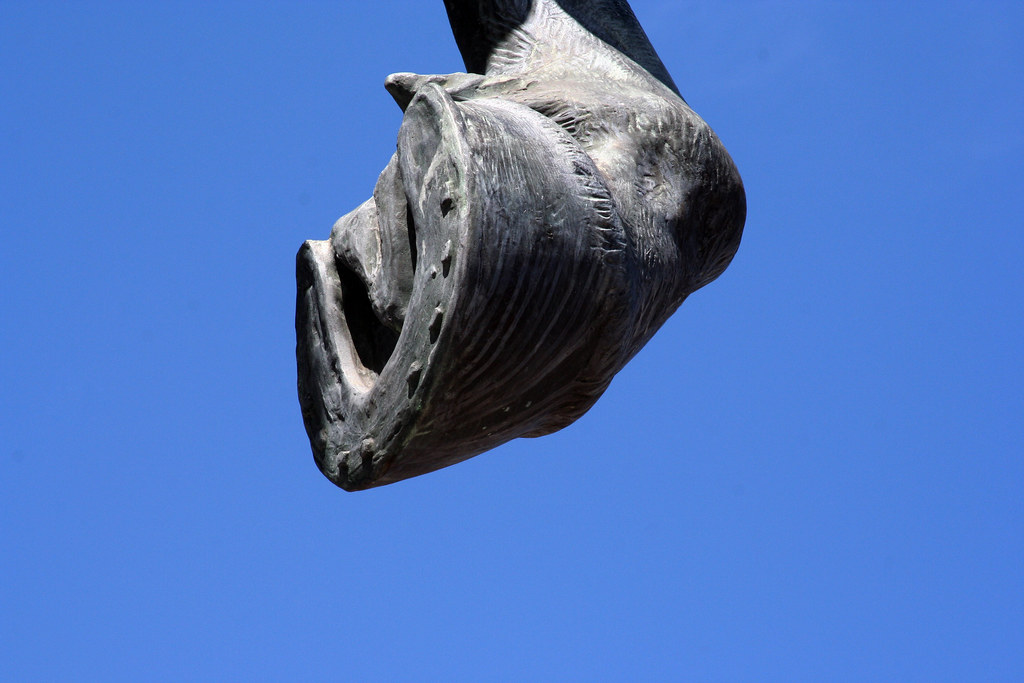
Photo: “horse hoof” by Leo Reynolds is licensed under CC BY-NC-SA 2.0

Poem: ‘What Lasts?’

Munch’s Scream fades, and the Taliban
blow up the grandest statues that they can.
Safer are spoken treasures of the mind:
poems and songs outlast objects that rust,
or bust, or slowly crumble into dust.
Until from cave or dig comes some strange find…
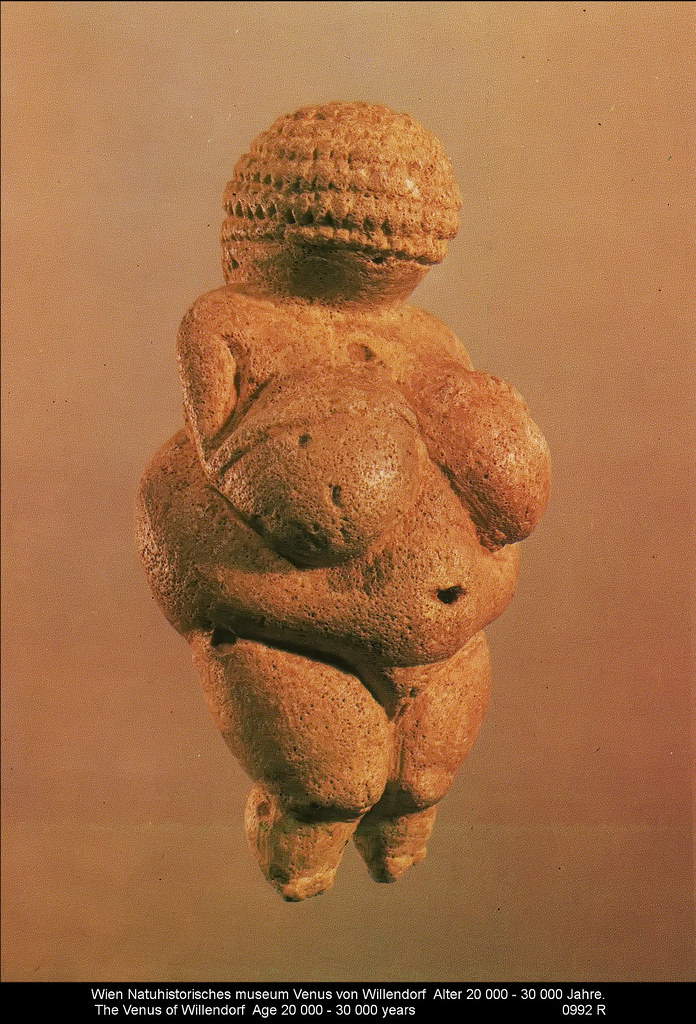
but when Lascaux and Willendorf were young,
what was recited, or what songs were sung?

As regards “immortal” works of art… anything that is still respected in a hundred years is pretty good, anything still talked about after a couple of thousand years is doing very well… Songs and poems can manage that length of time, especially if connected a religion or other social ritual; but there is very little oral survival beyond that, and the survival of physical artifacts from tens of thousands of years ago is of the luckiest, perhaps of the lost or the most overlooked, not necessarily the best.

How wonderful if in the future we can recapture sounds from the Stone Age! At present there is no way to see how it could ever be done. But at least we have a few cave paintings and small carvings…

This poem was just published a short while ago in The Asses of Parnassus. Thanks, Brooke Clark!

“Austria. Wien Naturhistorisches museum Venus von Willendorf. Die Venus von Willendorf ist eine Venusfigurine aus der jüngeren Altsteinzeit (Jungpaläolithikum), dem Gravettien, und ist als Österreichs bekanntestes Fundstück heute im Naturhistorischen Museum” by Morton1905 is licensed under CC BY-NC-ND 2.0

Poem: ‘Body Surfing’

Standing hip deep in the sea
Is nice in itself, but the reason for being there
Is the wait for a big wave.

A wave rising, a sudden tower
Smooth with devouring power
But one you can launch yourself forward in tune with – and
Hurtle ecstatic, unseeing and breathless
For as long as breath can hold
Through the water and up along over and onto the sand,
Sand thick in your hair, jammed in every fold,
Scraped, battered and rolled,
Triumphant, beached, deathless.

For this the saint prays,
For this the artist stares open-eyed,
For this the poet lets wounds bleed unstanched,
For this: this hope of being launched,
Controlled and uncontrolled
By what can’t be withstood or denied.

(Or else you could duck under the wall,
Let it pass over while you count three,
Hear the boom of its crested fall,
Yourself unbroken, inactive, safe, free.)

The sea is always there
Whether or not you are in it
Standing hip deep in it
Waiting for the next big wave.

Another of my “Is it formal?” poems. How much rhyme, rhythm and consistent structure do you need in order to consider it formal? Where is the cut-off between form and free? I don’t know. But I felt the alternation – between quiet waiting sections and the breathless rush of a good wave – was an appropriate expression in itself.

The poem was originally published in Snakeskin. Thanks, George Simmers!

“Superman body position while body surfing” by benaston is licensed under CC BY 2.0

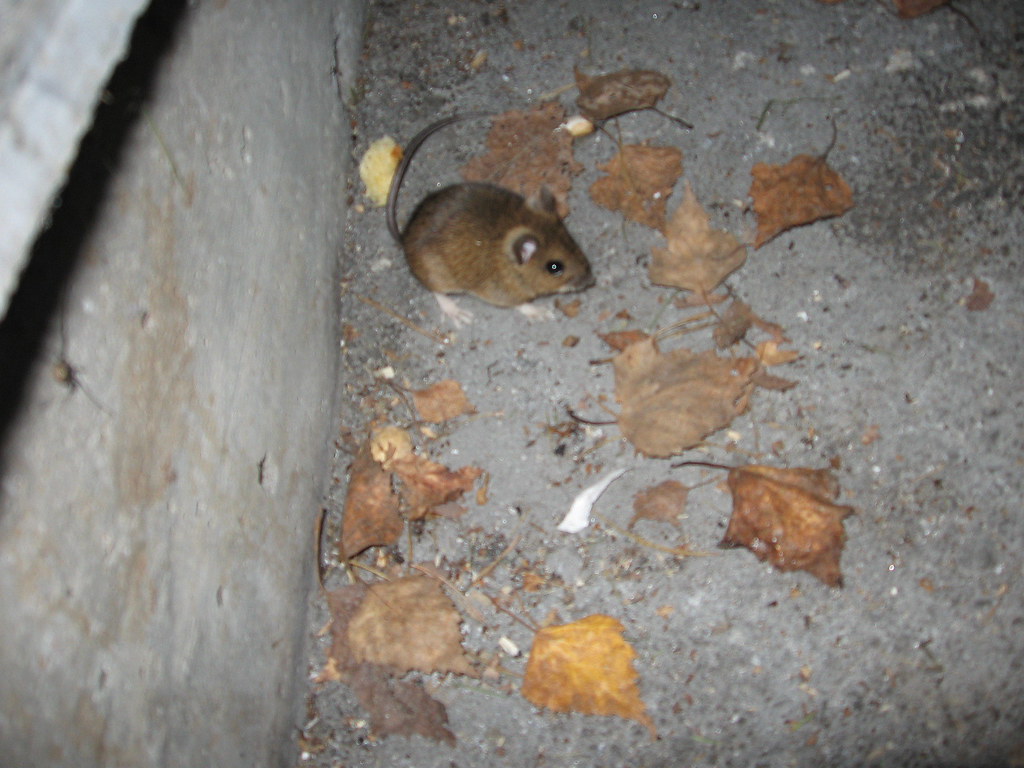
Poem: ‘Poems Like Mice’

Poems should be concise:
quick, small, like mice.
Then one day you find
they’ve made a nest in your mind.

I seem to be writing shorter, more epigrammatic verse recently. Probably influenced by reading too much FitzGerald/Khayyam.

This little poem was published in the December 2020 issue of Snakeskin–which celebrates 25 years as a monthly online poetry magazine, presumably the oldest (or rather “the most venerable”) such magazine in the world. Congratulations to its creator and sustainer, George Simmers!

Photo: “Look at the cute mouse ^^” by letmehearyousaydeskomdeskom is licensed under CC BY-SA 2.0

Review: Fitzgerald’s ‘Rubaiyat of Omar Khayyam’

FitzGerald’s version of Omar Khayyam’s Rubaiyat is one of the glories of English poetry. It has contributed more phrases and common quotations to the language, relative to its size, than any other piece of literature – including the Bible and Shakespeare. “A flask of wine, a book of verse, and thou”… “The Moving Finger writes; and having writ // Moves on”… and so on.

FitzGerald came out with five editions of the Rubaiyat (the fifth being posthumous), with 75 four-line stanzas in the first edition, then tinkering with it for the rest of his life: adding another 30 stanzas, subtracting again, and constantly modifying words, phrases and punctuation. The first edition has several things in its favour: succinctness, and the fire and integrity of the original effort.

Edward FitzGerald was a strange character. His personal life was a long search for friendship of two types: intellectuals with a passion for literature (Tennyson, Thackeray, Carlyle), and unintellectual men much younger than himself who were noted for their “manly” looks. His life and search were difficult, as Victorian England didn’t make life easy for homosexuals.

On the creative side, this search for friendship showed up as a need to be a co-creator: showed up in art, where he had a lifelong habit of buying paintings and cutting them down to a better composition and touching up the work to improve it; in music, where he arranged the works of others for his friends to sing; and in literature, where he found his genius in the works of others, translating Aeschylus, Calderon and Khayyam from the original Greek, Spanish and Persian, striving to identify with the original author and replicate in English not their exact words but the thrust of their thought and emotion. And with the Rubaiyat he appears to have been successful in every way. The five versions published between 1859 and 1889 constitute the single best-selling book of poetry in English.

Of the hundreds of editions that have been published since FitzGerald’s death, my two favourites are: for the lushness, the one illustrated by Edmund Dulac; and, for the background and insights, the one with an introduction by Dick Davis and published by Penguin in 1989.

In this particular Penguin edition (there have been several others), FitzGerald’s first edition and fifth edition are given in full, together with a complete listing of all the other variations found in the intervening versions. But – FitzGerald’s Rubaiyat only being 300 or 400 lines, depending on the version – all of that barely takes up 50 pages. Dick Davis’ introduction, almost as long, was presumably commissioned to make this a saleable book. And it is his introduction that gives it its full value.

Davis covers the life and what can be known of the personality of Omar Khayyam and – in conjunction with a review of FitzGerald’s life, personality, agnosticism and guarded homosexuality – the attraction, almost identity, that FitzGerald felt for him. He also investigates and approves the depth of FitzGerald’s translation skills, and analyses his use of rhyme scheme and meter. FitzGerald originally started translating Khayyam into paired couplets (aabb) before seeing the benefit of Khayyam’s rubaiyat (aaba) – given the epigrammatic nature of the verses, each quatrain is a stand-alone philosophic proposition and the return in the fourth line to the rhyme of the first two lines tends to heighten the sense of inevitability in each stanza.

Perhaps the most intriguing thought to come from Davis’ Introduction is that the sensual illustrations of half-naked women, so common in our collection of Rubaiyats, are all wrong. From linguistic and cultural clues in both the Persian and the English, it appears that the Saki, the young cup-bearer, the Thou of the flask of wine and book of verse, should be an attractive young male with his first moustache starting to grow in. In other words, and despite my preference for Dulac, FitzGerald’s version of the Rubaiyat of Omar Khayyam would perfectly support lush, ornate, gay illustrations; and that is likely what FitzGerald – and Khayyam himself – would have preferred.

The Nobel Prize for Literature: Louise Glück

Archaic Fragment

I was trying to love matter.
I taped a sign over the mirror:
You cannot hate matter and love form.

It was a beautiful day, though cold.
This was, for me, an extravagantly emotional gesture.

…….your poem:
tried, but could not.

I taped a sign over the first sign:
Cry, weep, thrash yourself, rend your garments—

List of things to love:
dirt, food, shells, human hair.

……. said
tasteless excess. Then I

rent the signs.

AIAIAIAI cried
the naked mirror.

Source: Poetry (January 2006)

So Louise Glück has won the 2020 Nobel Prize for Literature, “for her unmistakable poetic voice that with austere beauty makes individual existence universal.” This is all very well–she has powerful insights, strong images, and these translate well into other languages. But as an advocate of the use of poetic tools inherent in language–rhyme and rhythm in particular, for English–I can’t classify the expressions of her poetic voice as poetry.

The simplest touchstone is this: How easy is it learn the passage by heart, to recite it word for word from memory? Because that is why we developed the tricks of poetry, the different rhythms for different moods, the different forms for different levels of complexity. Poetry is song with the emphasis shifted from the melody to the words; but the music is still there in shadow form.

It is very hard to keep the actual poetry when a poem is translated from one language to another. It is easy enough to translate the insights and imagery, but what of the music of the language? It can be done by a skilful translator, but the fidelity is often compromised to remake the poetry. Yeats was very free with the French of Pierre de Ronsard when he wrote

When you are old and grey and full of sleep,
And nodding by the fire, take down this book,
And slowly read, and dream of the soft look
Your eyes had once, and of their shadows deep;

but he captured the poetry and made it into one of his own best-loved pieces. James Joyce translated the German of Gottfried Keller as

Now I have fed and eaten up the rose
Which then she laid within my stiffcold hand.
That I should ever feed upon a rose
I never had believed in liveman’s land.

It’s Keller, but it’s also poetry, and with Joyce’s own voice. Glück indeed has a voice, but how simple is it to learn her work and recite it word for word, compared with the Yeats or Joyce work above? And if you learn it by heart, will you still be able to recite it verbatim years later? I think not. So I submit that her work is not poetry.

That doesn’t mean that it isn’t literature. It just means that we need a word for such work, writing that is too poetic to be called prose, but too prosaic to be called poetry. Poetry needs its undercurrent of song. When the Nobel Prize was being awarded for poetry, Bob Dylan was a far wiser choice than Louise Glück.

Poem: “Prose and Poetry”

I long for Prose – but darkly, distantly,
She looks at far-off lands.
It’s Poetry who brings persistently
Small gifts in small white hands.

I confess that I have always wanted to be a novelist rather than a poet… but when, over the years, several novels remain as unpublished manuscripts but the poetry contributes to bubble up and find a home, what can you do? Smile ruefully and accept the gifts you are offered, and be grateful.

This poem was originally published in Lighten Up Online. And my only published novel is The Gospel According to the Romans… self-published, of course. The publishing score so far: Poetry, 300 – Prose, 1. “You can’t always get what you want… but…

How You Can't Always Get What You Want became Donald Trump's ...

you get what you need.”


Review: “The Chatto Book of Modern Poetry, 1915-1955”

Chatto Modern Poetry

1915 to 1955 provides quite a range of poetry! From Hardy, Housman, Kipling, Yeats, through two world wars, to Dylan Thomas and twenty poets younger than him. Editors C. Day Lewis and John Lehmann confined themselves to (loosely defined) British poets, and to those aged at least 30 by their final selection. Among the 260 poems are many standards–Hardy’s ‘Afterwards’, Yeats’ ‘Sailing to Byzantium’, Eliot’s ‘East Coker’, Auden’s ‘Lay Your Sleeping Head’, Dylan Thomas’ ‘Fern Hill’–but the real joy is in discovering good work by less well known poets. I give a few excerpts as examples: pastoral, autobiographical, of mortality, a war poem, wistfulness:

Andrew Young, ‘Wiltshire Downs’

The cuckoo’s double note
Loosened like bubbles from a drowning throat
Floats through the air
In mockery of pipit, land and stare.

And one tree-crowned long barrow
Stretched like a sow that has brought forth her farrow
Hides a king’s bones
Lying like broken sticks among the stones.

Laurie Lee, ‘First Love’

Then it was she put up her hair,
inscribed her eyes with a look of grief,
while her limbs grew as curious as coral branches,
her breast full of secrets.

But the boy, confused in his day’s desire,
was searching for herons, his fingers bathed
in the green of walnuts, or watching at night
the Great Bear spin from the maypole star.

Alun Lewis, ‘Water Music’

Cold is the lake water
And dark as history.
Hurry not and fear not
This oldest mystery.

This strange voice singing,
This slow deep drag of the lake,
The yearning, yearning, this ending
Of the heart and its ache.

Keith Douglas, ‘How to Kill’

Now in my dial of glass appears
the soldier who is going to die.
He smiles, and moves about in ways
his mother knows, habits of his.
The wires touch his face: I cry
NOW. Death, like a familiar, hears

and look, has made a man of dust
of a man of flesh. This sorcery
I do. Being damned, I am amused
to see the centre of love diffused
and the waves of love travel into vacancy.
How easy it is to make a ghost.

Sidney Keyes, ‘The Gardener’

Do you resemble the silent pale-eyed angels
That follow children? Is your face a flower?
The lovers and the beggars leave the park–
And still you will not come. The gates are closing.
O it is terrible to dream of angels.

As a collection the poetry is overwhelmingly formal, rural and male. It is titled ‘The Chatto Book of Modern Poetry’, but it predates the formless chaos of what we now call “modern poetry”, the unstructured confessional outpourings of the past half century. The anthology isn’t perfect, but very rewarding for lovers of traditional poetry. (Not hard to find. Used hardcovers are available from $0.99 on Amazon.)