Tag Archives: Robin Helweg-Larsen

Poem: “Post-literacy”

Yes, I know it seems unlikely
but I simply can’t help feeling
there’s an urgency to writing:
and in verse, and fluently.

We’ve our cultural traditions
that have coevolved with language
and each language has its verse forms
that are aids to memory.

It’s all fine that we are moving
to post-literate existence
where the things all talk and tell you
everything you need, you must

when the neon signs and fridges
can discuss with you their content,
you don’t need to read or count, if
their integrity you trust.

But embedded in our braincells
are the patterns of our language
and our need to think in patterns
drives our songs, makes us a folk,

it gives dub and rap and hip hop,
it drives rhetoric in speeches,
and the false anticipation
of the punchline of a joke.

With our cultures integrating
with AI and with each other,
we risk losing all our history,
all our culture and, what’s worse,

Our minds! So sing to babies,
have kids memorise long poems,
learn the maths of songs and music –
learn and read and write in verse!

This poem, recently published in Bewildering Stories, speaks to the heart of the matters that this blog deals with. Songs and music, rhyme and rhythm, dance, melodies, alliteration and assonance, structures and patterns and verses and choruses, are all part of something that is deeply human. It starts for us with the heartbeat in the womb, is nurtured with lullabyes and rocking, carries on through the songs and music and dance that are important to every generation of teenagers. It is such a fundamental part of our humanity that educational systems that ignore it are ignoring a powerful natural teaching tool.

The issue is larger than the fact that learning verse by heart is easier than learning prose by heart. Larger than the benefits of developing the ability to remember and memorise accurately. It is about recognising and nurturing those inner forces that make us human. It is about not letting our humanity be eroded by a culture that doesn’t acknowledge the rhythms that permeate our lives.

This blog is about the value of formal verse. Part of that value is poetry’s contribution to the sanity that comes from being a complete human being.

Technically this poem’s lines could be described as iambic tetrameter, which each fourth line being truncated and rhymed. But I prefer to read it almost as a patter song with each line composed of two tertius paeons, Short-foot-meter.svg Short-foot-meter.svg Long-foot-meter.svg Short-foot-meter.svg (each fourth line still being truncated and rhymed). In other words, it is designed to have the third and seventh syllables in each line be the ones with the greatest stress or emphasis. And that includes the rhymes, naturally.
Poem: “Rubble Faced”


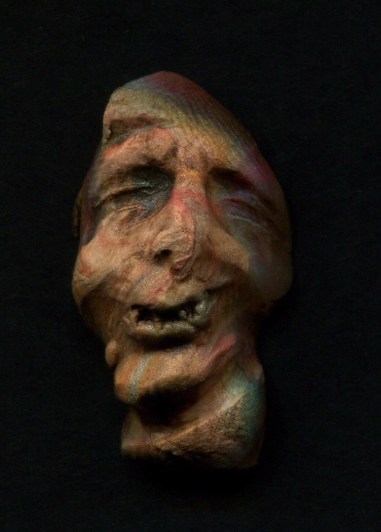
Because my mind and life’s so active
my face has been reduced to rubble.
I’m glad I think I’m unattractive –
it helps to keep me from worse trouble.

The Asses of Parnassus published this as their Valentine’s Day post in 2018. Thanks, Brooke Clark!

As for the truth of the poem, who knows. Maybe it applies to all of us to some extent, as we age?

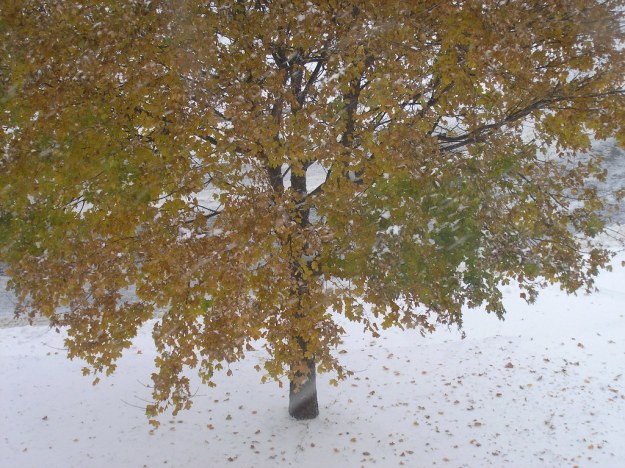
Poem: “Seasonal”

When Mr. Warm-as-winter-under-the-covers
Meets Cool-as-summer-in-the-evening-breeze
He’ll spring to leave ideas they could be lovers –
But her thoughts fall away like leaves from trees.

First published in Lighten-Up Online.

Poem: “Post-Adult”

Adults — earthworn, careweary,
grave, gravid and gravity-constrained —
take it all so seriously, furiously, fearsome and wearisome,
spuriously furious over the small stuff,
incessantly never having enough,
insensibly insatiable, insensate,
irrational, irascible,
driven by status, riven by expense,
dismissive of all greater age and experience.

How fortunate to age into osteoporosis,
bones lightening like a bird’s as you get older,
the wearying weights lifting off the shoulder,
and you drift up into the sky with your levity,
leaving behind adult cares and gravity,
unattached, detached,
careful but careless, unlatched.

This poem was recently published in Bewildering Stories. But what is it, technically? Does it have any form? It has elements of form–alliteration, assonance, scattered rhyme, the kind of rhythm (in parts) that you find in rap with emphasis on stresses, not on syllables–but none of it is organized, structured, codified, repeated…

I think it could be improved. If I come up with a significant improvement, I’ll switch it out. But there’s always the danger that the later “improvement” loses primal energy for the sake of trying to achieve an intellectual outcome. As with Auden’s poetic progress. But a little more formal structure would be good, I think.

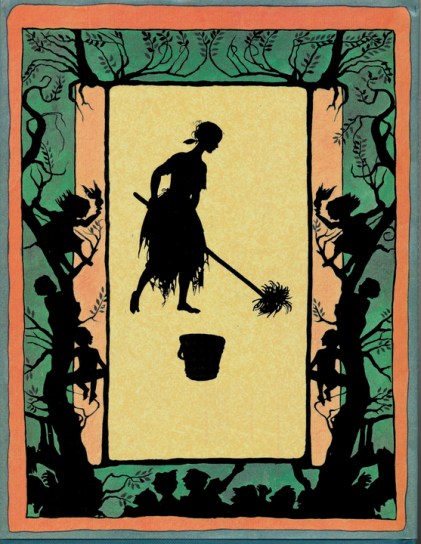
Poem: “Cinderella”

Cinderella

Cinderella, by Arthur Rackham

Every youngest daughter’s
Always Cinderella:
Never at the party,
Always in the cellar;

Tired of washing dishes,
Tired of sweeping dirt;
Wants to be a lady,
A scientist, a flirt;

Wants to travel world-wide,
Read till reading’s done;
Wants to be a mother,
Playing in the sun;

Wants to be the princess,
Beauty of the Ball –
Fairytales happen –
Watch, she’ll have it all!

First published in Lighten-Up Online (“LUPO”), the quarterly edited by Jerome Betts in the UK; republished in The HyperTexts, the massive anthology of poetry curated by Michael R. Burch. Good poets, both of them.

Poem: “The Knife of Night”

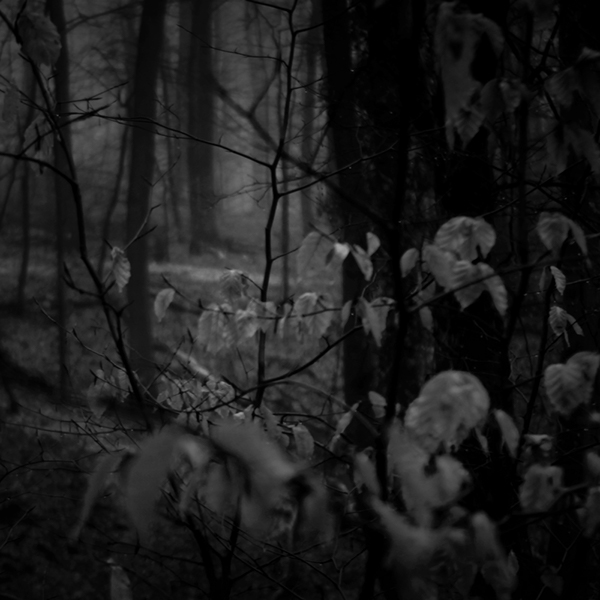
Dark Woods

“Dark Trees” by MonoStep

The knife of night
Spreads swirls of black and white
Over the slice of here.

The taste is bold:
A pinch of cold,
Spiced with primeval fear.

This little poem was first published in Candelabrum, a British print magazine that ran twice yearly from 1970 for some 40 years. Its editor, Leonard McCarthy, was a lone voice dedicated to keeping traditional poetic sensibilities of metrical and rhymed
verse alive.

The poem itself came from a nighttime ramble in the forests that cut through the residential areas of Chapel Hill, North Carolina. Hundreds of acres in town are undevelopable because of steep slopes, creeks and ravines. Where the night woods are unlit except by moon and stars, there are deer, possums, foxes, flying squirrels, owls… copperheads… poison ivy… The night is beautiful, but you can’t help moving through its darkness in a different state of being, compared with daylight.


Sonnet: “Windsor and Oakes, 1943”

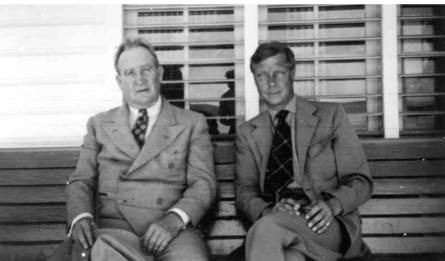
Oakes and Windsor

Sir Harry Oakes and the Duke of Windsor in Nassau

Edward, ex-king, pro-Nazi, was sent out
to the Bahamas for the War’s duration.
As Governor of our well-mixed-race nation
he joked with blacks but liked white rule and clout.
The wealthy Bay Street Boys, all white, agreed.
But one combative multimillionaire
felt equal pay for non-whites would be fair.
Canadian Harry Oakes disliked white greed.
Oakes pumped in cash for land, built an airport,
bought a hotel, hired coloured management,
then fought the U.S. Mob’s gambling intent.
Still, Bay Street had the Governor’s support.
Oakes wouldn’t change his mind, and he got killed.
Edward prevented justice. Whites were thrilled.

The 1943 murder in the Bahamas of Sir Harry Oakes–perhaps the richest man in the British Empire–was never legally solved. Having been found bludgeoned to death in his bed, with an attempt having been made to set the bed on fire, foul play might have been suspected immediately. But the top realtor in the Bahamas, Harold Christie (subsequently knighted) who had been sleeping in a guest bedroom two doors down from his host, hadn’t heard a thing and, discovering the body in the morning, tried to revive Oakes by getting him to drink some water.

Harold Christie first called his brother, and next the Duke of Windsor, rather than the police. The Duke of Windsor, being the Governor of the Bahamas, could have called the local police, or local British military forces, or brought in the CID, Britain’s Criminal Investigation Department. Instead he called two Miami detectives he knew (and who in later years were found to have Mafia connections), telling them “he wished to confirm the details of a suicide”. The Americans came, screwed up the crime scene, planted false clues, and then arranged for Oakes’ son-in-law to be charged.

But the evidence against the son-in-law, Alfred de Marigny, was so clearly fraudulent and the evidence against Christie and his brother was so strong that the Police Commissioner at the time refused to charge de Marigny. So the Duke of Windsor had the Police Commissioner transferred to Trinidad until the trial was completed, in order to prevent him from testifying.

One of the mysteries unresolved at the trial was matter of the four triangular holes in Oakes’ skull. Some form of local voodoo was suggested, but no one could think of anything specific that might have caused it. No one suggested it might have been a tool found on every boat in Nassau Harbour…

Oil drum bung wrench

Oil drum plug wrench

After one of the greatest legal defences of the 20th century de Marigny was acquitted and, although innocent and a British citizen, ordered deported. Unsuccessful attempts were made on his life in the next couple of years, as he detailed in his book A Conspiracy of Crowns.

Other books on the murder, two of which were called Who Killed Sir Harry Oakes?, initially failed to point a finger of blame. This was probably wise, as a couple of people who might have discovered unpleasant facts came to violent ends.

In 1950 American lawyer Betty Renner–a former Department of Justice lawyer who had done war crimes work in Japan–came to Nassau to gather evidence about the Oakes murder and speak to a potential informer. She was hit over the head, stripped half-naked, dragged over coral rocks and thrown head-first down a narrow well where she suffocated to death. Tree branches were cut and placed over the well. The autopsy concluded “there was no positive evidence of criminal attack but the possibility was still being investigated.”

In 1962 Dorothy Macksey, a 60-year-old white Bahamian secretary, was raped and murdered in her apartment some months after she told her employer she knew who had killed Oakes and was starting to write a book about it. Although it turned out she had been Harold Christie’s secretary in 1943, the Nassau police quickly determined there was no connection.

Books continue to be written about the Oakes murder. Perhaps the most complete and authoritative so far is John Marquis’ Blood and Fire, but the story is still dribbling out from those (apparently many) people who know the truth.

Oh, and by the way, my sonnet at the top was just published in Bewildering Stories, which I think is appropriate!

Sonnet: “Magnificent Young Thing”

You are the most magnificent young thing:
you bud, you blossom, fruit before my eyes,
kinetic artwork winning some great prize,
you move and flourish, and my heart takes wing.
I glory in you, as a countryside
enraptures one who loves his place of birth
and sees life blossoming, feels nature’s mirth
in fertile land the farmer takes as bride.
He loves his bulls and cows, his boars and sows;
sees orchards, beehives, pastures and is thrilled…
The piglets first, then the sow will be killed.
But beasts don’t know the fate of pigs and cows –
they know the farmer loves them, and that’s that.
And you don’t know you’ll age and run to fat.

This sonnet originally appeared in Snakeskin, for which George Simmers accepts a wide range of verse, formal or free, tender or cynical, objective or subjective – whatever catches his fancy. And this one is… well, it caught his fancy anyway.


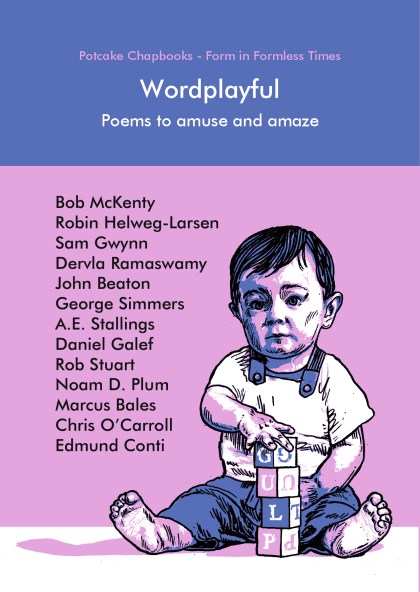
Launch: Potcake Chapbook 6, “Wordplayful”

06 Wordplayful

The sixth in the series of Potcake Chapbooks, ‘Wordplayful – poems to amuse and amaze’, is now beginning to wander around on both sides of the Atlantic (and hopefully further afield). This one is a little different from the earlier ones in the series: puns and puzzles, poems that can be read vertically or in reverse, wordplay in a variety of forms… but, yes, all formal poems, stuffed full of rhyme, rhythm and rich language.

Returning Potcake poets are Marcus Bales, John Beaton, Ed Conti, Daniel Galef, Chris O’Carroll, George Simmers, Alicia Stallings, Rob Stuart and myself; newcomers are Sam Gwynn, Bob McKenty, the unlikely Noam D. Plum and the elusive Dervla Ramaswamy. Mini-bios and photos for most of them are on the Potcake Poets page.

Alban Low has again provided all the art work, but he will now be taking a five or six month break to work on other things, especially the annual Art of Caring exhibition which opens in St George’s Hospital in Tooting in London in May, and moves to St Pancras Hospital in July – or at least it did in 2019. But Alban promises to re-engage with us in the early summer, by which time we may have more idea of what further Potcake Chapbook themes to pursue.

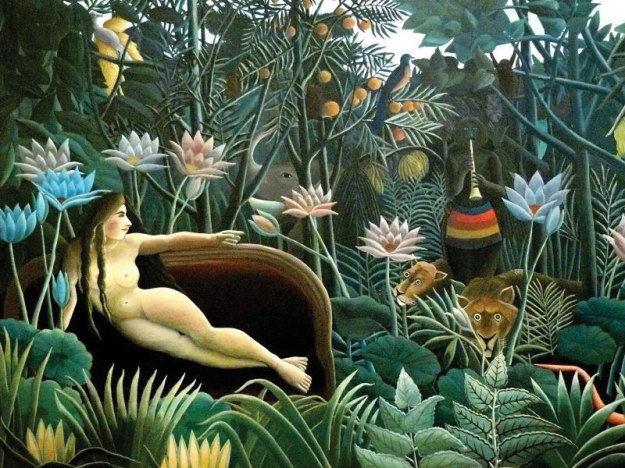
Poem: “On Rousseau’s Dream”

Rousseau, The Dream

Henri Rousseau, “The Dream”

I will be a flutist
standing in the trees
with the lions and tigers
stalking past my knees;

you, my naked lady
languid on a couch –
is the tiger standing,
or is it in a crouch?

Enormous tropic blossoms
open in the heat;
your hand is out toward me,
the pipe I play is sweet.

You have no need to answer
if things are as they seem.
The scene will last forever,
A moment, and a dream.

Henri Rousseau’s 1910 painting, The Dream, is one of his jungle-themed paintings, and hangs in one of the world’s greatest museums, MoMA, New York’s Museum of Modern Art. It is very powerful seeing the original – for one thing, it’s big – 2 x 3 metres. But my immediate inspiration for the poem was the Chaleur coffee mug of the painting – the colours are brighter (or they were, until I put the mug through the dishwasher too many times), and the flute player is more prominent.  

Technically the poem is… well, ekphrastic, because it’s about a painting, or at least a coffee mug. First published in The Lyric, it is a simple poem; perhaps colloquially you could say it is in hymn format. Regular quatrains. Three iambic beats to the line, with an extra syllable on the first and third line of each quartet. Just like

“From Greenland’s icy mountains
To India’s coral strand…”

But unlike a lot of hymns, only rhyming the 2nd and 4th lines. That’s just me being lazy. The painting itself is far better (of course!). My poem doesn’t even mention the elephant, trumpeting away in the foliage…