Category Archives: Robin Helweg-Larsen

Poem: “Any Tourist Island”

When the deep darkness dulls the dirty land
Before the moon meanders through the stars,
Invisibly the sea creeps up the sand
As night-blind drinkers lose keys to their cars.

Ah, the winter, with its delights and hazards! Escape it when you can, and explore fresh delights and hazards! That’s life, isn’t it.

This little poem was published in Lighten-Up Online, aka LUPO, the UK’s top light verse online magazine. Editor Jerome Betts carries on the work begun 12 years ago by Martin Parker: a quarterly issue of some 30 full-length poems, and as many again of the 4-to-8-line variety. Contributors include every current poet you have heard of who can write light engaging verse that rhymes and scans – unless, that is, they expect to be paid for their poems!


Sonnet: “Body Modding”

It starts with teeth, for even the healthiest:
Fillings put in, and “extra” teeth pulled out
Or realigned, the whole jaw moved about,
New faces for the kids of the wealthiest.
Tonsils, appendix, out. The stealthiest
Inject, use pills, every fluid reroute
With tourniquets, with tampons, condoms… flout
Flow, through to adult nappies. Atheist
As Science makes us with creative powers,
We add pumps, implants, radio, wires, chips,
Casually as tattoos, replacement hips;
Graft patchwork skin from humans, pigs, plants, flowers,
Joined in flamboyant Frankensteinish suture,
Racing against decay to cyborg future.

Like most of my sonnets, this was first published in Snakeskin. And like most of my sonnets, it has an existential theme. Ever since I was in high school (Stowe, a traditional British “public school” i.e. private school) and lost my belief in that Anglican school’s religion, I’ve been writing poetry about life and death. It’s a fascinating subject for those who are able to accept that death is inescapable except in religious fantasies, and science fiction, and the dreams of scientists out on the furthest limbs. Death may have proved universal so far, but so have the stories of the search for immortality in all the world’s cultures. Striving against death is part of what makes us human. And success will involve becoming something other than the humans that we are today.


Sonnet: “From Gombe’s Chimps”

From Gombe’s chimps to interstellar space
We will have war. Sanctioned by the Divine,
Moses first led the Jews to Palestine
Telling his tribesmen not just to displace
But to kill all, and wipe out without trace
Each adult, child, animal, tree, vine.
Genocide’s justified, cleansed ethics fine,
To get resources for your tribe and race.

Believers justify war’s bloody courses:
We’re right, they’re wrong, so therefore they’re to blame.
Conquer through war to grab and keep resources,
Aztecs or Spaniards, everyone’s the same –
Victory to the best guns, swords or horses,
And put defeated scriptures in the flame.

I’m pessimistic about the chances of humans being able to stop warfare. It seems built into the nature of social creatures – when you define your group, you are defining everyone else as not in your group. Then, when it’s a question of who gets limited resources, groups compete and the most ruthless groups tend to do the best.

This sonnet was originally accepted for publication by Quarterday in Scotland, but that excellent glossy magazine seems to have folded after a few issues and this poem was left hanging. Fortunately the Better Than Starbucks group is still competing successfully, thanks to the ruthless Anthony Watkins and Vera Ignatowitsch, and published it.

The sonnet is one of my favourites for several reasons: technically it is purer than most, rhyming ABBAABBA CDCDCD, though the volta between the two sections is weak (or possibly nonexistent). It deals with human nature, and the problems facing us as we move into the ever more complex future. And it highlights one of my personal religious irritations, that people can walk into a neighbouring territory, wipe out the inhabitants, and create a justifying fairytale of how the destroyers are the persecuted victims. Think of the Pilgrims and other British immigrants in America… think of the Jewish tribes coming into the Promised Land: when they captured a city outside the core area,

“when the Lord thy God hath delivered it into thine hands, thou shalt smite every male thereof with the edge of the sword:
But the women, and the little ones, and the cattle, and all that is in the city, even all the spoil thereof, shalt thou take unto thyself; and thou shalt eat the spoil of thine enemies, which the Lord thy God hath given thee.” (Deuteronomy 20:13-14)

But when they captured a city in the heart of the Promised Land,

“of the cities of these people, which the Lord thy God doth give thee for an inheritance, thou shalt save alive nothing that breatheth:
But thou shalt utterly destroy them; namely, the Hittites, and the Amorites, the Canaanites, and the Perizzites, the Hivites, and the Jebusites; as the Lord thy God hath commanded thee:
That they teach you not to do after all their abominations.” (Deuteronomy 20:16-18)

It is hard to see a future without warfare, when even the most revered “holy books” teach genocide and justify it as doing God’s will.


Sonnet: “Nigerian Scammers”

Nigerian Prince Scammer

Michael Neu, charged in “Nigerian Prince” scam

Nigerian scammers write bad, IN ALL CAPS,
Misspelling, losing credibility
With all except the stupidest of saps;
No fools themselves, it’s done deliberately.
No point in wasting time on those who doubt –
Everyone who responds is a clear fool:
Desperate to believe, they throw sense out –
Greedily they send cash, earn ridicule.
So @RealDonaldTrump tells barefaced lies
Unfazed by print or film-based evidence;
And fools give cash and votes as hypnotised,
Entrust the trickster with their confidence.
“Born of a virgin! Raised up from the dead!”
Faiths, too, tell huge lies – and religions spread.

This sonnet was originally published in Snakeskin. It’s key point is that the easiest people to take money off are those people who want to believe, and who demonstrate that overlooking the most blatant signs of fraud. Nigerian scammers filter for those people by making their emails deliberately implausible. 

And interestingly, not all Nigerian scammers are even Nigerian. Google the term and you may find Michael Neu, a Louisiana man in his late 60s who was charged with 269 counts of wire fraud and money laundering. Neu is a white American–but, yes, he apparently sent some of the money to his co-conspirators in Nigeria.

Sonnet: “When Konrad Lorenz”

Konrad Lorenz

Konrad Lorenz and tribe

When Konrad Lorenz studied how small fish
overcame lethal greedy tendency
by activating new dependency –
called love – to build a larger fulfilled wish,
he clarified the dynamic sweep and swish
of conquest across Earth’s wide land and sea
that gave to humans such ascendancy,
watched warfare grow as in a petri dish.

War against Other creates Family.
The nut of war that no hard mind can crack
if opened would show God Life Blaze Attack,
drying white hot deaths else left clammily.
So life says Outcompete! Outnumber! Breed!
Build Love of Tribe and State! Expand! Succeed!

This sonnet was originally published in Snakeskin. It’s pretty dense, but one of the things I love about sonnets is that they are just long enough to be able to cram in a full train of thought – here, that Konrad Lorenz‘ observations led him to propose that Love developed as a mechanism for allowing creatures to overcome their natural tendency to monopolise resources, so as to form a useful pair, family or larger community. Love then binds the community, and the selfishness and competition and dislike get focused further away on competing communities.

War would seem as inescapable as Love in this view, as there is always an inside group and an outside group. Developing feelings of universal Love has proved impossible for most humans despite thousands of years of morally uplifting sermons and commands. If your individuality is important, if you define yourself in contradistinction to some other or others (by age, sex, religion, ethnicity, language or whatever), if you are more comfortable with people you identify with than with people with whom you feel nothing in common – and all of these are natural and normal human attitudes – then both the desire to love and the desire to have your community grow at the expense of others seem inevitable.

Lorenz’ thinking led him to the Nazi Party in 1938. What he saw of the transportation of concentration camp inmates disillusioned him with Nazism by its inhumanity. At the end of his life he was active with the Austrian Green Party.

Triolet: “When Sunrise Gilds Your Hair”

You bring me back to when I once was young
When candles gild your eyebrows and your hair;
And to this rocky isle from which I’ve sprung,
You bring me back to where I once was young,
Birthplace of all the varied songs I’ve sung.
Now lying with you in the predawn air
You bring me back to when we both were young
As sunrise gilds your eyebrows and your hair.

This poem was originally published in The Rotary Dial, a Canadian monthly of 12 formal poems that ran some 50 issues before packing up in 2017. It was edited by two prize-winning Canadian poets, Pino Coluccio (winner of the Trillium Book Award for “Class Clown”) and Alexandra Oliver (winner of the Pat Lowther Award for her collection “Meeting the Tormentors in Safeway”). A very enjoyable magazine, I’m sorry it’s gone.

A triolet is strangely attractive form – it only has two rhymes, and several of the lines are required to repeat (though slight variations in the repetition are allowed, carrying the sense forward into new areas). So the rhyme scheme is ABaAabAB, with lines 1, 4 and 7 and lines 2 and 8 repeating, yet having fresh meanings as the little poem moves along.

In the case of this poem, being married for 25 years became enmeshed with returning to live in my home town after 40 years. The triolet’s structure of repetition suits a poem about development, ageing, memory, return. 

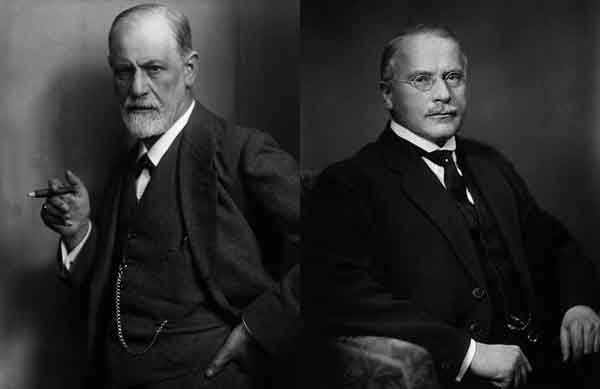
Poem: “Jung & Freud”

Freud and Jung

Freud and Jung

When sparkling springtime Doctor Young
And vernal Doctor Joy
Their arms, words, thoughts, widely outflung
The whole world was their toy.
But clottish schools their systems cloy
With death and dread and dung—
Oh miserable Doctor Joy!
Oh aged Doctor Young!

This little poem was originally published in The Asses of Parnassus, a string of occasional poems in Tumblr, focused on epigrams. “Short, witty, formal poems”, as editor Brooke Clark defines his search.

Jung & Freud is a frivolous piece, based on nothing more than trying to find flippant irony in the names of two of history’s best-known psychiatrists. It uses a bouncy little rhythm with lines of four feet followed by lines of three. The rhymes are simple, repetitive, reversed; the mirroring brings you back to where you started, but with everything reversed.

Sonnet: “The Quincentenarian Looks Back”

“Twentieth century”! – hard to think it through,
remember details in that distant view…
At her tenth birthday party, why’d I throw
her in the pool, all dressed up? Still don’t know.
Later we lived together overseas;
I had no clue of female hygiene needs,
never bought tampons, she used toilet paper.
Later she had a child. Mine? I wonder.
I’d left, we lived with others, better fit…
or did we marry, and have kids, then split?
I married once or twice, had kids, I’m sure.
Sent her too rude a joke, and heard no more.
We knew so little in those small young lives…
I miss you, though, my girl, or wife, or wives.

This science fiction sonnet, maybe a little flippant, was published recently in the Rat’s Ass Review edited by Roderick Bates. But what will happen when people live longer and ever longer? At what point will be stop bothering to remember things that were once essential to our lives? And the photo is a little flippant, too – if we start living to 500, it can only be because we can reverse aging. There may be a few eccentrics who choose to maintain their bodies as “old”, like in the photo, but I think most people would opt for something in the biological 20s.

And, really, it’s not so much a sonnet as 14 lines rhymed in pairs. And even the rhymes are pretty iffy. Oh well. But so long as you amuse or otherwise engage Rick Bates, you have a good chance of being published in RAR. His basic advice for anyone who has something they are dithering about sending out is: “Go ahead and submit.”


Poem: “4 God Limericks”

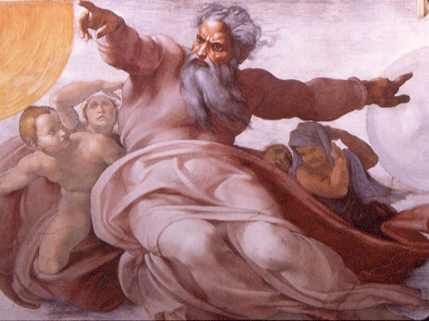
God

Christian idea of God

God made Heaven, earth, plants, people, fleas
In six days, and then rested at ease;
Then He thought: “In those stones
“I’ll hide dinosaur bones!!”
(He was always a bit of a tease.)

God looked out a Heavenly portal
And what He saw made Him just chortle:
Some dude, on a cross,
Claiming he was the Boss!
For his hubris, God made him immortal.

God, blessed with what one must call humour,
Decided to start up a rumour
That Himself as a dove
Came to Mary with love
And begat an Immaculate Tumour.

God saw how Religion had deadened
And said to His host, “Armageddon’d
“Look good on this lot”
For His plans were all shot
And His angels teased Him till He reddened.

As with the previous post, “4 Guru Limericks”, this was first published in Ambit No. 196, Spring 2009. (Hence the English spelling.) Like the previous post on gurus Buddha, Jesus, Marx and Hitler, you shouldn’t expect anything serious from a limerick. But this flippancy can have a purpose: by tackling a serious subject in a completely unserious way, you can undermine preconceptions and unthinking assumptions, and suggest alternative views and approaches.

With this in mind, consider the idea that religious belief correlates negatively with analytical thinking, but positively with moral concern and empathy. Research into this was summarized in The Independent in 2016, after more complete reporting in the science journal PLOS ONE. Limericks by their iconoclastic nature appear to be low in moral concern and empathy – but often it is some form of moral concern that has driven the limerick’s creation, although its rudeness and fresh viewpoint tends to favour analytical thinking over empathy.

Limericks are the clowns, the fools, of the poetry world. The best of clowns and fools go into stealth mode to make useful observations.

Poem: “4 Guru Limericks”

A wealthy young prince called Gautama
Loathed worship of Krishna and Rama;
“It’s inside you,” he said
But, once he was dead,
He was worshipped…. That’s interesting karma!

A radical rabbi called Jesus
Assumed if he loved us he’d please us;
Though he loved Mary Magdalene,
John, and small children,
His power was no match for Caesar’s.

A second-rate father, Karl Marx
Let his kids die while writing remarks
On Struggle and Might
And the duty to fight
For state-owned newspapers and parks.

Hitler, son of a half-Jewish bastard
Dreamed of occult power; Europe, aghast, heard
Race-hate psychodrama;
His unending trauma
Destroyed the whole state that he’d mastered.

I love limericks. Their elegant form, rhythmic and rhyme-rich, and their frivolous and chatty anapestic feet, allow you to be rude and insulting without causing more offence than a well-dressed wit who has had one too many drinks at a party. And as such, they say things with very few words in a way that is very easy to remember.

As for gurus… well, it’s always good to be able to listen to people with more experience and wisdom than oneself, but that doesn’t necessarily make them correct in their analysis, infallible in their prescriptions and proscriptions. They’re still only human, full of half-aware dreams and unconscious bias. And if they have swarms of devotees and go off the rails, well, they really go off the rails.