Category Archives: Magazines

Sonnet: “Bring on the Violins”

Bring on the violins, the falling leaves,
the wistful ending to a misty day.
The long game’s over and we ride away
to sunset Heaven that no one believes.
Our world is dying, yet here no one grieves:
Earth warms, seas rise, but Wall Street’s still in play…
and we ourselves are aging anyway.
We all face death, and there’ve been no reprieves.
And yet, and yet…robotics and AI,
gene therapy, unlimited life span,
promise an almost-here-and-now sublime,
an unknown life, with our old life gone by.
Trumpet a fanfare for the Superman,
music for dancing to the end of time.

This sonnet has just been published in the Amsterdam Quarterly, this spring’s issue being on the theme of Beginnings and Endings. That may be relevant for our Covid-19 catastrophe, but of course the theme was determined a year ago, and life and death have merely decided to smile on AQ ironically.

But we were all facing death before this latest coronavirus came along. As the saying goes, “Perfect health is simply the slowest rate at which you can die.” And interwoven with death is always new life, never an exact repetition of the old life and often dramatically better. The real issue is, will the new life come at the expense of the old, or can the old reform and regenerate itself, renew itself without needing to die? The avoidance of death has been the quest of religion and medicine since those disciplines (or that discipline) originated. It is great driver of culture, and the pot of gold at the foot of the never-quite-reached rainbow.

Technically this is a correctly structured Petrarchan sonnet, with an initial octave (in this case of existential doom and gloom) rhyming ABBAABBA, followed by a volta (in this case a reversal to hope) for the sestet that rhymes CDECDE.

The sonnet is a marvellous structure for expressing an argument in a compact way.
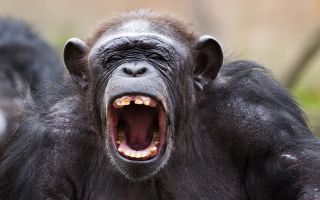
Poem: “The Ape in the Landscape”

Ape

I. THE APE

Like a chimp in a storm
we revert to a norm,
tree-swinging, branch-breaking,
stick-shaking, noise-making;
each baby’s a bomb
and their poise and aplomb
is a jack-in-a-box
full of fireworks and shocks,
full of colour, noise, light
full of anguish, delight,
rending, mending and tending,
exploiting, befriending,
and losing and finding,
abusing and minding,
both stupid and clever
but moving forever,
and dancing and singing
thought-prancing, word-winging,
for there’s no escape
from the million year ape,
from our in-built, inherited shape.

II. EXTERNAL LANDSCAPE

Somewhere a cleft cliff overhang, a cave
where we can stay dry, have a fire, and sleep;
though lions and bears growl outside, we feel brave–
Worship the Cave, Earth’s Deep.

Somewhere, huge in an open plain, a tree–
to climb for refuge, or the whole world see,
loving its fruit, leaves, wood, its shade from glare–
Worship the Tree, Earth’s fountain into air.

Somewhere a river ends where sea’s begun
and marshlands hold vast clouds of birds and fish,
and moon and tides swing like the winds and sun–
Worship the Waters, fresh, salt, both Earth’s gifts.

Somewhere the lightning strikes, a forest burns;
only one thing runs to it, not away,
one creature uses it to make night day,
cook food, stay warm, make tools, dance round and play–
Worship the Fire, on which being human turns.

Somewhere the landscape most potential shows:
more people, and some wary bird or beast;
by integrating them the human grows
into the landscape’s richness, Nature’s feast–
Worship the Richness with which life’s increased.

III. INTERNAL LANDSCAPE

Climbing, foraging and hunting,
running, loping, chasing something–
we were built for this.

An open field with a large tree,
a path towards a far blue sea–
the landscape we think bliss.

Keeping dogs, cats, birds as friends,
sharing food for no clear ends–
extended family.

Pigs, cows, sheep, ducks, geese as pets,
eating them without regrets–
that’s humanity.

And talking, dancing, running, singing,
friends and lovers, parents, children,
social, single, energetic,
meditative or frenetic…
we’re a tribal ape at heart,
without the wild we fall apart,
the ape’s our essence, end as well as start.

This poem was just published in Snakeskin, a very appropriate magazine from the point of view of its name, whose meaning is spelled out in the Credo in its first issue back in 1995:

The serpent whispered unto Eve:
“Think and feel; don’t just believe.”
This made the earth’s foundations shake.
We are the kindred of that snake. (…)

We trust no level tones; we ride
The roller-coaster of our pride.
The gonads’ rage, and yearning’s ache
Speak through the kindred of the snake.

In other words, no matter how much we develop our civilisation, no matter how much we tinker with our genetics, no matter how much we turn our decision-making over to AI, we need to acknowledge and work with – and enjoy – the primitive drivers and needs that are inherent in our physical and psychological makeup.

In other words (this time Nietzsche’s), “Stay true to the earth, my brothers,” even while looking forward to the coming of the Superman, for we are still part ape, and our coheret progress depends on our awareness of that, and of self-knowledge in general.

Technically the poem is a mish-mash of forms, somewhat casual in structure by formal standards, but rich in rhythm and rhyme. And this too is in keeping with Snakeskin’s Credo:

Nor shall we sit to lunch with those
Who moralise in semi-prose.
A poem should be rich as cake,
Say the kindred of the snake.

Enjoy! And my thanks to Snakeskin’s George Simmers.


Poem: “Post-literacy”

Yes, I know it seems unlikely
but I simply can’t help feeling
there’s an urgency to writing:
and in verse, and fluently.

We’ve our cultural traditions
that have coevolved with language
and each language has its verse forms
that are aids to memory.

It’s all fine that we are moving
to post-literate existence
where the things all talk and tell you
everything you need, you must

when the neon signs and fridges
can discuss with you their content,
you don’t need to read or count, if
their integrity you trust.

But embedded in our braincells
are the patterns of our language
and our need to think in patterns
drives our songs, makes us a folk,

it gives dub and rap and hip hop,
it drives rhetoric in speeches,
and the false anticipation
of the punchline of a joke.

With our cultures integrating
with AI and with each other,
we risk losing all our history,
all our culture and, what’s worse,

Our minds! So sing to babies,
have kids memorise long poems,
learn the maths of songs and music –
learn and read and write in verse!

This poem, recently published in Bewildering Stories, speaks to the heart of the matters that this blog deals with. Songs and music, rhyme and rhythm, dance, melodies, alliteration and assonance, structures and patterns and verses and choruses, are all part of something that is deeply human. It starts for us with the heartbeat in the womb, is nurtured with lullabyes and rocking, carries on through the songs and music and dance that are important to every generation of teenagers. It is such a fundamental part of our humanity that educational systems that ignore it are ignoring a powerful natural teaching tool.

The issue is larger than the fact that learning verse by heart is easier than learning prose by heart. Larger than the benefits of developing the ability to remember and memorise accurately. It is about recognising and nurturing those inner forces that make us human. It is about not letting our humanity be eroded by a culture that doesn’t acknowledge the rhythms that permeate our lives.

This blog is about the value of formal verse. Part of that value is poetry’s contribution to the sanity that comes from being a complete human being.

Technically this poem’s lines could be described as iambic tetrameter, which each fourth line being truncated and rhymed. But I prefer to read it almost as a patter song with each line composed of two tertius paeons, Short-foot-meter.svg Short-foot-meter.svg Long-foot-meter.svg Short-foot-meter.svg (each fourth line still being truncated and rhymed). In other words, it is designed to have the third and seventh syllables in each line be the ones with the greatest stress or emphasis. And that includes the rhymes, naturally.

Poem: “Rubble Faced”


Because my mind and life’s so active
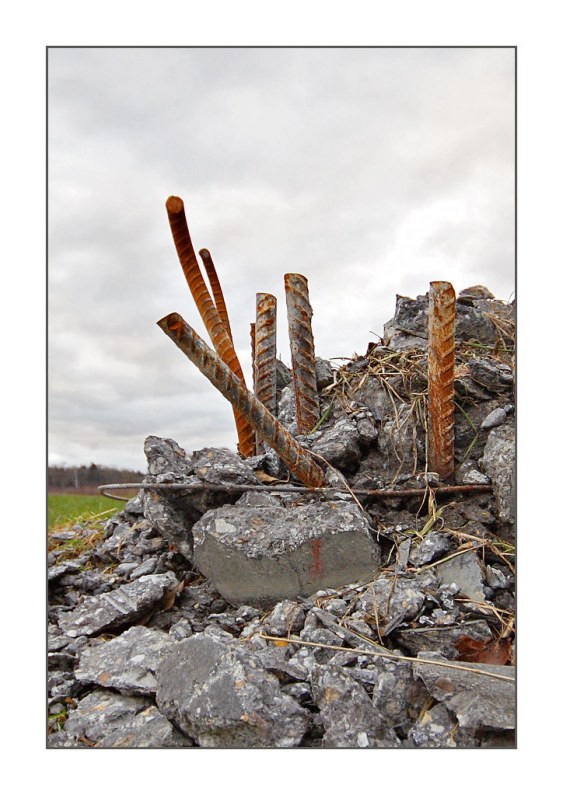
my face has been reduced to rubble.
I’m glad I think I’m unattractive –
it helps to keep me from worse trouble.

The Asses of Parnassus published this as their Valentine’s Day post in 2018. Thanks, Brooke Clark!

As for the truth of the poem, who knows. Maybe it applies to all of us to some extent, as we age?

Poem: “Seasonal”

When Mr. Warm-as-winter-under-the-covers
Meets Cool-as-summer-in-the-evening-breeze
He’ll spring to leave ideas they could be lovers –
But her thoughts fall away like leaves from trees.

First published in Lighten-Up Online.

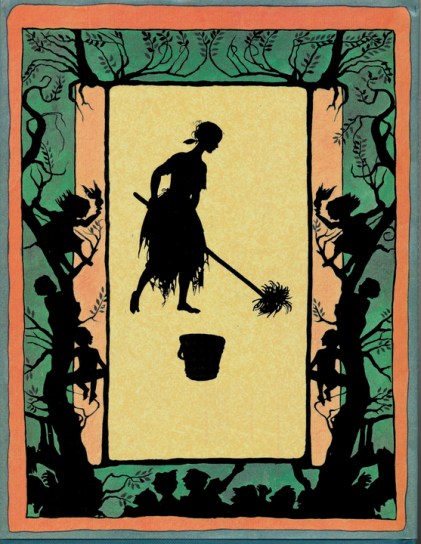
Poem: “Cinderella”

Cinderella

Cinderella, by Arthur Rackham

Every youngest daughter’s
Always Cinderella:
Never at the party,
Always in the cellar;

Tired of washing dishes,
Tired of sweeping dirt;
Wants to be a lady,
A scientist, a flirt;

Wants to travel world-wide,
Read till reading’s done;
Wants to be a mother,
Playing in the sun;

Wants to be the princess,
Beauty of the Ball –
Fairytales happen –
Watch, she’ll have it all!

First published in Lighten-Up Online (“LUPO”), the quarterly edited by Jerome Betts in the UK; republished in The HyperTexts, the massive anthology of poetry curated by Michael R. Burch. Good poets, both of them.

Poem: “The Knife of Night”

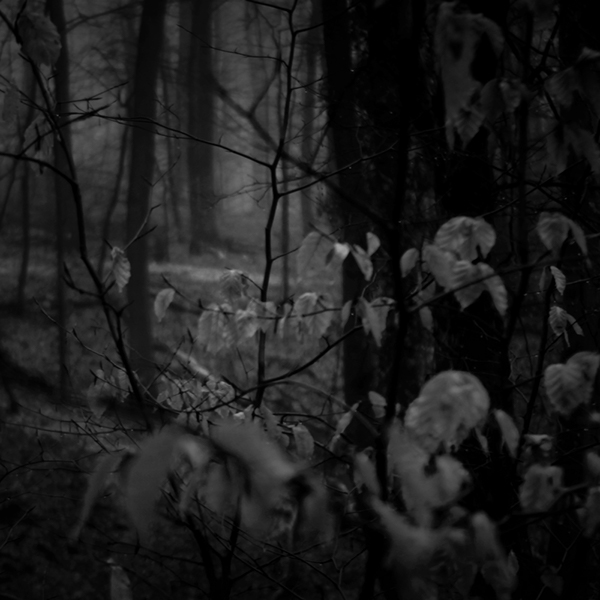
Dark Woods

“Dark Trees” by MonoStep

The knife of night
Spreads swirls of black and white
Over the slice of here.

The taste is bold:
A pinch of cold,
Spiced with primeval fear.

This little poem was first published in Candelabrum, a British print magazine that ran twice yearly from 1970 for some 40 years. Its editor, Leonard McCarthy, was a lone voice dedicated to keeping traditional poetic sensibilities of metrical and rhymed
verse alive.

The poem itself came from a nighttime ramble in the forests that cut through the residential areas of Chapel Hill, North Carolina. Hundreds of acres in town are undevelopable because of steep slopes, creeks and ravines. Where the night woods are unlit except by moon and stars, there are deer, possums, foxes, flying squirrels, owls… copperheads… poison ivy… The night is beautiful, but you can’t help moving through its darkness in a different state of being, compared with daylight.


Poem: “Implants and Biotech”

These are the scarecrow years
When frost tears glisten
On moulded and painted cheeks, beside ears
That no longer listen
Being more deaf than dead
And hearing only
Through implants and inputs into the head
Bonily, stonily.

Fears come while certainties lapse:
Fears of the dark,
Of abandonment, monsters, uncertainty. Now (perhaps)
Some Schrödinger’s shark
Divides cosmonaut, cryonaut, chrononaut
From those who can’t trust
The unknown, are ill-taught, or die without thought.

Thrive on change, or be dust.

This was first published in The Rotary Dial, an excellent online monthly of a dozen formal poems that was put out by two of Canada’s best poets, Pino Coluccio and Alexandra Oliver. Unfortunately The Rotary Dial folded in 2017 and Pino, after winning Ontario’s Trillium Book Award for ‘Class Clown’, disappeared off the radar.

The poem subsequently appeared in the fifth Potcake Chapbook: ‘Strip Down – poems of modern life’, where it has a page facing A.E. Stallings’ far gentler and more positive view of modern medicine, ‘Ultrasound’.

Poem: “Smoke on the Wind”

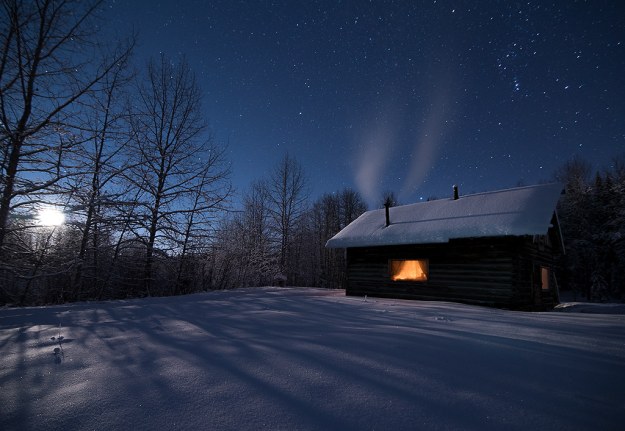
Smoke on the wind
And ice on the glass,
Leaves off the trees
And green off the grass;
Deer in the yard
And wood in the shed;
The end of the old
And a new year ahead.

This was published in The Orchards Poetry Journal, edited by Karen Kelsay Davies. The journal typically appears in June and December, and focuses on previously unpublished formal verse – though it accepts “finely wrought free verse”, and will also republish something that hasn’t appeared online in the past three years.

“Inspired by the small plot of apple trees near Cambridge, England, where writers have gathered for years with their books and pens,” Orchards naturally attracts the bucolic. I find something engaging about the idea of traditional verse in an online format… perhaps “apple” is the link… Anyway, as we bridge the past and the future: Happy New Year!

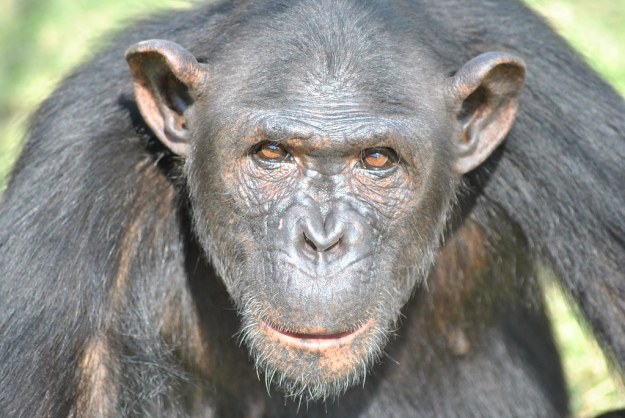
Sonnet: “From Gombe’s Chimps”

From Gombe’s chimps to interstellar space
We will have war. Sanctioned by the Divine,
Moses first led the Jews to Palestine
Telling his tribesmen not just to displace
But to kill all, and wipe out without trace
Each adult, child, animal, tree, vine.
Genocide’s justified, cleansed ethics fine,
To get resources for your tribe and race.

Believers justify war’s bloody courses:
We’re right, they’re wrong, so therefore they’re to blame.
Conquer through war to grab and keep resources,
Aztecs or Spaniards, everyone’s the same –
Victory to the best guns, swords or horses,
And put defeated scriptures in the flame.

I’m pessimistic about the chances of humans being able to stop warfare. It seems built into the nature of social creatures – when you define your group, you are defining everyone else as not in your group. Then, when it’s a question of who gets limited resources, groups compete and the most ruthless groups tend to do the best.

This sonnet was originally accepted for publication by Quarterday in Scotland, but that excellent glossy magazine seems to have folded after a few issues and this poem was left hanging. Fortunately the Better Than Starbucks group is still competing successfully, thanks to the ruthless Anthony Watkins and Vera Ignatowitsch, and published it.

The sonnet is one of my favourites for several reasons: technically it is purer than most, rhyming ABBAABBA CDCDCD, though the volta between the two sections is weak (or possibly nonexistent). It deals with human nature, and the problems facing us as we move into the ever more complex future. And it highlights one of my personal religious irritations, that people can walk into a neighbouring territory, wipe out the inhabitants, and create a justifying fairytale of how the destroyers are the persecuted victims. Think of the Pilgrims and other British immigrants in America… think of the Jewish tribes coming into the Promised Land: when they captured a city outside the core area,

“when the Lord thy God hath delivered it into thine hands, thou shalt smite every male thereof with the edge of the sword:
But the women, and the little ones, and the cattle, and all that is in the city, even all the spoil thereof, shalt thou take unto thyself; and thou shalt eat the spoil of thine enemies, which the Lord thy God hath given thee.” (Deuteronomy 20:13-14)

But when they captured a city in the heart of the Promised Land,

“of the cities of these people, which the Lord thy God doth give thee for an inheritance, thou shalt save alive nothing that breatheth:
But thou shalt utterly destroy them; namely, the Hittites, and the Amorites, the Canaanites, and the Perizzites, the Hivites, and the Jebusites; as the Lord thy God hath commanded thee:
That they teach you not to do after all their abominations.” (Deuteronomy 20:16-18)

It is hard to see a future without warfare, when even the most revered “holy books” teach genocide and justify it as doing God’s will.