Tag Archives: formal verse

Poem: “4 Guru Limericks”

A wealthy young prince called Gautama
Loathed worship of Krishna and Rama;
“It’s inside you,” he said
But, once he was dead,
He was worshipped…. That’s interesting karma!

A radical rabbi called Jesus
Assumed if he loved us he’d please us;
Though he loved Mary Magdalene,
John, and small children,
His power was no match for Caesar’s.

A second-rate father, Karl Marx
Let his kids die while writing remarks
On Struggle and Might
And the duty to fight
For state-owned newspapers and parks.

Hitler, son of a half-Jewish bastard
Dreamed of occult power; Europe, aghast, heard
Race-hate psychodrama;
His unending trauma
Destroyed the whole state that he’d mastered.

I love limericks. Their elegant form, rhythmic and rhyme-rich, and their frivolous and chatty anapestic feet, allow you to be rude and insulting without causing more offence than a well-dressed wit who has had one too many drinks at a party. And as such, they say things with very few words in a way that is very easy to remember.

As for gurus… well, it’s always good to be able to listen to people with more experience and wisdom than oneself, but that doesn’t necessarily make them correct in their analysis, infallible in their prescriptions and proscriptions. They’re still only human, full of half-aware dreams and unconscious bias. And if they have swarms of devotees and go off the rails, well, they really go off the rails.

Review: “Poems” by Ralph Hodgson

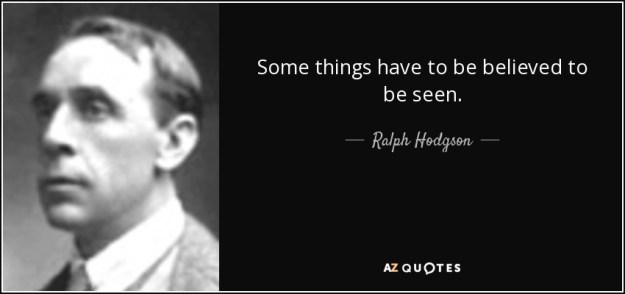
Ralph Hodgson

It is a little strange to think of Ralph Hodgson’s ‘Poems’, collected and published in 1917, being contemporaneous with Eliot’s ‘Love Song of J. Alfred Prufrock’ (begun 1910, published in Poetry in 1915), but there we are.

He was born in Yorkshire in 1871, the son of a coal miner or coal merchant. A champion boxer and billiard player, an actor in New York, an artist in London, he wrote most of his poems between 1907 and 1917. During the First World War he was in the Royal Navy, and then the British Army. In the 1930s he taught in university in Japan and was awarded the Order of the Rising Sun for his work in translating classical Japanese poetry into English. He then moved to Minerva, Ohio, living there until his death in 1962.

Hodgson was of the Georgian school – traditional, pastoral, occasionally longwinded, but often charming and memorable. Poems that I know and love in this collection include:

‘Time, You Old Gipsy Man’, with its simple, wistful philosophy:
“Time, you old gipsy man,
Will you not stay,
Put up your caravan
Just for one day?
(…)
Last week in Babylon,
Last night in Rome,
Morning, and in the crush
Under Paul’s dome;”

‘Eve’, with its lyrical portrayal of her seduction by Satan:
“Eve, with her basket, was
Deep in the bells and grass,
Wading in bells and grass
Up to her knees,”

‘Stupidity Street’, with the animal-lover and natural ecologist’s outrage:
“I saw with open eyes
Singing birds sweet
Sold in the shops
For the people to eat,
Sold in the shops of
Stupidity Street.

I saw in vision
The worm in the wheat,
And in the shops nothing
For people to eat;
Nothing for sale in
Stupidity Street.”

‘The Birdcatcher’:
“I lurk among the thickets of
The Heart where they are bred,
And catch the twittering beauties as
They fly into my Head.”

It’s not Eliot. But at his best, Hodgson is truly charming.

Poem: “On Rousseau’s Dream”

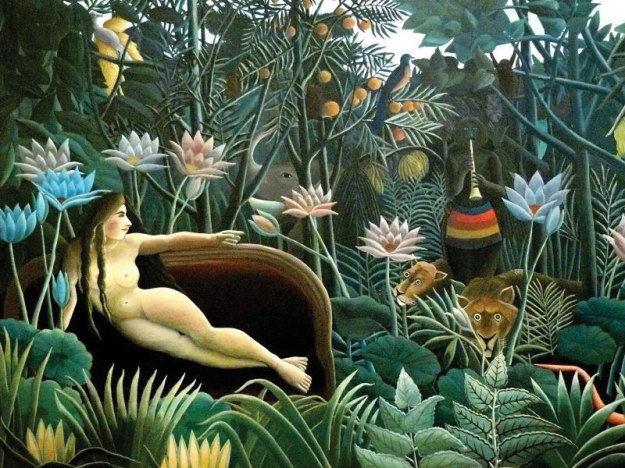
Rousseau, The Dream

Henri Rousseau, “The Dream”

I will be a flutist
standing in the trees
with the lions and tigers
stalking past my knees;

you, my naked lady
languid on a couch –
is the tiger standing,
or is it in a crouch?

Enormous tropic blossoms
open in the heat;
your hand is out toward me,
the pipe I play is sweet.

You have no need to answer
if things are as they seem.
The scene will last forever,
A moment, and a dream.

Henri Rousseau’s 1910 painting, The Dream, is one of his jungle-themed paintings, and hangs in one of the world’s greatest museums, MoMA, New York’s Museum of Modern Art. It is very powerful seeing the original – for one thing, it’s big – 2 x 3 metres. But my immediate inspiration for the poem was the Chaleur coffee mug of the painting – the colours are brighter (or they were, until I put the mug through the dishwasher too many times), and the flute player is more prominent.  

Technically the poem is… well, ekphrastic, because it’s about a painting, or at least a coffee mug. First published in The Lyric, it is a simple poem; perhaps colloquially you could say it is in hymn format. Regular quatrains. Three iambic beats to the line, with an extra syllable on the first and third line of each quartet. Just like

“From Greenland’s icy mountains
To India’s coral strand…”

But unlike a lot of hymns, only rhyming the 2nd and 4th lines. That’s just me being lazy. The painting itself is far better (of course!). My poem doesn’t even mention the elephant, trumpeting away in the foliage…

Poem: “Eva’s Trip”

Eva

(Poster for Prostitution Support Centre, Norway)

Some of the girls I know
Go to the University
Sit so pretty
Prissy
Kiss-kiss and cissy
With beautiful boys that they know
Friends to drink tea with
Chat with and be with
Feather-headed into the feather-bedded night.

Oh no, sweet Jesus, hear me. I scream.
Such a life of show
Is beyond what I dream.
Give me a man who I’ll never know
A man without feelings, without wrong or right
Without obligations
Except for the money.
Let him be cold and hard as the money
And the money as dirty and evil as me.
I can’t trust feelings, I never trust feelings
And I don’t care
That I can’t care…
I don’t dare.

Some of the girls that I’ve seen
Listen to that classy music, they sit
And play piano while they drink their tea.
That’s somewhere I’ve never been.
Cello! Piano!! What SHIT!

Sweet JESus CATCH me beFORE I SCREAM
give me ROCK, ROCK, give me ROCK oh give me ROCK
ROCK, give me ROCK, give me ROCK
blast my MIND let me DROWN give me SO much of ALL
that my HEAD and my BODy are FINally SOUND
give me ROCK, ROCK, give me ROCK, ROCK
give me ROCK rock ROCK rock ROCK, ROCK
DROWN me DROWN me, LET me go DOWN
aWAY
aWAY
aWAY.

Some of the kids from my school
Would sit down to a smoke, have a toke and cool down,
Drift round the town feeling cool.
Not me.

Some of the students I’ve seen
Trip out on acid, they want to expand.
They want to feel all that they can, and still more.
Not me.

Give me JUNK.
Give me the rush and the bliss of fuck-all.
Give me the unsatisfaction of life.
Give me the treadmill toward the next fix,
The stealing or whoring, the need, the despair
Of being whipped up an unending stair.
A problem of Now I can just about handle,
The safety in knowing tomorrow’s the same
And the whole problem, thank God, unthinkable,
Only the treadmill toward the next fix,
The fix of nothingness, of peaceful nothing.
And let me not think
LET me not THINK
Sweet JESus if I THINK even ONCE
I’ll SCREAM I’ll SCREAM I’ll SCREAM
I’ll DIE.

This poem was originally published in Ambit in the UK when the delightful Martin Bax was editor, and has been reprinted various times, most recently under the name “Eva’s Trip” by Bewildering Stories, edited by Don Webb and John Stocks.

I wrote the poem when I was living in Copenhagen at a time that there was a lot of concern about young people from across Europe running away to Denmark, especially to Copenhagen’s “Freetown Christiania”, and ending up in prostitution. A big newspaper investigation on the subject gave the pseudonym Eva to a teenager they interviewed, and I thought the name well-chosen for the combination of innocence together with the knowledge of good and evil that such people have.

Haiku: “Young Man”

Ageing Man in Mirror

(In the mirror)

Where’s the young man gone,
who lived in mirrors so long?
Putting old masks on.

This was published in Asses of Parnassus, a most worthy site for short verse, especially the flippant, frivolous or sarcastic. “Young Man” seems to be a theme I keep returning to, probably because I keep having birthdays. It’s easy enough to feel in your early 30s when you’re climbing a tree to pick fruit, or swimming, or reading; but a mirror may offer an unexpectedly different opinion.

Technically a loose sort of haiku, this poem meets the requirements of 5-7-5 syllables and the volta between lines 2 and 3, but hardly addresses a season and its sensibilities. The rhyme and near-rhyme of the three lines is not something required in Japanese, but seems to me to be necessary in an English haiku to make it a poem, i.e. to differentiate it from 17 syllables of prose written over three lines.

Poem: “Said Poor Mrs. Owen”

Wilfred Owen

(“Futility” by Robbie Kerr) 

Said poor Mrs. Owen
To her son Wilfred
Why must you always
Write of the trenches?
Why can’t you write
Like that nice Mr. Wordsworth
Of flowers?

Said Mrs. Picasso
To her son Pablo
Why must you always
Paint so distortedly?
Why can’t you paint
Like that nice Mr. Monet
Some flowers?

Because we don’t always
Create what we celebrate,
Sometimes we model the
Things that we’d like to change,
Things we don’t like, or just
Things that we think about –
Thoughts of ours.

This poem was published in The Road Not Taken – a journal of formal poetry that is edited by Kathryn Jacobs in connection with Texas A&M University at Commerce, TX.

Technically the poem lacks some aspects of what we tend to assume is “form”, notably extensive rhyme, alliteration or assonance. But each of the stanzas has the same seven-line form, with two stressed syllables in each of the first six lines and a shorter seventh line. The first two stanzas have virtually identical structure, though one deals with poetry and the other with painting, and the third stanza answers them. The last lines repeat and rhyme.

It is really the natural rhythm of the poem that allows it to be included in a journal of formal poetry. In the sense that “form” is any trick of verse that allows it to be remembered word for word, form can be a lot broader than some of the narrow definitions of formal verse.

Sonnet: “Unanswered”

The Afterlife – some Happy Hunting Ground?
Or Jesus, virgins, merging flesh and breath?
Or god of your own world, white-robed and crowned?
Or ghost? Rebirth? Just, please, no final death!

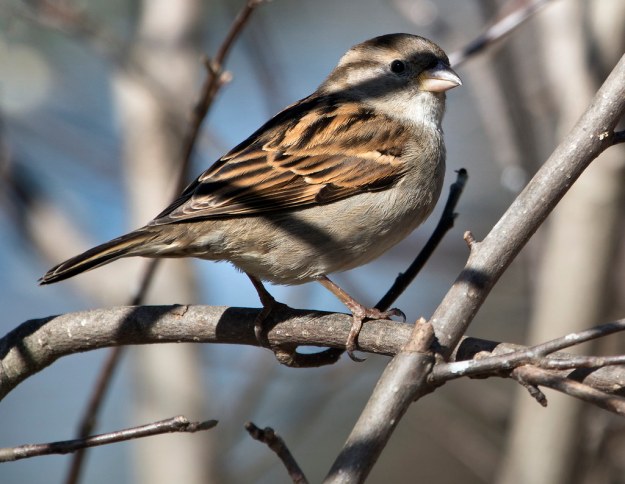
The sparrow through the Saxon hall at night –
Brief light and warmth, then cold obscurity.
Is this our life? But yet the bird in flight
lived in the dark, both pre and post. Do we?

Frogs, living in a buried water tank,
spend all their time in darkness. Then the lid
is lifted and sun shines into the dank –
lid down, light gone… but they live on, though hid.

We work and play throughout our brief day’s sun –
Day raises many questions – night, just one.

This sonnet was published in Snakeskin No. 265, edited by George Simmers. I write both religious and irreligious poetry as the muse suggests, but my own personal views are Fundamentalist Agnostic: “Nescio et tu quoque”, “I don’t know and neither do you.” The sparrow reference is to a passage in the Venerable Bede’s Ecclesiastical History of the English People which usually seems to resonate well.

Technically the sonnet is Shakespearean: iambic pentameter rhyming ABAB CECD EFEF GG. The three quatrains are each self-contained, but leading to the resolution (or lack of resolution) in the couplet. The last line is the strongest, which is always satisfying.

Poem: “Optimism”

Do you have a clear detection
Of an unexpired affection?
Are you reckoned to come second in her life?
Was there someone there before you?
Let it be, don’t let it bore you;
It’ll maintain her somewhat saner as your wife.

This little throwaway poem was recently published in Lighten Up Online. In my mind its value is not so much as a commentary on modern marriage, as an enjoyable way to string some rhymes together. I no longer have any idea what was on my mind when I wrote it.

Many poets would analyse this as written in trochees with lines of either four or six feet, the third line being

ARE you RECKoned TO come SECond IN her LIFE?

but to my mind the lines have only either two or three strongly accented syllables, with the third line being

Are you RECKoned to come SECond in her LIFE?

It is a short piece of patter, which is emphasised by the internally stressed rhymes of reckoned/second and maintain-her/saner. But that leads to a problem: there is a difficulty with the beginning of the last line, and it is hard to find a smooth flow.

Originally it read

‘Twill maintain her —

Archaic, said LUPO editor Jerome Betts, and requested a change for publication as

It’ll keep her —

I accepted this, not noticing that I was losing the rhyme with saner. So why not

It’ll maintain her —

Now the problem is that there is one syllable too many, and we don’t have a smooth flow from the previous line.

You’ll maintain her —, perhaps?

That gives a brand new problem, a subtle shift of meaning from the abstract “it” to the personal “you”, with a much more active sense of “maintain her” and even a suggestion of financial concern.

If it was just an oral presentation, you could probably slide by with

‘t’ll maintain her —

but is that acceptable, comprehensible, in print?

My operating principle with poetry is that there is always a solution. But in this case I haven’t yet found it. 

Poem: “Diatribe Against Unversed Poets”

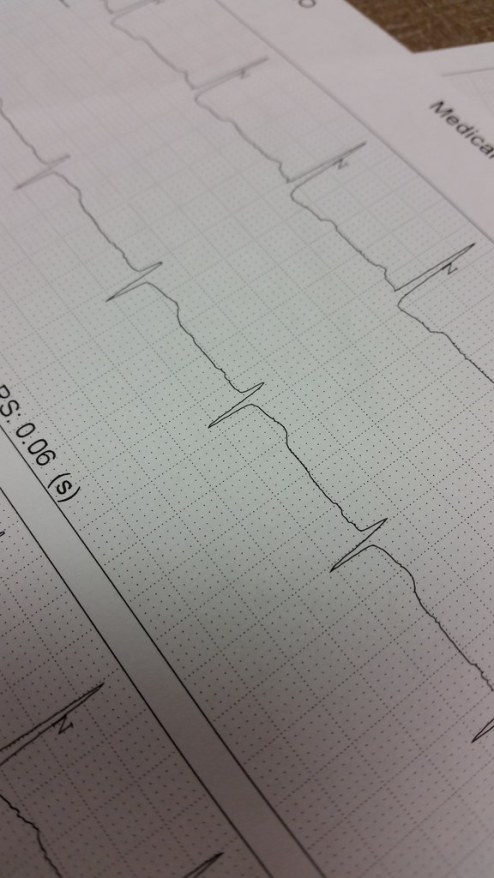
Heartbeat

Heartbeat – “June 1, 2014” by osseous

Ignoring clockwork towns and fertile farms
Tied to the sun-swing as the seas to moon,
They searched for verse in deserts without rhyme,
Lifted erratic rocks nonrhythmically
In search of poetry, then through the slough
Of their emotions hunted for a trail:

“The scent is cold. Its Spirit must have fled;
The body of its work, though dead,
Has been translated to some higher plane.
Look how the world’s translated verse
Comes to us plain—why can’t we emulate?
Then if the words themselves are unimportant,
If poetry in essence is idea,
And song is wrong,
Rhyme a superfluous flamboyance
(Like colour in Van Gogh),
Rhythm a distraction to the memoring mind,
Then we determine poetry’s true form is mime!”

While in the air the deafening blare
Confounds their silence everywhere:
Before our hearts began to beat
We were conceived in rhythmic heat;
So, billions strong, we sing along
For all the time, in time, our time, the song
Goes rocking on in rhythmic rhyme. Rock on!

This was originally published in Snakeskin, the monthly online poetry magazine that George Simmers has been putting out since the 1990s. He is receptive to a range of poetry, but as his original credo states: “Nor shall we sit to lunch with those / Who moralise in semi-prose. / A poem should be rich as cake.”

This poem is a rant against the vast amounts of blather that have been published as “poetry”, while anything showing formal verse skills was automatically rejected by most magazines over the past several decades. The rant is against poets who are “unversed”: “not experienced, skilled, or knowledgeable.” Why should they be given automatic acceptance, when the skilled were automatically rejected? It has been a bizarre half-century. It has a zeitgeist worth considering.

To focus on the United States as the cultural driver of the 20th century: it has always had an anarchic aspect, from the founding tenet of the right to “life, liberty and the pursuit of happiness” – though this mostly applied to adult white males who had a certain level of property. (By contrast, Canada’s constitutional requirement for the federal parliament to provide “peace, order and good government” has a social rather than individual orientation.) The US high water mark for good government came domestically with the FDR-and-Eleanor Roosevelt presidency, and internationally with the founding of the United Nations. But “big government” acquired such nasty connotations thanks to Stalin, Hitler and Mao that those who wanted the freedom to exploit others without legal restriction were able to make a case for “small government” and chip away at government structures.

In poetry, what started with Walt Whitman in the 19th century burst open a century later with Ginsberg, Ferlinghetti, and classrooms where every child was “encouraged in self-expression” without penalties for illiteracy. What was expressed became everything; the how became irrelevant. As in government, freedom from others’ rules became desirable in the literary and artistic community, and in the hippie movement, and the innovative business start-ups of Silicon Valley. There were undoubted benefits… but in literature, the suppression of poetic form was one of the less fortunate results.

Poetry takes different forms in different languages, but the forms all have the same desirable outcome: to make it easier to memorise and recite word-for-word. Alliteration, assonance, rhyme, metre – these are all useful tools for achieving this, along with less tangible tools such as fresh or startling imagery. Metre is viscerally important to us, because the mother’s heartbeat is the background to sensory development in the womb, and our own heartbeat and breathing rhythms continue throughout life. As humans we drum, we dance, we sing, just as we walk and run rhythmically, tap our fingers rhythmically when we are bored, teach small children to clap and sing, teach older children clapping and skipping games. Rhythm is built into us from before birth.

But rhythmic poetry didn’t die when it stopped being publishable. It just went into folk songs, blues, rock, country-and-western, musicals, rap, hip hop… Popular music let teenagers and adults continue to thrive with what they were not given by schools: rhythm and rhyme. This drive to make words memorable and recitable is part of who we humans are. So schools do best when they leaven “creative self-expression” with getting kids to learn things by heart, and to pay attention to the qualities that make it easy to memorise and recite.

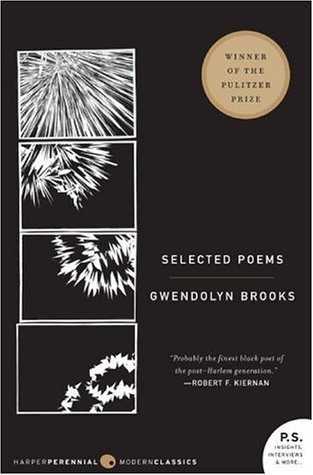
Review: “Selected Poems” by Gwendolyn Brooks

Gwendolyn Brooks

“Selected Poems” covers the best of Gwendolyn Brooks‘ poetry from her first book in 1944 up to 1963. It is vibrant, amusing, angry, always insightful – sometimes formal, sometimes experimental, always rich, always quotable. To me (with British sensibilities) this is some of the greatest American poetry of the 20th century, on a par with Frost and cummings.

Born in 1917, Brooks’ poetry dealt with the real world – the black experience in Chicago and throughout the US, with a strong feminine sensibility. The opening poem “kitchenette building” of her first book (A Street in Bronzeville, published 1945) sets the tone:

We are things of dry hours and the involuntary plan,
Grayed in, and gray. “Dream” makes a giddy sound, not strong
Like “rent,” “feeding a wife,” “satisfying a man.”

But could a dream send up through onion fumes
Its white and violet, fight with fried potatoes
And yesterday’s garbage ripening in the hall,
Flutter, or sing an aria down these rooms

Even if we were willing to let it in,
Had time to warm it, keep it very clean,
Anticipate a message, let it begin?

We wonder. But not well! not for a minute!
Since Number Five is out of the bathroom now,
We think of lukewarm water, hope to get in it.

Dreams and reality were both important in her upbringing. Her father had given up on medical school and become a janitor in order to get married and raise a family. Her mother was a school teacher and concert pianist. Reading and recitation were high priorities in the family, and Brooks started writing poetry very early. Four of her poems were published in a local paper when she was 11, and her mother encouraged her, saying ”You are going to be the lady Paul Laurence Dunbar.” Material was all around her, and she dealt with it unflinchingly. The second poem in the book was called, with deliberate irony, “the mother”. It begins:

Abortions will not let you forget.
You remember the children you got that you did not get,
The damp small pulps with a little or with no hair,
The singers and workers that never handled the air.

Children in several poems are trying to find their place in the world. “a song in the front yard” begins:

I’ve stayed in the front yard all my life.
I want a peek at the back
Where it’s rough and untended and hungry weed grows.
A girl gets sick of a rose.

Brooks uses form very fluently, choosing form for the mood of the poem: from near nursery rhyme:

Maud went to college.
Sadie stayed at home.
Sadie scraped life
With a fine-toothed comb.

to pages of iambic pentameter with frequent rhyme for “The Sundays of Satin-Legs Smith”:

Inamoratas, with an approbation,
Bestowed his title. Blessed his inclination.

And this first volume ends with a dozen sonnets, all with slant (or near) rhyme. It was wartime, but the issues of race were in the military as elsewhere. One of the sonnet titles barely needs its poem: “the white troops had their orders but the Negroes looked like men”.

“A Street in Bronzeville” brought her two years of Guggenheim Fellowships and other awards. Her second book, “Annie Allen” made her the first black writer to win a Pulitzer Prize in any category. Next came a novel, then a volume of poetry for children, and then in 1960 her third book of adult poetry, “The Bean Eaters”:

They eat beans mostly, this old yellow pair.
Dinner is a casual affair.
Plain chipware on a plain and creaking wood,
Tin flatware.

Two who are Mostly Good.
Two who have lived their day,
But keep on putting on their clothes
And putting things away.

And remembering…
Remembering, with twinklings and twinges,
As they lean over the beans in their rented back room that is full
of beads and receipts and dolls and cloths, tobacco
crumbs, vases and fringes.

Civil rights. Mississippi. Arkansas. That all became part of her poetry, moving on from Chicago. The lynching of Emmett Till. The integration of a high school by the Little Rock Nine. All in her poems:

And true, they are hurling spittle, rock,
Garbage and fruit in Little Rock.
And I saw coiling storm a-writhe
On bright madonnas. And a scythe
Of men harassing brownish girls.
(The bows and barrettes in the curls
And braids declined away from joy.)

I saw a bleeding brownish boy…

The lariat lynch-wish I deplored.

The loveliest lynchee was our Lord.

This review can’t even mention all the truly memorable poems in the book, but it covers enough to show Brooks’ range of styles and interests. She became increasingly active in black issues, and she continued to write and to rack up awards and prizes, up until her death in 2000. But this “Selected Poems” only goes up to 1963 because she left her original publisher, Harper & Row, in order to work with a black start-up publisher in Detroit. Not a problem. This “Selected Poems” alone places Gwendolyn Brooks in the very forefront of American poetry.