Tag Archives: poets

Villanelle: Janice D. Soderling, ‘The Poor Poet, Carl Spitzweg’

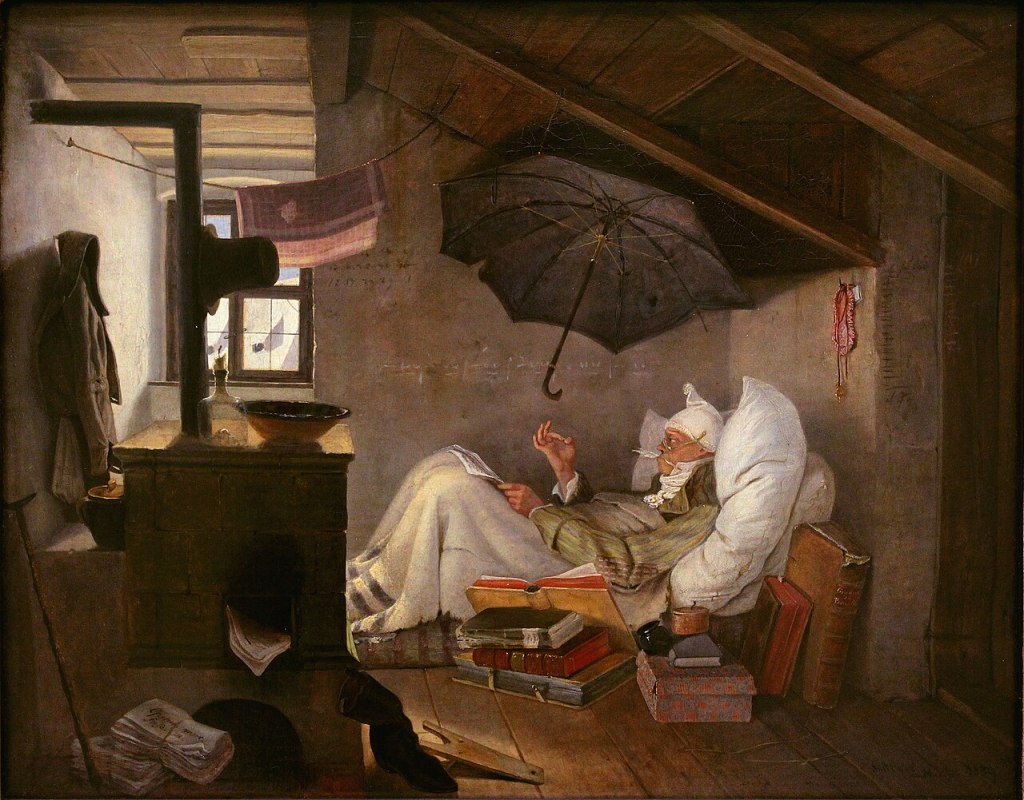
Der Arme Poet (best-known painting by Carl Spitzweg, 1839)

​​If only I can hatch a heartfelt rhyme,
(with thought and frowns, it can’t be very hard),
I’ll take my rightful place with the sublime.

O, gradus ad parnassum. One quick climb.
I’ll be crème de la crème and avant-garde,
if only I can hatch a heartfelt rhyme.

Top hat, cravat and walking stick meantime
are ready—attributes to reap regard.
I’ll take my rightful place with the sublime.

No more damp attic life; no fleas or grime.
My poem will be perfection—a petard!
If only I can hatch a heartfelt rhyme.

My peers will shout, “Alors, a paradigm!
Such lofty wit, a wise camelopard.“
I’ll take my rightful place with the sublime.

I bite my quill: crime, slime, Mülheim, enzyme.
The world will bow, salute and call me bard.
If only I can hatch a heartfelt rhyme,
I’ll take my rightful place with the sublime.

*****

Janice D.Soderling writes: ​​“This poem is ekphrastic, generated from a preceding work of art.
“About the mysterious motor that generates, I can say little. But no composer, artist, poet, sculptor works ex nihilo. Earliest man, woman, looked at their handprint, their footprint, and a thought rose, an urge to express what they felt – a primitive fear of death perhaps – and off they went to the caves to imprint their hand, or to carve a footprint on the rockface by the sea. A shout-out that Kilroy was here.
“We hear music in the babbling brook, in the sighing wind, in the raindrop falling from leaf to leaf and plopping into the puddle below. There is poetry in the emotive sounds we make and hear: tinkling laughter, cooing seduction, growling rage, keening sorrow, barking grief. Of such, language is made; of language Shakespeare made Sonnet 73.
“All art is imitation, from birdsong to a symphony orchestra, from the walking stride to the metrical verse. All art is a denial of death. Even the comic art.“

​​Janice D. Soderling is an American–Swedish writer who lives in a small Swedish village. Over the years, she has published hundreds of poems, flash and fiction, most recently at Mezzo CamminEclecticaLothlorien Poetry Journal and Tipton Poetry Journal. Collections issued in 2025 are The Women Come and Go, Talking (poems) and Our Lives Were Supposed to Be Different (short stories).

‘The Poor Poet’ was originally published in American Arts Quarterly, and republished in the current Well Met, where links at the bottom will take you to other poets in the issue.

Pic credit: Carl Spitzweg, The Poor Poet (via Wikipedia)​

​​​

Lucius Falkland, ‘Sado-Masochism in Love Poetry’

Some like being bound up in leather and chains,
Others spanked with a branch from a tree,
But the people who truly get turned on by pain
Try to publish their love poetry.

The poet’s not known for his psychical health:
He wrestles despair, feels dejected,
Not that undisposed to killing himself,
Yet his heart’s work so often rejected.

Sometimes he must wait the best part of a year,
Like an innocent man on death row,
To have to him confirmed his most terrible fear,
For they are quite sadistically slow.

And the hurt they inflict? It’s not over yet.
Do they find wounding fragile souls funny?
Some journals won’t read the submissions they get
If the poets don’t first send them money!

Once it’s crafted and honed and as good as Ted Hughes,
On a par with their earlier choices,
They find a new method to mentally abuse:
They prioritize “marginalised voices.”

The agony felt by a hounded young deer
As he’s brought to the ground by a predator
Is as nothing compared to the suffering and fear
That’s induced in a poet by an editor.

*****

Lucius Falkland writes: ‘I wrote this poem in response to having so many of my love poems rejected by poetry journals. It struck me as absurd that poets experience feelings, including being in love, so intensely that they must process them via poetry, they share the most poignant aspects of their lives with journal editors, and yet they know they will frequently get rejected. It is as though they write about their deepest pain only to then subject themselves to the further pain of being told that they can’t even express their pain properly. ‘Are we poets Masochists?’ I wondered. Naturally, this poem was itself rejected by a number of editors – with one even commenting that he was sympathetic to my plight. before rejecting it anyway because ‘it’s not the right fit’ (euphemism for ‘I don’t like it!) – before being published in The New English Review.”  

Lucius Falkland is the nom de plume of a writer and academic originally from London. His first poetry volume, The Evening The Times Newspaper Turned Into Jane Eyre, was published in 2025 with Exeter House Publishing. It can be purchased here.

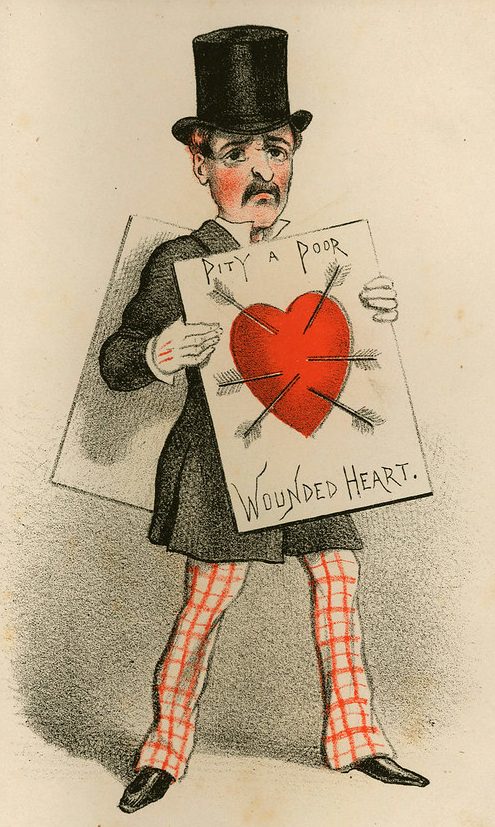
Illustration: “Vinegar Valentine – 05” by BioKnowlogy is marked with Public Domain Mark 1.0.

Pope Francis: ‘Dear Poets, Help Us Dream’ (excerpts)

Dear poets, I know that you hunger for meaning, and that is why you reflect on how faith questions life. (…) Poetry is open; it throws you into another realm.

In light of this personal experience, today I would like to share some thoughts with you on the importance of your service.

The first thing I want to express is this: you are eyes that see and dream. Not only do you see, but you also dream. A person who has lost the ability to dream lacks poetry, and life without poetry does not work. We humans yearn for a new world that we may never fully see with our own eyes, yet we desire it, seek it, and dream of it. A Latin American writer once said that we have two eyes: one of flesh and the other of glass. With the eye of flesh, we see what is before us; with the eye of glass, we see what we dream. Woe to us if we stop dreaming—woe to us! (…) Indeed, poetry does not speak of reality from abstract principles but rather by listening to reality itself: work, love, death, and all the little and great things that fill life. Yours is — to quote Paul Claudel — an “eye that listens.” (…)

I would also like to say a second thing: you are the voice of human anxieties. Often, these anxieties are buried deep within the heart. You know well that artistic inspiration is not only comforting but also unsettling because it presents both the beautiful realities of life and the tragic ones. Art is the fertile ground where the “polar oppositions” of reality — as Romano Guardini called them — are expressed, always requiring a creative and flexible language capable of conveying powerful messages and visions. For example, consider when Dostoevsky, in The Brothers Karamazov, tells the story of a little boy, the son of a servant, who throws a stone and hits one of his master’s dogs. The master then sets all the dogs on the boy. He runs, trying to escape the fury of the pack, but ultimately, he is torn apart under the satisfied gaze of the general and the desperate eyes of his mother.

This scene has tremendous artistic and political power: it speaks to the reality of yesterday and today, of wars, social conflicts, and our personal selfishness. It is just one poetic passage that challenges us. And I’m not only referring to the social critique in that passage. I speak of the tensions of the soul, the complexity of decisions, the contradictions of existence. There are things in life that, at times, we can’t even understand or find the right words for: this is your fertile ground, your field of action. (…)

That is what I want to ask of you today as well: go beyond the closed and defined borders, be creative, do not domesticate your anxieties or those of humanity. I fear this process of taming because it stifles creativity, it stifles poetry. With the words of poetry, gather the restless desires that inhabit the human heart so they do not grow cold or die out. This work allows the Spirit to act, creating harmony amidst the tensions and contradictions of human life, keeping the fire of good passions alive, and contributing to the growth of beauty in all its forms, beauty that is expressed precisely through the richness of the arts.

This is your work as poets: to give life, to give form, to give words to all that human beings live, feel, dream, and suffer, creating harmony and beauty. It is a work that can also help us better understand God as the great “poet” of humanity. Will you face criticism? That’s okay, bear the weight of criticism while also learning from it. But never stop being original, creative. Never lose the wonder of being alive.

So, eyes that dream, voices of human anxieties; and therefore, you also have a great responsibility. And what is it? It’s the third thing I want to say: you are among those who shape our imagination. Your work has an impact on the spiritual imagination of the people of our time. Today, we need the genius of a new language, powerful stories, and images. (…)

Dear poets, thank you for your service. Continue dreaming, questioning, imagining words and visions that help us understand the mystery of human life and guide our societies toward beauty and universal fraternity.

Help us open our imagination so that it transcends the narrow confines of the self and opens up to the entire reality, with all its facets, thus becoming open to the holy mystery of God. Move forward, without tiring, with creativity and courage!

I bless you.

*****

The above is a substantial excerpt from the letter Pope Francis wrote for the book ‘Verses to God: An Anthology of Religious Poetry‘ (published by Crocetti Editore), curated by Davide Brullo, Fr. Antonio Spadaro, and Nicola Crocetti. The letter is given in full in the Vatican News.

The Economist’s obituary for Pope Francis states he insisted on: “no papal cape or red slippers, just a plain white cassock and his ordinary black shoes. (…) No crest-embellished dinner plates, no new pectoral cross; he kept the iron-plated one he had worn, from 1998, as archbishop of Buenos Aires. No 12-room apartment in the Vatican, but a two-room suite in the guests’ hostel, and meals in the dining room with everyone else. “We’ll see how long it lasts,” said one aide, uncomfortable. It lasted until he died; for in Buenos Aires, after all, he had cooked his own meals and travelled by bus. (…) In Buenos Aires he was called the “Slum Bishop” for insisting that he, and his priests, should go out in the streets and on the margins. (…) He made a point of reaching out, feeding hundreds of homeless with pizza at the Vatican and adopting several families of Syrian refugees.”

So, sympathy for the homeless, and refugees… and poets. There’s a spiritual resonance to that grouping!

Photo: “The Inauguration Mass For Pope Francis” by Catholic Church (England and Wales) is licensed under CC BY-NC-SA 2.0.
Sonnet: Eric McHenry, ‘Lives of the Poets’

They rubbed two sticks together and made friction.
They made a fist but couldn’t make a hand.
Their dictionary wasn’t made of diction.
Their diction made them hard to understand.

Trying to make a poem, they made a list.
Trying to make the team, they made the choir.
They made up stories whose protagonist
would rub two sticks together and make fire.

Mistakes were made, and mixtapes to go with them.
They made a couch their bed and made their bed.
They tried to make a joke at the expense
of love and money. “Make me,” money said.
They made up stories but they made no sense.
They rubbed two cents together and made rhythm.

*****

Eric McHenry writes: “Strangely, I remember almost nothing about writing this poem, except that I was thinking about the etymology of ‘poet’ (‘maker’) and about the versatility of the verb ‘make’.”

‘Lives of the Poets’ was first published in Literary Matters.

Eric McHenry is a professor of English at Washburn University and a past poet laureate of Kansas. His books of poetry include Odd Evening, a finalist for the Poets’ Prize; Potscrubber Lullabies, which received the Kate Tufts Discovery Award; and Mommy Daddy Evan Sage, a collection of children’s poems illustrated by Nicholas Garland. He lives in Lawrence, Kansas, with his wife and two children.
Eric McHenry – The Waywiser Press
Eric McHenry, Author at The American Scholar

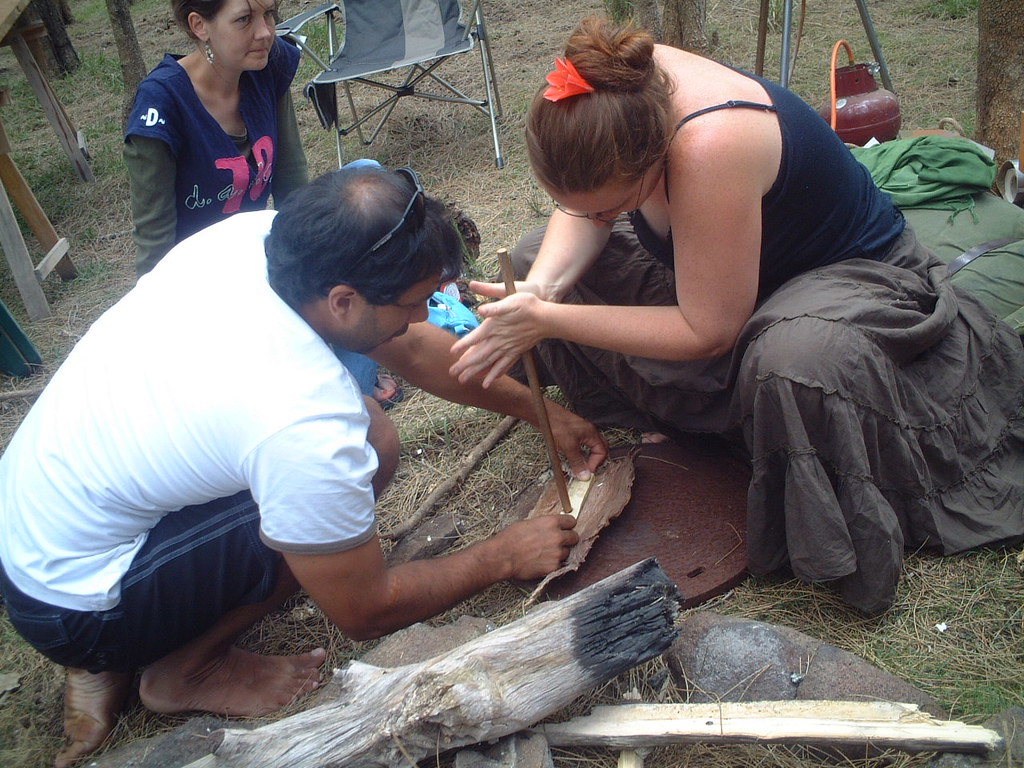
Photo: “Master Sacha twirls the fire stick” by one thousand years is licensed under CC BY 2.0.

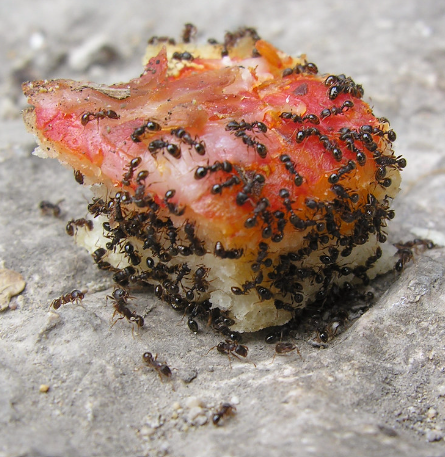
Short poem: RHL, ‘The Self-Aware’

Most insecure are those, the self-aware:
for all their acts are pointless and they know it,
scurrying like ants on an eclair…
the universe, indifferent, looks askance.

This insecure mode breeds defensiveness
and therefore arrogance, not least in poets
who know their work especially valueless…
even to other ants.

*****

I think we poets, who can be so rude about other people, need to be rude about ourselves occasionally. Not that the universe cares one way or the other.

This poem was originally published in The Road Not Taken – A Journal of Formal Poetry – in Fall 2016. Thanks, Dr. Kathryn Jacobs!

Photo: “Ant picnic” by dmcneil is licensed under CC BY-NC-ND 2.0.

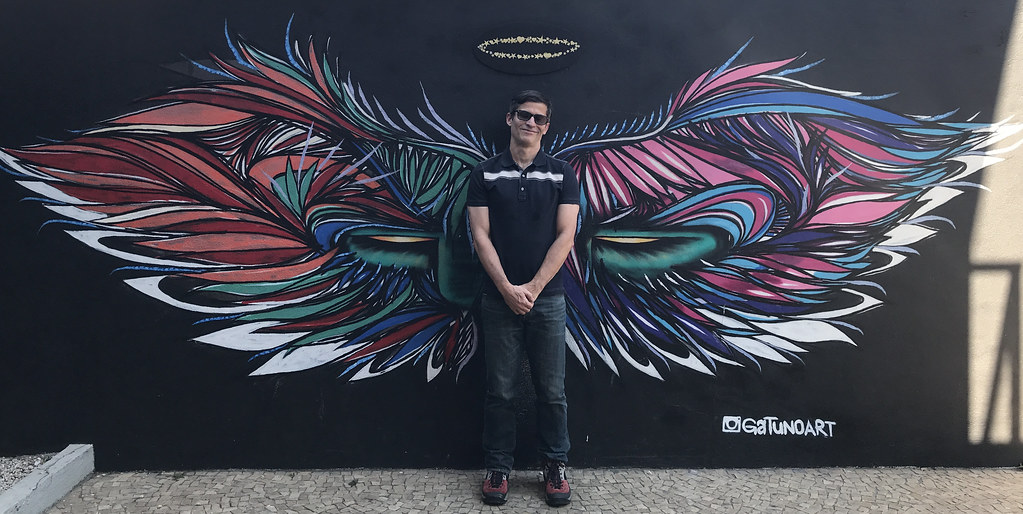
Poems on poets: ‘Maz’ Griffiths, ‘Lies’

Perhaps it’s true, as Twain implies,
statistics are the greatest lies
but point for point and size for size,
I think they tie for major prize
with poets’ modest little ‘i’s.

*****

Margaret Ann Griffiths, aka Maz, aka Grasshopper, was a British poet known almost exclusively for her online work. In his Preface and Personal Recollection, editor Alan Wickes speaks of her “belligerent modesty” and her lack of interest in the preservation of her verse. In 2008, after winning Eratosphere‘s annual Sonnet Bake-off with “Opening a Jar of Dead Sea Mud” and being praised by Richard Wilbur, she was a Guest Poet on the Academy of American Poets website, where she was hailed as “one of the up-and-coming poets of our time”.

Her poem ‘Lies’ speaks volumes (in a brief space) about the different types of modesty available to creative figures. Her reputation for wit, intelligence, astute criticism and kind-heartedness goes well with her wide-ranging subjects and diverse styles of verse. She was the preeminent English-language online poet of the early 21st century.

Her work was posthumously collected by fans and fellow poets in the 2011 ‘Grasshopper‘ from Arrowhead Press and Able Muse Press.

Photo: “Anjo da Vila, Vila Madalena, São Paulo, Brazil.” by ER’s Eyes – Our planet is beautiful. is licensed under CC BY-NC-SA 2.0.
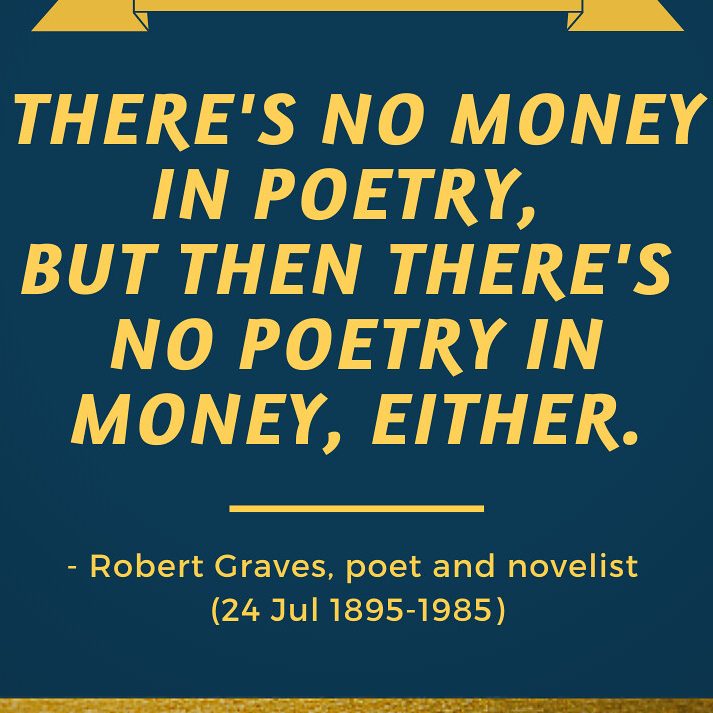
Donald Wheelock, ‘Worthless’

What a worthless thing is poetry,
a product of hard labor I adore;
a counter full of year-old toiletries
will always fetch considerably more.

A merchant selling gift-wrapped bars of soap
will come away with profit and some change;
to sell a poem is no more than a hope
washed clean of what a market can arrange.

Here! Have a few of mine, two for a quarter—
a dime apiece—the bargain of the day…
just name it! I’m here to take your order.
Hard labor’s even hard to give away.

*****

Donald Wheelock writes: “I have spent most of my life as a composer of vocal, orchestral and chamber music. While remuneration for song cycles and string quartets is not unknown, the profits from commissions and other sources rarely exceed the expenses. I don’t have to tell the readers of formalverse that the same could be said for formal poetry. The conceit of this poem has been an assumption in my life for many years, and equivalent jokes among composers of “classical concert music” are not uncommon.

I have written formal poetry for almost as long as I have music, often to set to music. But it is relatively recently that I have submitted it to journals welcoming formal poetry. Snakeskin (where this poem was first published), Able Muse, Think, Blue Unicorn, Rue Scribe, Quadrant and many other journals have published my poems. My first full-length book, It’s Hard Enough to Flywas published by Kelsay Books in 2022. My second book, With Nothing but a Nod, will appear in May of this year from David Robert Books.”

Photo: “A THOUGHT FOR TODAY from A.Word.A.Day” by Wordsmith.org is licensed under CC BY-NC-SA 2.0.
Quincy R. Lehr, ‘As if by chance’

When I looked at her, and when her lips
Pulled back to show her teeth, and when her voice
Broke into laughter, I could only think
Of moments that I’d pissed away, each choice
I’d left to others, and the careless slips
That landed me beside an empty drink.
That afternoon, I could have sworn I saw
A thinner, hopeful version of my face
Staring from behind her retinas–
Familiar, yes, the eyes, the skin, the jaw,
But in that instant somehow out of place.
It cast a knowing frown. The gravitas
Was overbearing. Nonetheless, we filled
The void with gossip, anecdotes and smut,
Comparing chatty journals–note by note.
Like poets, we dissembled in the rut
That each of us was in, our chances killed
By loss of nerve or failure to emote.
But still, a sneer could not have hurt me more
Than her clear laugh that sang of expectations
So long forgotten from a distant day
When youth still spread before me, and the poor
And pitiful attempts at explanations
Still lay in ambush, only years away.

*****

Quincy R. Lehr writes: “This poem was literally about running into a high school friend of mine by chance on the day I defended my doctoral dissertation (though that’s not in the poem). It’s funny how old I thought I was at twenty-nine.”

Born in Oklahoma, Quincy R. Lehr is the author of several books of poetry, and his poems and criticism appear widely in venues in North America, Europe, and Australia. His book-length poem ‘Heimat‘ was published in 2014. His most recent books are ‘The Dark Lord of the Tiki Bar‘ (2015) and ‘Near Hits and Lost Classics‘ (2021), a selection of early poems. He lives in Los Angeles.
https://www.amazon.com/Quincy-R.-Lehr/e/B003VMY9AG

Photo: “Young woman laughing” by Snapshooter46 is licensed under CC BY-NC-SA 2.0.
Poems on Poets: George Simmers, ‘Poets in Residence’

The Head was ambitious and nobody’s fool,
A big man, efficient, and proud of his school.

At the start of the term, as he sorted his post,
The item of mail that intrigued him the most

Was a piece puffing National Poetry Day,
Including a list of the poets who’d stay

And workshop and somehow persuade the whole school
That poets were ‘groovy’ and poems were ‘cool’.

‘Here’s status,’ the Head thought. ‘It’s not to be missed.’
The one problem, though, was the names on the list;

Though doubtless they wrote quite respectable stuff,
Not one of them, frankly, was famous enough.

His school deserved more; his ambition took wing,
And so he decided to do his own thing.

With his usual flair, and with chutzpah exquisite,
He invited the whole English canon to visit.

Geoffrey Chaucer came first, on an equable horse,
And Spenser, and Marlowe, and Shakespeare, of course

(Who was grabbed by the teachers of English, imploring
‘Do come and persuade the Year Nines you’re not boring.’)

Keats arrived coughing, Kipling marched vigorously;
Matthew Arnold began to inspect the school rigorously –

Which delighted the Head, who with pride and elation
Showed the bards of the ages today’s education.

Vaughan was ecstatic, though Clough was more sceptical.
Ernest Dowson puked up in a litter receptacle.

Coleridge sneaked off to discover the rates
Of an unshaven person outside the school gates;

Soon he’d sunk in a private and picturesque dream,
While Auden was ogling the basketball team.

Plath lectured the girls: ‘Get ahead! Go insane!’
Algernon Swinburne cried: ‘Bring back the cane!’

Dylan Thomas soon found the head’s cupboard of booze,
And Swift was disdainfully sniffing the loos.

And then the Head twigged, with a horrified jolt,
That something had sparked a Romantic revolt.

Shelley’d gathered the students out in the main quad,
And roused them to rise against school, Head, and God.

Byron soon joined him, and started to speak.
(He showed his best profile, and spouted in Greek.)

The bards of the thirties were equally Red,
And Milton explained how to chop off a head.

Decadents undermined all the foundations.
Surrealists threw lobsters and rancid carnations.

Pre-Raphaelites trashed the technology room
And the First World War poets trudged off to their doom.

Sidney with gallantry led a great charge in
(Tennyson cheering them on from the margin).

The Deputy Head, who was rather a dope,
Got precisely impaled on a couplet by Pope

(Who, while not so Romantic, was never the chap
To run from a fight or keep out of a scrap).

Then the whole solid edifice started to shake
As it was prophetically blasted by Blake. 

Soon the School was destroyed. Eliot paced through the waste,
And reflected with sorrow and learning and taste,

Which he fused in a poem, an excellent thing,
Though rather obscure and a little right-wing.

He gave this to the Head, who just threw it aside
As he knelt by the wreck of his school, and he cried

Salty tears that went fizz as they hit the school’s ashes.
He said words that I’d better imply by mere dashes:

‘——– Poets! ——– Poetry – rhyme and free verse!
Let them wilt in the face of a Headmaster’s curse!

‘Let poetry wither! How sweet it would be
If all of the world were prosaic as me!’

*****

George Simmers writes: “Poets in Residence was written as a celebration of National Poetry Day many years ago. Several people had been mouthing blandly off about how lovely poetry was in contrast to that horrible pop music young people listen to. Schools were being encouraged to give children a lot of poetry because it was nice and beautiful, and would make them nice. ‘Do these people have no idea of how incendiary the English canon is?’ I wondered. I really enjoyed demolishing the school around the ears of the pompous and pretentious head. I was a teacher at the time.”

George Simmers used to be a teacher; now he spends much of his time researching literature written during and after the First World War. He has edited Snakeskin since 1995. It is probably the oldest-established poetry zine on the Internet. His work appears in several Potcake Chapbooks, and his recent diverse collection is ‘Old and Bookish’.

Photo: “Ndélé highschool student in front of destroyed school” by hdptcar is licensed under CC BY 2.0.

Poems on poets: A.M. Juster, ‘Houseguests’

There’s shouting by the stove (it’s Plath & Hughes)
as Wystan wanders off without his shoes
and Whitman picks the Cheetos off his beard.
The Larkin-Ginsberg chat is getting weird,
for after countless hours they have found
bizarre pornography is common ground.
Old Emily is not
As prim as billed—
When Dylan finds her bra-hooks—
She is thrilled.
Poe strokes his bird; Pound yawps that it’s a pity
Eliot can’t sleep without his kitty.
Rimbaud’s on eBay searching for a zebra
while sneering, “Oui, a cheemp can write vers libre!”
The Doctor’s soggy chickens start to smell
and Stevens has insurance he must sell.
The readings are spectacular, I know,
but is there any way to make them go?

*****

A.M. Juster writes: “This was first published in The Barefoot Muse. It looks like I wrote it in late 2008, it was a fairly prolific period for me and I was a little distracted because I was running the Social Security Administration. (Under his unpoetic name, Michael J. Astrue. – Editor). I don’t remember now the impetus for writing it, but I did enjoy taking these poetry idols off their pedestals and making them more human for a few laughs. This was about the time that I finished my translation of Horace’s Satires in something like 1850 heroic couplets, so I was much more comfortable with the form than I would have been five years before. I think the imitation of Emily Dickinson’s form is an amusing touch for the reader, although it is undetected when I read it because it remains in rhymed iambic pentameter.”

A.M. Juster’s poems and translations have appeared in Poetry, The Paris Review, The Hudson Review and other journals. His tenth book is Wonder and Wrath (Paul Dry Books 2020) and his next book will be a translation of Petrarch’s Canzoniere, which W.W. Norton will release in early 2024. He also overtweets about formal poetry @amjuster.

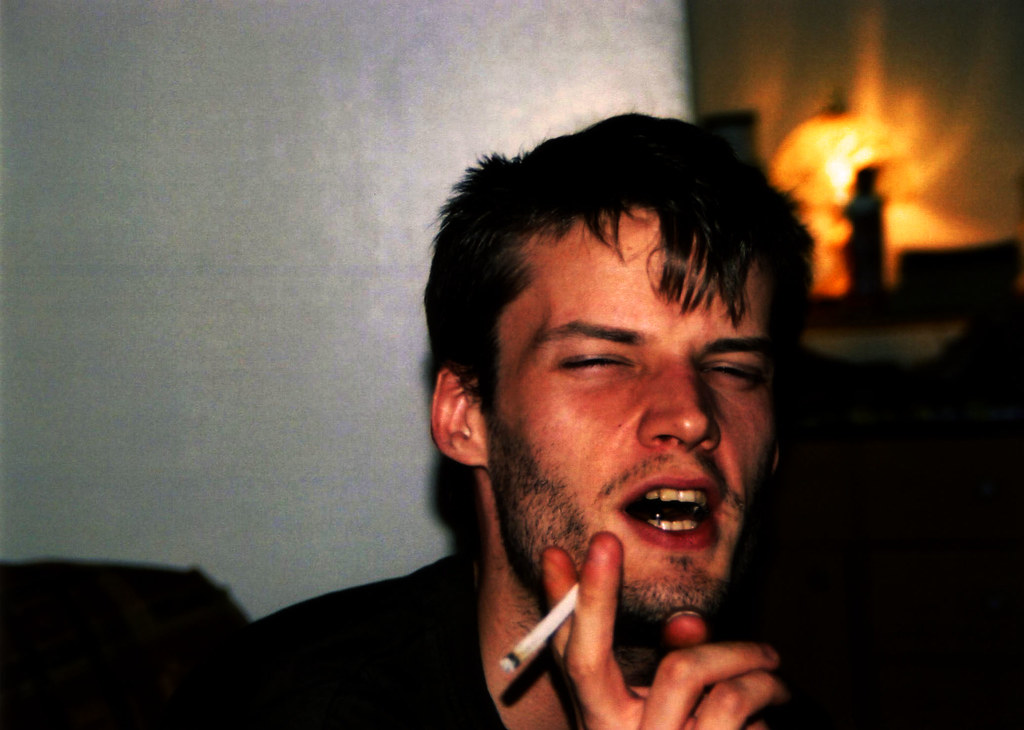
Photo: “me drunk & chris’_MMVI” by andronicusmax is licensed under CC BY 2.0.