Tag Archives: Robin Helweg-Larsen

Haiku: “Young Man”

Ageing Man in Mirror

(In the mirror)

Where’s the young man gone,
who lived in mirrors so long?
Putting old masks on.

This was published in Asses of Parnassus, a most worthy site for short verse, especially the flippant, frivolous or sarcastic. “Young Man” seems to be a theme I keep returning to, probably because I keep having birthdays. It’s easy enough to feel in your early 30s when you’re climbing a tree to pick fruit, or swimming, or reading; but a mirror may offer an unexpectedly different opinion.

Technically a loose sort of haiku, this poem meets the requirements of 5-7-5 syllables and the volta between lines 2 and 3, but hardly addresses a season and its sensibilities. The rhyme and near-rhyme of the three lines is not something required in Japanese, but seems to me to be necessary in an English haiku to make it a poem, i.e. to differentiate it from 17 syllables of prose written over three lines.

Poem: “Said Poor Mrs. Owen”

Wilfred Owen

(“Futility” by Robbie Kerr) 

Said poor Mrs. Owen
To her son Wilfred
Why must you always
Write of the trenches?
Why can’t you write
Like that nice Mr. Wordsworth
Of flowers?

Said Mrs. Picasso
To her son Pablo
Why must you always
Paint so distortedly?
Why can’t you paint
Like that nice Mr. Monet
Some flowers?

Because we don’t always
Create what we celebrate,
Sometimes we model the
Things that we’d like to change,
Things we don’t like, or just
Things that we think about –
Thoughts of ours.

This poem was published in The Road Not Taken – a journal of formal poetry that is edited by Kathryn Jacobs in connection with Texas A&M University at Commerce, TX.

Technically the poem lacks some aspects of what we tend to assume is “form”, notably extensive rhyme, alliteration or assonance. But each of the stanzas has the same seven-line form, with two stressed syllables in each of the first six lines and a shorter seventh line. The first two stanzas have virtually identical structure, though one deals with poetry and the other with painting, and the third stanza answers them. The last lines repeat and rhyme.

It is really the natural rhythm of the poem that allows it to be included in a journal of formal poetry. In the sense that “form” is any trick of verse that allows it to be remembered word for word, form can be a lot broader than some of the narrow definitions of formal verse.

Poetry Resource: “SF&F Poetry Association”; Sonnet: “On a Dead Spaceship”

Spaceship

(“Golconda Uranium (2012)” by Alexey Kashpersky)

On a dead spaceship drifting round a star
The trapped inhabitants are born and die.
The engineers’ broad privileges lie
In engine room and solar panel power.
The fruit and vegetables and protein coops
Are run by farmers with genetics skills:
The products of their dirt and careful kills
Help service trade between the several groups.
Others – musicians, architects – can skip
Along the paths of interlinking webs.
Beyond these gated pods that the rich carve
For their own selves (but still within the ship),
In useless parts, are born the lackluck plebs.
Heard but ignored, they just hunt rats or starve.

This sonnet was published in Star*Line, the official journal of the Science Fiction & Fantasy Poetry Association, a quarterly edited by poet and English prof Vince Gotera. Each issue contains a vast diversity of sf&f poetry. Not much of it is formal, but that is all part of the diversity which is appropriate to its genre.

So a sonnet is fine. And this one, like so much sf, is a metaphor for Earth today: circling the Sun, carrying highly unequal societies.

Technically, it is a sonnet to be sneered at by purists: it rhymes ABBA CDDC EFGEFG, the second quartet failing to rhyme with the first, making it a flawed Petrarchan sonnet. In addition, rhyming “star” with “power” is a bit of a stretch, one syllable against two, and none of them sharing quite the same vowel… Oh well, it’s only Science Fiction…

Poetry Resource: “Shot Glass Journal”, Poem: “In the Metal Box”

You sit in the humming metal box
And the unlikely landscape rolls
Beneath you in its crumpled seas and rocks
Seen from some miles above on long papyrus scrolls.

This little poem was recently published in Shot Glass Journal, whose motto is “… brevity is the soul of wit …” Accepting only short verse (although “16 lines or less” seems overly generous for “short”) in either free or form, it is remarkable for an American institution in reserving half its space for non-US poets. In the current issue, the left-hand column of 21 US poets is balanced by the right-hand column of 21 poets from Australia, the Bahamas, Canada, India, Ireland, Israel, New Zealand, South Korea, Turkey and the UK. This in itself adds richness and interest to the journal, all the more tasty and accessible in a short-form environment.

Normally edited by Mary-Jane Grandinetti, the current issue (#29) is guest-edited by poet R.G. Rader, the poet and playwright who founded Muse-Pie Press. Muse-Pie Press publishes Shot Glass Journal, as well as two other idiosyncratic magazines, Bent Ear Review of spoken poetry (audio or video submissions only, naturally) and the fib review of Fibonacci poetry. All are open to both formal and free verse.

Technically, this might or might not be a “throwaway poem”. That’s how I would describe it, meaning just a casual thought in verse; but on the other hand some people use the term to mean hand-written thoughts (usually not well-formed) on scraps of paper left behind on public transit or in the park. This one has a bit of form: rhyme, meter, and the last two lines lengthening in imitation of the endlessness of air travel and of the landscape that is being flown over.


Sonnet: “Death Will Be Harder Now”

“trying to sneek a peek” by lastbeats 

Death will be harder now, as, year by year,
We solve the clues of immortality:
Emotions sink to animality
As false hopes tighten screws of desperate fear.
Hormone control will make age disappear—
After false starts, most horrible to see—
But those already old must beg to be
Frozen for the genetic engineer.
While war, starvation, pipe Earth’s gruesome jigs,
Successful businessmen will fight to gain
Some dead teen’s body, to transplant their brain,
The already-old beg to be guinea-pigs.
Children, look back, hear our despairing cry:
We bred immortals, but we had to die!

This sonnet was originally published in the British quarterly Ambit in 2007, back when the amazing pediatrician and novelist Martin Bax was editing it and accepting formal verse. Perhaps the best-known piece Martin published was J.G. Ballard’s “The Assassination of John Fitzgerald Kennedy Considered as a Downhill Motor Race”…

But although the poem’s subject-matter seems current, it dates from 1982 when I was first becoming aware of cryonics and the speculative thinking around genetics and nanotechnology. I believe if a person is truly aware of their surroundings, they are going to be aware of both their historical context and their possible science fiction futures. Otherwise, to repeat, they aren’t truly aware of their surroundings.

As Heraclitus said, “The only constant in life is change.” He couldn’t have imagined our present world. The rate of change is accelerating. I doubt anyone today can imagine the world a hundred years hence.

Poem: “Agenda for a Political Career”

Help the peaceniks
With their cut-backs
To the Army,
It’s fulfilling;

Once elected,
Buy cheap arms stocks,
Start a war and
Make a killing.

This poem was originally published in Lighten Up Online, edited by Jerome Betts. I dislike war, but even more I loathe “chicken hawks“, those who personally avoided combat when their country called them up but who later in their careers advocated war and made a fortune from it. That includes a lot of American politicians.

Good guys: Eisenhower and his military-industrial complex warning. Kennedy, assassinated when he was trying to pull US troops out of Vietnam. Jimmy Carter. All military men who understood war.

Total jerks: Johnson, ramping up the Vietnam war while everyone was distracted by the Kennedy funeral. Kissinger even more than Nixon. Cheney even more than George W. Bush. Trump. Chicken hawks.

The US doesn’t have a monopoly on avaricious politicians. The UK’s Tony Blair has been rewarded by the world of oil and wars to the extent of acquiring an estimated $90 million and a property portfolio worth $37.5 million in the first eight years since leaving office (i.e. 2007-2015).

Poem: “Roughing It In Europe”

One two three four
Is OK, but you need more:

Un deux trois quat’
If you want a welcome mat

En to tre fire
With the krone getting dearer,

Bir iki uç dirt
Selling off your jeans or shirt

Wahid zoozh teleta arba
In a cafe by the harbour

Üks kaks kolm neli
For some food to fill your belly;

Jeden dwa trzy cztery
Language may be shaky, very,

Uno dos tres cuatro
But they’ll love you if you’re up to

Eins zwei drei vier
Trying freely, laughing freer.

This poem, more fully titled “(On the value of learning languages, when) Roughing It In Europe”, was originally published in Unsplendid, actually a splendid magazine that unfortunately has been quiet for the past couple of years. The poem dates back to my early hitchhiking days, when I was based in Copenhagen but wandering around Europe, North Africa and North America. My experience was that you could wander into any country without any plans, prior contacts or knowledge of the language, and survive so long as you quickly learned to say Yes, No, Please, Thank you, Hello, Goodbye and to count from zero to ten – and so long as you smiled, and were comfortable being laughed at for all kinds of mistakes. Case in point: the word “zoozh” that I learned for “two” in Morocco won’t get you very far in most Arabic-speaking countries… So it goes.

Technically, this poem written in a simple form, 11 rhymed couplets, four feet to a line. The second line of each couplet has mostly trochaic feet (i.e. with two syllables, a stressed or accented one followed by an unstressed one). But the first line of each couplet is simply counting out 1-2-3-4 in different languages, and therefore the feet vary with the words of the language. But as we are used to counting to four in a steady rhythm, everything sounds rhythmic regardless of the number of syllables.

So this shows another type of “form”: each couplet is structured the same in the sense of the first line counting 1-2-3-4, always in a new language, and the second line having four feet and rhyming with its first line’s “four”. And therefore the poem has a “nonce” form – I created this form for this specific poem; it was created “for the nonce”.

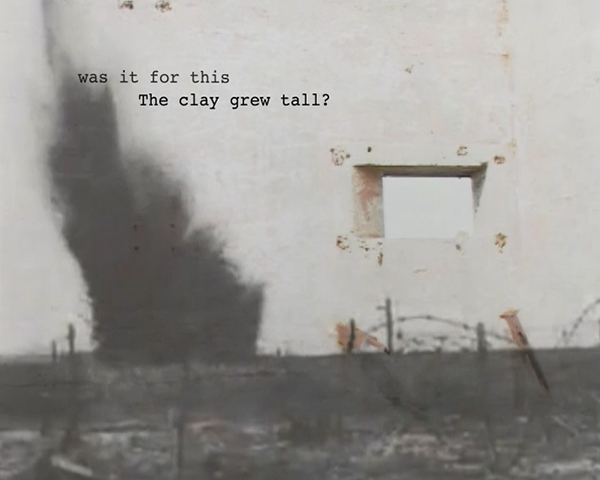
 

Sonnet: “And Then You Die”

And then you die. So what have you achieved?
Your house, your place of work, both turn to dust.
You’re honoured? But who’s on a marble bust
none knows or cares, or if the honour’s thieved.
You cheated? Centuries later, none’s aggrieved.
You fought for Freedom? But in history’s dust
no war is seen as necessary or just.
You were a saint? None cares what you believed.
Why all this striving, more than to survive?
Millennia hence a random rubbish heap
will be more studied than your claimed success.
So find a sunny sea, be calm, alive,
swim, then float on your back and fall asleep.
Life can be no more perfect; death no less.

This sonnet was published in Snakeskin a couple of weeks ago. I was very happy with its formal Petrarchan rhyme scheme, until I suddenly noticed, reading it for the umpteenth time, that I had used the word “dust” twice in the rhymes. Given the enormous number of alternatives I could have chosen from, I’m a little embarrassed. All I can say is, the word just seemed so natural, in both places…

But, in the spirit of the poem, so what? The swimming is lovely today!

Poem: “I Started Out Alone”

I started out alone
with no numbers and no words.
The people gave me food and clothes.
I loved the sun and birds.

And when I reach the end,
numbers and words all done,
have to be fed and dressed again,
I’ll love the birds and sun.

This little poem was published recently in Bewildering Stories, and I like it for a couple of reasons: its simplicity (echoing the simplicity of the states of beginning and end of life, the simplicity of the basics of being human); and its completeness – it covers an entire life, and I can’t think of more words that could be added; and the formality, not only of the simple rhythm and simple rhymes, but of the structure, the line-by-line echoing of the beginning of life in the end of life.

For all these reasons it is an easy little poem to remember and recite, and that is satisfying in itself.

New Poem: “Modern Cars”

So, following up on the previous post about Lighten Up Online, I get my own short, light things in there once in a while. Tucked in as one of the Seven Sixes, in the current issue I have “Modern Cars”:

Dealing with the modern automobile
is like a farrier fixing a steering wheel.
Forget your happy thrills
with metal tools, familiar skills.
This is no horse and carriage.
Just take it to a garage.

Yes, my American and Canadian friends, that last word rhymes… at least in the UK… at least to some people. I suspect that’s one of the reasons I wrote the poem (together with expressing the futility of trying to fix modern things oneself). I enjoy hearing all the variations of the word “garage“!