Category Archives: Poems

Double Dactyl: “Rome/New Rome”

Bippetty boppetty
Gracchus (Tiberius)
Tried to reform Rome and
Ended up dead.
Same with his brother; and
Coincidentally
JFK, RFK,
Pumped full of lead.

This Double Dactyl was published in the Asses of Parnassus, a Tumblr site managed by Brooke Clark that focuses on short snarky formal poems, preferably with a link to Latin and Greek themes.

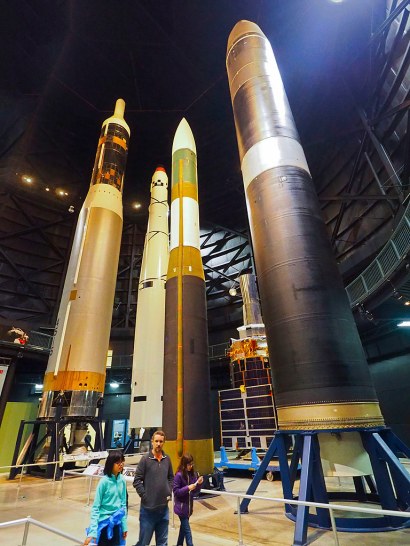
American history shows high points once a century: the Presidencies of Washington, Lincoln and Franklin Roosevelt (with Eleanor, of course). After the Second World War, Eisenhower warned America about the “military-industrial complex”, which Kennedy started trying to rein in after a few missteps. But apparently the CIA’s assassination of democratically elected leaders isn’t restricted to “outside the US”. And the end result, after LBJ, Reagan/Bush, Bush/Cheney is… Trump.

We simply have to look forward to this century’s American history high point. But it’s not even on the horizon yet.

Potcake Poet’s Choice: Max Gutmann, “Onset”

Max Gutmann

Max Gutmann

ONSET

Remember with my sitting parents I
at napkins red with cloth a table high
things struggling out to figure how these thin
(which home I knew at bags came plastic in)
potatoes were, and hamburger my how
to a connection have could any cow.

Twist change and blithely we our world: we light
and pave like soft, good day the earth, the night.
We wonder so that find what easy it
twist well ourselves as to? We still can sit
for desks behind long money hours for bland
and nation hate on any can command.

Hard shapes for make can strange it us our new
recall in shapes the which we born were to.

Max Gutmann writes: “Onset is probably my most unusual poem, and it tends to inspire strong reactions. In an online competition, it was the favorite of the host, a well-published poet I respect, who commented that she could see it becoming widely anthologized, and it came close to being the readers’ top choice. At the same time, it got far and away the greatest number of negative comments, some of them pretty strong. That combination of reactions is something I’ve been proud of ever since.

The host’s anthology prediction hasn’t come to pass, but Onset is, at long last, forthcoming–in Raintown Review.”

Under the pseudonym Noam D. Plum, Max Gutmann has published in The Spectator, The Country Mouse, Light Quarterly, and elsewhere including, of course, in the Potcake Chapbook Wordplayful. Having won two $500 prizes, as well as some smaller ones, Noam is a more successful breadwinner than the man for whom he fronts.

Given the mental gymnastic similarities between Noam’s Preopr Splelnig and Max’s Onset, however, I think it is reasonable to treat the poets as the same writer… You can see more of his work at https://www.maxgutmann.com/


Potcake Poet’s Choice: Gail White, “Anecdotal Evidence”

Gail White

Gail White

ANECDOTAL EVIDENCE

My aunt who brought her kidney function back
By eating grapefruit seeds for fifty days
Makes no impression on our local quack.
It’s anecdotal evidence, he says.
There are no reproducible results.
Another person might eat grapefruit seeds
For fifty days and cease to have a pulse.
Cause and effect’s the evidence he needs.
The evidence is all in favor of
The proposition that the dead are dead,
Despite our bitter hope and wistful love.
Yet when my mother died, my father said
That just before the chill that would not thaw,
Her face lit up with joy at what she saw.

Gail White writes: “One poem out of a lifetime’s work is hard to choose, but I find that when I think back over many years of sonnets, my mind keeps settling on this one (first published in Measure). The opening is light (and fictional), but the final sentence on my mother’s death is serious (and true). Perhaps for that reason it has stayed near my heart.”

Gail White is the resident poet and cat lady of Breaux Bridge, Louisiana. Her poems appear in several of the Potcake Chapbooks, available from Sampson Low Publishers; her books ASPERITY STREET and CATECHISM are available on Amazon. She is a contributing editor to Light Poetry Magazine. “Tourist in India” won the Howard Nemerov Sonnet Award for 2013.

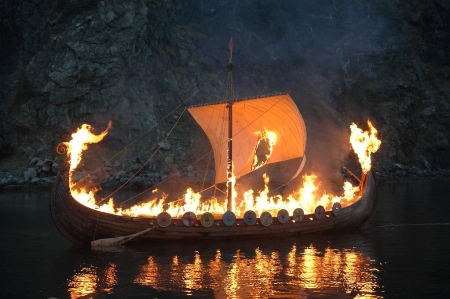
Sonnet: “Viking Slave”

Viking funeral

Why did they make me swallow this mead muck?
My lord, alive, would barely let me drink.
They wouldn’t treat his wife this way, I think.
Now all I am is something they can fuck.
They say this way they’re sharing in their lord,
Behaving as he did with me, his slave.
And now they launch his boat upon the wave,
The dragon boat with him and me aboard.
Just me, his horse, his sword… the boat’s been fired;
An honour, just for me, not for his wife;
So with him I will end this stage of life
And go with him to Asgard… I’m so tired,
Couldn’t move even if I wasn’t tied.
They told his wife he loved her too. They lied.

This sonnet was published in the Rat’s Ass Review, Summer 2020 issue. The image of the burning longship funeral, complete with much-used female slave, goes back to the writings of Ahmad ibn Fadlan. In 922 he was sent as part of an embassy from the Caliph of Baghdad to the king of the Volga Bulgars, and ibn Fadlan wrote several pages on the Vikings who had settled along the Russian river Volga. (The very word Russia comes from “Rus”, Vikings from southern Sweden.)

Unfortunately for the burning ship image we love, the Viking chief’s boat was burnt on the shore of the river–at least in ibn Fadlan’s account. That allowed ship, chief and slave to be entombed. But it’s still a great image. Perhaps in other times and places…


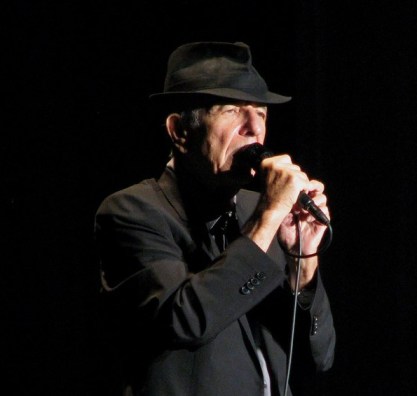
Poem: “Dark Fedora”


“You look like a musician-poet in that dark fedora.”
I think of the young Dylan, and it takes away my breath,
And for her easy flattery I all the more adore her…
But she meant Leonard Cohen in the days before his death.


First published in Light Magazine, Summer/Fall 2017.

Poem: “Never Believe”

Never believe the lies of war, and the orders
that seem to make sense –
whether Hitler or Bush, no one storms over borders
“in self defence”.

“Leading the Free World” by having the biggest gun
has always chilled
those on whom the guns are turned, on everyone
free to be killed.

This is another of my anti-imperialist or anti-war poems, first published in Ambit’s 200th quarterly issue in the UK. Despite the tone of the poem, I should clarify that I don’t dislike guns in themselves. One way or another they were in my life for decades: capguns as a kid, then BB gun and speargun, four years of .303s at school in England (and a submachine gun on school exercises in Denmark), earning my Marksman badge in training in Canada, letting my own kids try skeet shooting, Nerf guns and super-soakers… 

But I don’t see any reason for anyone to own any firearm other than a single-shot hunting rifle.

And as for military forces, given that invaders need several times the firepower of defenders to be successful, I don’t see the need for any military force to be more than a third the size of its biggest competitor. Anything more than that would be best channeled into (a reformed, effective, efficient) United Nations. And never believe anyone who says they need to strike first, in self-defence. They are the bad guys, by definition.

Technically the poem is a little loose. The rhymes are OK, but the scansion is erratic, relying on the reader to find five beats in the longer and two beats in the shorter lines for a rhythmic read. Iambic pentameters it ain’t. But the short lines are the cleanest and the punchiest: that’s where the action is. My hope is always that a strong last line absolves a lot of earlier sins.

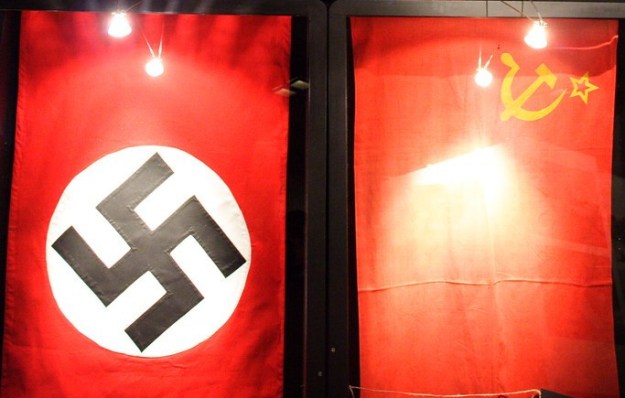
Sonnet: “Flags We Have Feared”

The Swastika, that ancient Vedic sign,
the lightning wheels with which the Aryan bands
in lightning war overrun other lands,
wheeled juggernauts that crush, self-claimed divine.
Hammer and Sickle, commoners’ work-tools;
weapons for rising up, and tearing down
the castle of the rich, the bourgeois town;
fake honour to the poor the Party rules.
A flag with Stripes, memorial for flogged slaves,
striped jail clothes for resulting underclass;
and Stars like bullets through the windshield’s glass
for leaders by the CIA shot down,
star earned for each election overthrown,
star for each land the flag invades, or ‘saves’.

This sonnet was originally and ironically published in Ambit in the UK. The irony being, of course, that the Union Jack is viewed by much of the world with as much fear and hostility as any of the other three flags. But you don’t learn that, or the reasons for it, in school in the UK–at least not in England. The British (at least the English) have a warm and fuzzy feeling toward their flag, and are innocent or puzzled that anyone else should find it negative. Similarly in the times of the other three flags, the Germans (at least the Aryans), the Soviets (at least the Russians) and the Americans (at least the whites) have been happy and proud of their flag, puzzled that anyone else should fear or dislike it.

Another irony: the jury is still out on to what extent one of the leaders shot down by the CIA was their own.

Technically it’s a sonnet with a non-standard rhyme scheme: ABBA CDDC EFFGGE. But the rhymes and the scansion are OK. As for the volta, the requisite turn of mood or argument between the octave and the sestet… well, after dealing with the two great enemies of western democracy, you weren’t expecting me to pick on the US, were you?

Sonnet: “Last Will and Testament”

I, Robin, being of sound mind, declare
the Cryonics Institute shall have my corpse.
That’s where I’ll rest, if I can get shipped there,
no matter how friends stare, family gawps.
“I”, “corpse” and “rest” are contradictory, true,
because we’re into science frontier realms
where problem-solving causes problems anew,
where human thought both helps and overwhelms.
Limitless lifespan, or apocalypse?
Both feasible as we reach out through space.
Cryonics is a ticket for both trips…
or none at all, if humans lose our race.
Enjoy this puzzle-path, solve it and thrive.
Drive to arrive alive. Strive to survive.

Another of my existential sonnets, this one just published in Star*Line, the quarterly publication of SFPA, the Science Fiction & Fantasy Poetry Association, now in its 43rd year. Star*Line is one of those tolerant poetry magazines which will publish anything that appeals to editor Vince Gotera, from formal verse to experimental poetry–so long as it deals with space ships or time travel, dragons or golems and so on, of course.

Technically this is a Shakespearean sonnet, i.e. it’s in iambic pentameter and rhymes ABAB CDCD EFEF GG. Each of the 4-line blocks is a complete thought, describing the existential situation being faced. There is a volta or turn (but it’s weak) before the final couplet which moves from description to prescription: the couplet is a call to action.

By the way, I am changing the poem’s title with this blog post–it appears in Star*Line with the first line as the title.

Sonnet: “Bring on the Violins”

Bring on the violins, the falling leaves,
the wistful ending to a misty day.
The long game’s over and we ride away
to sunset Heaven that no one believes.
Our world is dying, yet here no one grieves:
Earth warms, seas rise, but Wall Street’s still in play…
and we ourselves are aging anyway.
We all face death, and there’ve been no reprieves.
And yet, and yet…robotics and AI,
gene therapy, unlimited life span,
promise an almost-here-and-now sublime,
an unknown life, with our old life gone by.
Trumpet a fanfare for the Superman,
music for dancing to the end of time.

This sonnet has just been published in the Amsterdam Quarterly, this spring’s issue being on the theme of Beginnings and Endings. That may be relevant for our Covid-19 catastrophe, but of course the theme was determined a year ago, and life and death have merely decided to smile on AQ ironically.

But we were all facing death before this latest coronavirus came along. As the saying goes, “Perfect health is simply the slowest rate at which you can die.” And interwoven with death is always new life, never an exact repetition of the old life and often dramatically better. The real issue is, will the new life come at the expense of the old, or can the old reform and regenerate itself, renew itself without needing to die? The avoidance of death has been the quest of religion and medicine since those disciplines (or that discipline) originated. It is great driver of culture, and the pot of gold at the foot of the never-quite-reached rainbow.

Technically this is a correctly structured Petrarchan sonnet, with an initial octave (in this case of existential doom and gloom) rhyming ABBAABBA, followed by a volta (in this case a reversal to hope) for the sestet that rhymes CDECDE.

The sonnet is a marvellous structure for expressing an argument in a compact way.

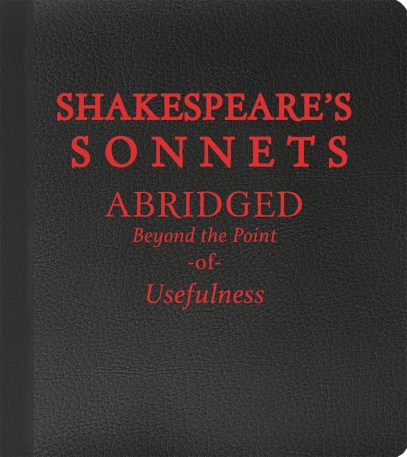
Review: “Shakespeare’s Sonnets: Abridged Beyond the Point of Usefulness” by Zach Weinersmith

Shakespeare's sonnets

Zach Weinersmith is best known as the creator of Saturday Morning Breakfast Comics, a daily comic of random existentialism, religion, robots, sex, etc. As a gift to people self-isolating or otherwise inconvenienced in a time of Covid-19, he is making eight of his books available free as PDFs. I chose one for its intriguing title, and discovered the most amazing piece of literature, more offbeat-creative than anything I’ve read recently: “Shakespeare’s Sonnets, Abridged Beyond the Point of Usefulness“.

What he has done is abridge each of Shakespeare’s 154 sonnets from its rhymed pentameters into a rhymed couplet, abridging the pentameters into tetrameters. (And sonnet 145 being uniquely written in tetrameter, he naturally reduces to trimeter.) For a taste of this, consider Sonnet 18:

Shall I compare thee to a summer’s day?
Thou art more lovely and more temperate.
Rough winds do shake the darling buds of May,
And summer’s lease hath all too short a date.
Sometime too hot the eye of heaven shines,
And often is his gold complexion dimmed;
And every fair from fair sometime declines,
By chance, or nature’s changing course, untrimmed;
But thy eternal summer shall not fade,
Nor lose possession of that fair thou ow’st,
Nor shall death brag thou wand’rest in his shade,
When in eternal lines to Time thou grow’st.
So long as men can breathe, or eyes can see,
So long lives this, and this gives life to thee.

Under Weinersmith’s treatment, it becomes

Summer’s bad, then dies. You won’t.
(OK, you will, but poems don’t.)

But cutting through to the simple essence of the poem without any of that unnecessary flowery stuff is only part of what he has achieved: the greater gift is that in radically abridging the poems, Weinersmith allows the entire series to be seen as a connected series of comments, almost diary entries, in Shakespeare’s relationship first with the so-called “Fair Youth” (the first 126 sonnets) and then the “Dark Lady” (the last 28).

As Weinersmith points out in his brief but enormously enlightening introduction,

‘the term “Fair Youth” is not present in the sonnets, but is something of a euphemism designed to, as poet Don Paterson writes in Reading Shakespeare’s Sonnets , “[keep] everything just on the right side of sodomy”.

After the initial 126 poems, we encounter the 28 “Dark Lady” sonnets. These contend with an unattractive, bad-smelling, yet surprisingly popular married woman whom Shakespeare nags until she sleeps with him. Most of the poems that follow this consummation concern how Shakespeare hates himself for having sex with her. Remember this next time you receive these as a Valentine’s gift.’

Weinersmith lays out the whole flow of Shakespeare’s relationship with the Fair Youth, and the relationship of both of them with the Dark Lady… You will never think of Shakespeare the same again. Read Weinersmith’s introduction, then blast through his couplets. You may, like me, find yourself needing to work your way through the damn sonnets themselves, and see them for the first time as they truly are.