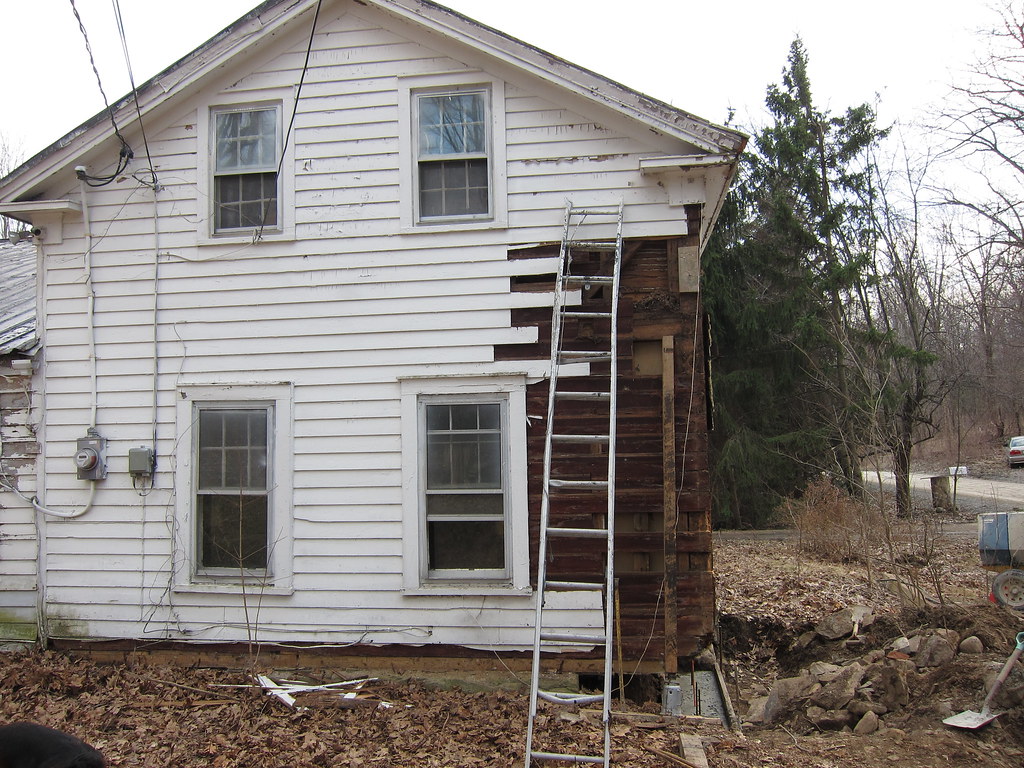
Time was, we spent our muscle and our nous propping an aging house against the pummeling of its hundred years. Clean paint, neat gardens, upkeep rarely in arrears, sober as Donne. Yet now each year afresh burdens us with new failings of the flesh:
Legs that once mounted ladders without qualm tremble. Nor are we calm confronting pipework; torsos will not shrink, backs bend, or shoulders fold to grope below a sink. Hands shake; eyeballs glaze over. What appalls is that our bodies buckle like our walls:
plaque in arteries, soot in chimney stacks, stubborn and troublous cracks in teeth, in plaster. House! Ought we to call ourselves—and you—new poster children for the Fall, for that hard doctrine grumbling down the ages that Sin’s to blame, with Death and Rot its wages?
Entropy as theology—would Donne jape at it? Wink and pun as in his randy youth? Or solemnly robed in his winding sheet, sing Mutability, spinning into the praise of God in Art the fact that all things earthly fall apart?
Or pull from air some bit of modern science, yoking (even by violence) thermodynamics, shortened telomeres, transplants, genetics, sex, the music of the spheres? Strange physics and wild metaphors—all grand, but Rot and Death, plain woes we understand,
are better fought with checkbooks than with verse. We’ll sit, these days. We’ll nurse our beers, while able bodies stir their dust. A distant siren whines—we sigh; it whines for us. Let plumbers, painters, carpenters begin this season’s round of battling Death and Sin.
*****
Maryann Corbett writes: “Last summer, Clarence Caddell was just beginning work on a new magazine, The Borough, and was planning a second issue while the first came together. He had in mind an issue centered on Donne, and he commissioned me to contribute a poem. I’d read the wonderful biography Super-Infinite: The Transformations of John Donne by Katherine Rundell not many months before, so a lot of the life was fresh in my mind–but it was also the season of endless repair that is the eternal truth of owning a house that’s 113 years old. It wasn’t hard to pull together a poem about the woes of home ownership with tidbits that “everyone knows” about Donne–his worldly-to-holy conversion, the familiar line about his yoked-by-violence metaphors–under an allusive title, and in a stanza form a bit like one of his. (Alas, this blog can’t show you the indents that would best imitate Donne’s way of laying out a poem. You’ll have to imagine all the trimeter second lines indented and the hexameter fourth lines hanging out farther left.) In the end, Clarence had to use the poem to fill out his first issue, so it sat alone, unassisted by an issue theme.”
Maryann Corbett earned a doctorate in English from the University of Minnesota in 1981 and expected to be teaching Beowulf and Chaucer and the history of the English language. Instead, she spent almost thirty-five years working for the Office of the Revisor of Statutes of the Minnesota Legislature, helping attorneys to write in plain English and coordinating the creation of finding aids for the law. She returned to writing poetry after thirty years away from the craft in 2005 and is now the author of two chapbooks and six full-length collections, most recently The O in the Air (Franciscan U. Press, 2023). Her work has won the Willis Barnstone Translation Prize and the Richard Wilbur Award, has appeared in many journals on both sides of the Atlantic, and is included in anthologies like Measure for Measure: An Anthology of Poetic Meters and The Best American Poetry.
Like other teenage girls in ‘65, I learned to knit, embroider, and crochet, so if I’m teleported back in time a century or two, I’ll do okay.
I learned the way to wrap a package neatly, to tie a range of plain and froufrou bows, to minimize my body flaws discreetly, using the cut and pattern of my clothes.
I also learned to iron, hem, and baste, to sew on zippers, trim, and appliqué, to choose a hairdo that would suit my face— and nothing that I ever use today.
*****
Susan McLean writes: “In the mid-Sixties, the times were changing, but the education of teenage girls was not. In junior high school home economics classes, which girls were required to take, the girls were trained in sewing and cooking skills as preparation for their future roles as wives and mothers. The ideas that men might need to know any of those skills or that women might have full-time careers were not considered. In addition to teaching girls domestic skills, the classes served to reinforce the gender roles and expectations of the time (which had not changed significantly from those of the previous few centuries).
“I slightly overstate my case when I say that I never use anything now that I learned in the two years of sewing classes I took. I still wrap a package and sew on a button occasionally, but I had learned both of those skills well before I took the classes. And even when I was taking the classes, I was already determined to have a career of my own. I petitioned successfully to be allowed to skip the cooking classes so that I could take art classes in their place (though, ironically or not, I am now an enthusiastic home cook). I didn’t mind learning various sewing skills, which had an artistic side, but I had no interest in spending a lot of time using them afterwards, and the view of my options that the classes conveyed was quite dispiriting. No one foresaw how radically the roles of many women would be changing soon afterwards. But I am very glad that they changed.
“The rhymed quatrains that the poem is written in are a standard poetic form, though the mix of slant rhymes with true rhymes suggests an underlying dissonance that ties in with the poem’s themes. The poem originally appeared in the online journal Umbrellaand was later published in my second poetry book, The Whetstone Misses the Knife.”
Susan McLean has two books of poetry, The Best Disguise and The Whetstone Misses the Knife, and one book of translations of Martial, Selected Epigrams. Her poems have appeared in Light, Lighten Up Online, Measure, Able Muse, and elsewhere. She lives in Iowa City, Iowa. https://www.pw.org/content/susan_mclean
The boy he’s always been still takes delight In testing scabs on elbows, knees, To see if fingernails can assert their right To lift with satisfying ease The lid from off the mystery healing box And see the flesh beneath the skin Where the wise body-mind slowly unlocks Corpuscles and white pus within. The hint of pain, like some itch that you scratch, Is fun alongside look-and-see. What does the boy do with that useless patch, The scab? Easy: autophagy.
*****
Curiosity is a useful aspect of intelligence. This poem first published in Lighten Up Online (aka LUPO). Thanks, Jerome Betts!
It can be difficult for a formalist to find a home for their poetry. Some of the best-known and longest-established poetry magazines have either changed (often under a new editor) from being receptive to being hostile towards formal verse (e.g. Ambit, in the UK); others are receptive, but only to already well known poets (e.g. Poetry, in the US). For what it’s worth, here is a list of places where I have been able to publish 400 of my own uneven and very varied pieces (plus several where I’m still unpublished, but you may be a better fit), with some comments about what is appropriate for where.
14 Magazine – UK: 14-line poems… sonnets etc. 32 Poems – US Alabama Literary Review – US: lyrical, positive; only takes snailmail submissions (unless you have a genuine need for email) Alchemy Spoon – UK Allegro – UK: contemporary, looking for more formal submissions than they receive Amethyst Review – US: “with a connection to spirituality and the sacred”, meaning very Christian Amsterdam Quarterly – Netherlands, English-language: must address the issue’s theme Asses of Parnassus – Canada: short, witty, formal poems, snarky is fine, hosted on Tumblr. Bad Lilies – UK Bewildering Stories – Canada/UK/US: speculative and science fiction pieces Blue Unicorn – US: prefers formal but will take other work Bombay Literary Magazine – India The Borough – Australia: new in 2024, committed formalist Brazen Head – UK: ideas-rich Carmen et Error – UK: “a poem and a mistake”… Cerasus – UK Chained Muse – US: prefers classical themes Consequence – US: addressing the impact of war Consilience – UK/US/Canada: poems on science (themed) Crow and Cross Keys – UK: speculative, gothic, folk… should sound as good as it reads Dawntreader – UK: “myth, legend; in the landscape, nature; spirituality and love; the mystic, the environment” Empty House – US: abandoned spaces (mental and physical), historical sense Eye To The Telescope – US: SF, themed: Nov 2024 is “(Non-)Binaries” Grand Little Things – US: “Returning versification to verse” Griffith Review – Australia: themed iamb – UK: audio recordings Juniper – Canada: would like to see more formal submissions Libretto – Nigeria: prefers African/Afro-American/Afro-European/post-colonial pieces Light – US: large biannual issue, also the home of weekly topical light verse Lighten Up Online (LUPO) – UK: light formal verse, quarterly Lyric – US: “Founded in 1921, The Lyric is the oldest magazine in North America in continuous publication devoted to traditional poetry.” Lyrical, positive… flowers and countryside. Magma – UK: themed (‘Ownership’ for November 2024) Metverse Muse – India: publishes simple traditional verse. No website. The email for editor Dr. Tulsi is metverse_muse@yahoo.com New Criterion – US: conservative New Verse Review – US: new in 2024, impressive Obsessed With Pipework – UK: “strangeness and charm… prefers dreams to deathbeds” Orbis – UK: (Editor may suggest/request multiple edits, but will accept your decision.) Orchards Poetry Journal – US: more rural than urban Oxford Poetry – UK Penwood Review – US: religious streak Poetry Porch – US: lyrical Pulsebeat Poetry Journal – US: more urban than rural Rat’s Ass Review – US: irreligious streak; whatever appeals to the editor, including NSFW things you can’t get published elsewhere. Rattle – US: large print circulation, a variety of different opportunities Road Not Taken: The Journal of Formal Poetry – US: hard to find online because of its name, but a good small publication for formal and semi-formal verse. Shot Glass Journal – US: max 16 lines, equally weighted between US and international poets Snakeskin – UK: probably the longest-established poetry zine in the world; has no interest in submission bios, only in the poems; likes work that begins light and becomes heavier. Sonnet Scroll – US: a sonnet-specialized alcove on the Poetry Porch The HyperTexts (THT) – US: an enormous assemblage of verse from all times and places; the editor’s personal preference for formal and leftist verse doesn’t rule out selections by Walt Whitman or Ronald Reagan! The works are mostly republications, but if you have a body of strong work the editor may be interested in creating a page for you. Think – US: formalist, conservative, Christian Verse-Virtual – US: a monthly publication for a caring community of poets Visions International – US: I’m not sure what the status is of this magazine these days, or who is editing it… and finally: Wergle-Flomp Humor Poetry Contest, No Fee – US: $3,750 in prize money
This list doesn’t include magazines not relevant for me (like Mezzo Cammin: An Online Journal of Formalist Poetry by Women), or that moved away from formalism and no longer publish me (like Ambit, and Star*Line), or that have unfortunately folded (14 by 14, Better Than Starbucks, Bosphorus Review of Books, Candelabrum, The Rotary Dial, Unsplendid), or that show no apparent interest in formal verse in current issues despite their guidelines (3rd Wednesday, Westchester Review).
And there must be a lot of worthy magazines that I simply haven’t run across – let me know!
And of course, as ever, don’t just fire off a handful of poems at random – read some samples online, determine the magazine’s orientation and moods, check whether the editor wants anything particular, note whether they love or loathe attachments, etc…
I hold you on my lap; I think you’re dead. Next to us hangs a rusty, creaking swing. I look down as my white dress blooms with red.
Such fun to pull the seat right back, then fling it free. You’re two, I’m four, so I’m to blame; now I’m screaming bloody murder to bring
someone to the garden to witness my shame where swaying grimly like a tolling bell the swing is the proof of the deadly game.
It’s a story my mother liked to tell while tracing the faint white mark on your brow: how she found me soothing you after you fell.
The truth is, I can’t remember why or how I hurled that dead weight directly at you. Did she wonder at all, as I do now
if I pushed it so hard because I knew the swing’s unpredictable to and fro showed love and jealousy can both be true?
You never reproached me, but even so I still bear the scar of that reckless throw.
*****
Louise Walker writes: “The Swing was my second effort at writing a poem in terza rima; my first was a complete disaster, written in response to an assignment set by Cahal Dallat during a course I did with Coffee-House Poetry earlier this year. That novice attempt followed the rules of the form perfectly, with 3-line stanzas rhyming aba bcb cdc ded efe fgf gg. However, my poem was pompous, stilted and vacuous. It also took me an entire day. The next morning, a memory from early childhood came to me and I thought I would try terza rima one more time. To my surprise (and joy!) the poem called ‘The Swing’ came very quickly, was a pleasure to write and didn’t require my usual endless revisions and tweakings. What’s more, I found that the terza rima form became a little engine for generating my poem – for example, searching for a rhyme for ‘you’ threw up the word ‘fro’ which made think of the swing as a metaphor for the oscillating feelings of a child when a younger sibling arrives. I also found that the chain-like effect of the form, swinging back for rhymes, and then forward, suited the subject matter perfectly. Deep in my subconscious, the terza rima form had been working its magic overnight!
I was not at all delighted to get the terza rima assignment at first, but I learnt such a valuable lesson: sometimes one has to write a really bad poem to be able to write a decent one. ‘The Swing’ became an important poem in my recent debut collection ‘From Here to There’ published by Dithering Chaps, which has at its core my journey from childhood, through the death of my brother in our twenties, then onwards.”
Louise Walker was born in Southport and now lives in London. After reading English at Magdalen College, Oxford, where she was a member of the Florio Society, she taught English for 35 years at girls’ schools. Her work has been published in journals such as Acumen, Oxford Poetry, South, Prole and Pennine Platform. Highly Commended in the Frosted Fire Firsts Award and longlisted in in The Alchemy Spoon Pamphlet Competition, in 2023 she was shortlisted in the Bedford Competition and won 3rd prize in the Ironbridge Poetry Competition. Commissions include Bampton Classical Opera and Gill Wing Jewellery for their showcase ‘Poetry in Ocean’. She has recently published her debut collection with Dithering Chaps: https://www.ditheringchaps.com/from-there-to-here Instagram @louise_walker_poetry
Book discarded, like excess baggage shed by someone who has rapidly pushed on into uncharted regions far ahead, he sleeps in an old deck chair on the lawn. Gulls circle, skaters on an ice-blue lake, while he dreams on, oblivious, his face unshaded by a hat which, when awake, he wears with equanimity and grace. What does he dream? Is the unreal more real than those pale gulls that spiral high above? In sleep, has youth returned? No longer frail, does he relive time when impatient love was everything and all his heart desired, before life tricked him, left him old and tired?
*****
Richard Fleming writes: “I suppose Sunny Afternoon reflects my own station in life, that is, drifting steadily towards the end, with the usual collection of regrets that most of us have.”
Richard Fleming is an Irish-born poet (and humorist) currently living in Guernsey, a small island midway between Britain and France. His work has appeared in various magazines, most recently Snakeskin, Bewildering Stories, Lighten Up Online, the Taj Mahal Review and the Potcake Chapbook ‘Lost Love’, and has been broadcast on BBC radio. He has performed at several literary festivals and his latest collection of verse, Stone Witness, features the titular poem commissioned by the BBC for National Poetry Day. He writes in various genres and can be found at www.redhandwriter.blogspot.com or Facebook https://www.facebook.com/richard.fleming.92102564/
Bears are frustrated by their lack of speech, Their claws leave blackboards shrieking for repairs, And that’s why bears are seldom asked to teach And almost never get Distinguished Chairs Unless they come across one unawares Whose rich upholstery they quickly shred. Some of them have been known to have affairs With a man or woman lured into their bed— This often ends up badly with one dead, The other executed for the crime, Or given a life sentence in a zoo. Bears are familiar with existential dread, Bears put their pants on one leg at a time: The problems bears have are your problems too.
*****
Charles Martin writes: “The poem is written in a variation on the Spenserian Sonnet form, which I have been writing for several years now. In this case, I enjoy the contrast between the strictness of the form and the raucousness of its subject. As I recall, I began it on a morning walk, and I think finished it shortly after the walk ended.
“The poem will next appear in The Khayyam Suite this spring, published by The Johns Hopkin University Press, which has published my last two collections of poetry, Signs & Wonders and Future Perfect, both of which are still in print. (Future Perfect has a sonnet sequence written in the Spenserian form.) Poems have recently been published in Literary Matters, The Hudson Review, Classical Outlook, and in Best American Poetry, 2024.”
Charles Martinis a poet, translator of poetry, and essayist. The Khayyam Suite is the fifth of his eight books of poetry to appear in the Fiction and Poetry Series of the Johns Hopkins University Press. His poems have appeared in Poetry, The New Yorker, The Yale Review, The Hudson Review, Literary Matters, The Hopkins Review and, in numerous anthologies, including Best American Poetry, The Norton Anthology of Poetry, and War No More: Three Centuries of American Antiwar and Peace Writing. He has received an Academy Award in Literature from the American Academy of Arts and Letters, a Creative Writing Fellowship from the National Endowment for the Arts, an Ingram Merrill Grant, a Bess Hokin Award from Poetry magazine, and a Pushcart Prize. His residencies include the Djerassi Foundation and Ragdale, and he served as Poet in Residence for five years for the American Poets’ Corner at the Cathedral of Saint John the Divine. His translation of Ovid’s Metamorphoses received the 2004 Harold Morton Landon Award from the Academy of American Poets, and he has also translated The Poems of Catullus and the Medea of Euripides. He is the author of the critical introduction to Catullus in the Hermes Book series of Yale University Press and of numerous essays on, and reviews of, classical and contemporary poetry.
We hurried back, struggling to comprehend the scale of devastation and what journey’s end would mean – wondering indeed whether we still had a home to go to. Aghast, we scanned fields the dead had sown and reaped forever
transformed to lakes, then villages where cars had been tossed aside like toys, and scooped-out bars, churches, schools, where dark lines marked the height reached by the water, left as scars. There’d been no warning signs, no Noah’s ark
though those of us who’d been on higher ground could now inherit the world the tempest drowned though too few to repopulate that morning’s massive, muddy funeral mound, reminding us what might have been our fate.
The radio was silent, even if the word on the street was help would come – soon enough we heard helicopters. But the broken men who landed only muttered something blurred about how this was it till God knows when.
A black market opened – which only the rich could afford. The rest of us survived on what we’d stored in better days, skimping until re-learning the ancient ways, we could once more live off the land with long-forgotten skills.
Sometimes I look back, yet I know the past has gone for good, that no one can forecast when the day will come we’ll dare to hope the storm which killed so many was the last, and trust again illusion’s horoscope.
*****
Tom Vaughan writes: ” ‘Safe‘s working title was Sanctuary, and the poem was inspired – if that’s the word – by the sense that there is none. The form reflects the fact that it was written during one of my regular bouts of reading Larkin. I was lucky enough to visit his office in the library at Hull University in July, with a copy of The Whitsun Weddings in my backpack for the train trip back to London . . . “
Tom Vaughan is not the real name of a poet whose previous publications include a novel and three poetry pamphlets (A Sampler, 2010, and Envoy, 2013, both published by HappenStance; and Just a Minute, 2024, from Cyberwit). His poems have been published in a range of poetry magazines, including several of the Potcake Chapbooks and frequently (as with ‘Safe‘) in Snakeskin. He currently lives in Brittany. https://tomvaughan.website
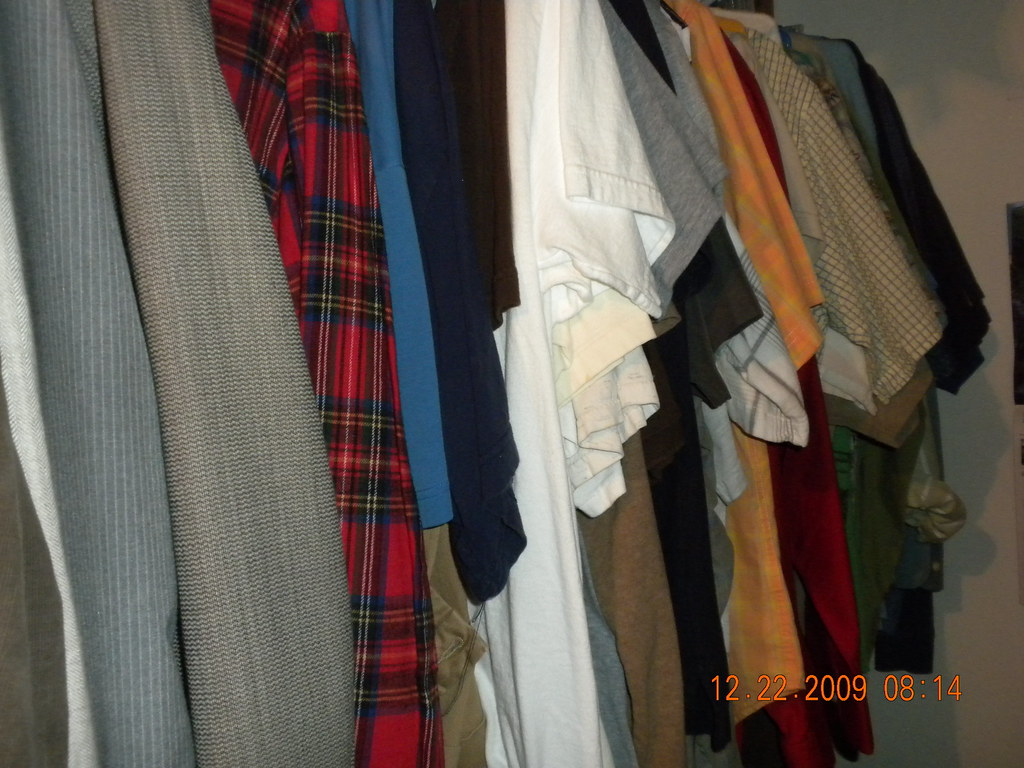
I remember you some mornings in the midst of getting dressed Surprised that I recall exactly when I wore you last
The paisley patterns spilling over sleeves The Nehru collars nobody believes … were popular The turtlenecks no turtle ever wore Those V-neck disco shirts that dance no more … Spectacular!
Are you lurking in the closet among other clothes I own? I gently touch your shoulder—a brief flash, then you’re gone
The concert souvenir shirts we outgrew The obligation gifts we always knew … were wrapped in haste Thick cotton plaids lost lumberjacks would covet That college T tossed out, but how we loved it … still, such a waste
You promised transformation, but what else did you require The full ensemble led us toward transcendence or desire (Attire of another age, accessories all the rage)
Bell-bottom flares that took flight as we walked Embroidered jeans so tight that people talked … of nothing else Those bomber jackets earthbound boomers froze in Those leather wristlets grunge guitar gods posed in … with death’s head belts
You folded in your fabric everyone I used to be Now that you’re gone, I realize I’m left with only me But if I run across you in some thrift shop bargain rack Or rummaging recycling bins, what else would you bring back? Who else will you bring back?
Some nights I see you in my dreams of places far away I’m wearing you as if I haven’t aged a single day Shirts of the distant past, shirts of the distant past
*****
Ned Balbo writes in Rattle #85, Fall 2024 (where you can hear the song performed): “I’ve played guitar since I was 5, keyboards since I was 13, and ukulele since I was 42, but my time as a ‘professional’ musician—someone paid to play—is scattershot and humble. Ice rinks, a Knights of Columbus Hall, a campers’ convention in Yaphank, a crowd of disco-loving retirees at Montauk’s Atlantic Terrace Motel, company picnics, school dances, private parties, and more—these were where I played guitar, sang, and devised versions of the Beatles, Bowie, et al. in two Long Island cover bands. The Crows’ Nest or Tiffany’s Wine-and-Cheese Café hosted noise-filled solo acoustic gigs, with more receptive listeners for original songs and covers of Elvis Costello or Eno at my undergrad college’s coffeehouse. More recently, I’ve written lyrics to Mark Osteen’s preexisting jazz scores (look for the Cold Spring Jazz Quartet on Spotify, Amazon, CDBaby, and elsewhere) and returned to solo songwriting and recording with ‘ned’s demos’ at Bandcamp. As a relic from the age when lyrics were sometimes scrutinized with poetry’s intensity, I listen closely to the sonics of language, whether sung or spoken, and look up to lyricists whose words come alive both aloud and on the page.”
Balbo: Robin, thanks for posting ‘Shirts from the Distant Past’, my little song-poem hybrid. I’ll be happy to answer any questions you have.
Editor: For myself, I see a continuum from womb heartbeat to dance to music to song to formal verse. I would love to have any additional comments on the subject in general, or on the creation of this poem in particular, related to these elements.
Balbo: I love what you’re saying about womb, heartbeat, and dance. A formative text for me is Donald Hall’s essay on poetic form’s psychic origins, ‘Goatfoot, Milktongue, Twinbird‘. You probably know it. Hall proposes three metaphors for poetry’s deepest sources: Goatfoot, the impulse toward dance, rhythm, movement; Milktongue, the pure pleasure of language, the texture of words when spoken; and Twinbird, our desire for form, symmetry, wholeness, which is complicated and energized by the contradictions it contains and reconciles. To me, Hall’s terms just sound like different ways of envisioning exactly what you’re talking about. They apply as much to song as they do to verse. The meter varies by stanza or section: iambic heptameter (seven iambs) in the couplet verses—not so different, after all, from the tetrameter to trimeter shifts we find in many ballads. The “shirts” title refrain, which doesn’t appear in print till the last line, are two trimeter phrases. It was fun to find surprising rhymes to hold the whole song together.
Editor: Regarding ‘Shirts’, quite apart from the charming idea, I like the work that has gone into the metre, rhyme, idiosyncratic structure.
Balbo: Thank you. I wrote and sung ‘Shirts’ as a poetic song lyric—one that could be read and enjoyed but, ideally, would be heard. I view its structure as that of a call-and-response song in traditional format. (In rock, for example, I think of George Harrison’s ‘Taxman’ with John and Paul harmonizing “Taxman, Mr. Wilson, Taxman, Mr. Heath” in answer George’s lead vocal.) In ‘Shirts’, the call-and-response comes from using the title as a refrain: it explains who the “you” is in each verse (when you hear it, anyway—I cut it from the visual text for fear it would seem repetitious without the music). Sometimes the title refrain answers a statement in the verse: “I gently touch your shoulder—a brief flash, then you’re gone” sounds like I might be talking (or singing) about a person, but it turns out to be those long-lost shirts—a playful fake-out.
Then there are the brief call-and-responses of the bridge sections which comment on the previous line or complete an unfinished thought: “Those V-neck disco shirts that dance no more…spectacular!” or “Embroidered jeans so tight that people talked…of nothing else.” They’re in iambic pentameter, with the second and fourth changing to heptameter if we count the two extra beats (set off on their own line) answering them.
The so-called “middle 8” (usually eight bars used to break up the verse-chorus/verse-chorus model) is delayed till just before the end: “You folded in your fabric everyone I used to be, etc.” That’s meant to set up the payoff: it’s not the shirts but our lost selves— along with loved ones, lost ones, everyone—we’re missing or mourning. But writing or singing about shirts—clothing that shapes and defines us—makes the lyric less depressing, leavens it with wit (I hope) so that what’s more poignant comes at the very end where more dramatic music can counterbalance the mood—the contradictions reconciled, as Donald Hall might have put it.
Of course, the very end is quieter – wistful again.
As I mentioned in Rattle (thanks again to Tim Green for giving both words and music a home), I grew up in the era when lyrics were often analyzed as seriously as poetry (and not just by undergraduates in long-ago dorm rooms under black light posters). Whether I’m writing poetry or songs, I listen closely to the different ways words sound—what works when sung doesn’t always work as well when spoken or encountered on the page—so when I do write lyrics, I try to make them both readable and singable.
Poems and song lyrics operate differently, but there’s lots of overlap between them. I wanted ‘Shirts’ to operate on both levels, even if it tilts more toward song lyric than poem.
*****
Ned Balbo’s six books include The Cylburn Touch-Me-Nots (New Criterion Prize), 3 Nights of the Perseids (Richard Wilbur Award), Lives of the Sleepers (Ernest Sandeen Prize), and The Trials of Edgar Poe and Other Poems (Donald Justice Prize and the Poets’ Prize). He’s received grants or fellowships from the National Endowment for the Arts (translation), the Maryland Arts Council, and the Mid Atlantic Arts Foundation. Balbo has taught at Iowa State University’s MFA program in creative writing and environment and, recently, the Frost Farm and West Chester University poetry conferences. His work appears in Contemporary Catholic Poetry (Paraclete Press), with new poems out or forthcoming in Able Muse, The Common, Interim, Notre Dame Review, and elsewhere. He is married to poet and essayist Jane Satterfield.
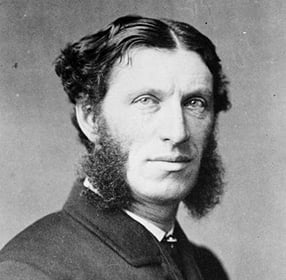
Victoria Moul writes: When I hear or read people — often though not only American “formalists” — discussing “correct” metre in English, and the supposed dominance of accentual-syllabic forms in general and the iambic pentameter in particular, I often think rather impatiently of poets like Arnold and Yeats. Arnold’s verse is musical, highly memorable and — to my ears at least — mostly very straightforward to speak correctly. But it’s often not very iambic at all and he typically uses lines of very varying syllable length. ‘Rugby Chapel’ is a good example of this — its pattern is, technically speaking, more trochaic (rugby) than iambic (endured), the trochaic pattern is established very clearly at the outset (‘Coldly, sadly descends’) and the lines have between six and nine syllables each. If you (inexplicably) wanted to spend an hour “scanning” it you’d find a complex variety of combinations of stressed and unstressed syllables. But its music is easy to hear and read, and very easy to remember, because regardless of the number of the syllables all the lines have three stresses.
Repeated three-stress lines are relatively unusual in English, especially in longer poems, but the four-stress line is very common, perhaps in fact the most natural English line of all, and indeed a lot of so-called iambic pentameter has a tendency to drift towards four rather than five stresses. ‘The Wild Swans at Coole’ establishes an iambic pattern at the outset (‘The trees are in their autumn beauty / The woodland paths are dry’) but is in stanzas of 4/3/4/3/5/3 stresses, with quite varied syllable length and relatively few perfectly iambic lines. Day-Lewis’ poem, by contrast, looks to the eye like it might be iambic pentameter, since the line-length hovers around 10 syllables (ranging from 9 to 12). But most of the lines are spoken naturally with four stresses, not five (‘A sunny day, with leaves just turning’; ‘Wrenched from its orbit, go drifting away’), and only a handful of lines certainly have five.
As far as I know — do comment if you can think of any counter-examples — there are no really good poems about rugby itself, so the poems I discussed today were just those which came into my mind as I watched the practices. None of these English poems are obscure — all are by poets who were considered major in their own lifetime, and all three have been very well-known at some point even if they are not now — and not one of them is in iambic pentameter. In fact, not one of them is obviously in a ‘syllabic’ metre, strictly speaking, at all (as in the familiar statement that traditional English verse is ‘accentual-syllabic’, i.e. where both the number of stresses and the number of syllables are set by the metrical pattern). These poems, like a great deal of English poetry, establish and follow an accentual pattern — of a certain number of stresses in a line, though this too is open to variation — but not, or only very loosely, a syllabic one. Verse of this kind is very common in the English tradition, and the hundred years of poetry between the mid-19th and mid-20th century, even if you set aside the full-blown “modernists” completely, is particularly rich in metrical variety. It is puzzling that this is not better reflected in most discussions of English metre and form. But the best way to get a feel for the actual — rather than imagined — conventions of a literary tradition is, of course, by reading it.
*****
Editor: The passage above is excerpted with permission from a recent Substack post by Victoria Moul in her ‘Horace & friends’ – the full thing is at https://vamoul.substack.com/p/on-rugby-and-metre. In it, with thoughts inspired by watching her nine-year-old son playing rugby, she discusses Cecil Day-Lewis’ ‘Walking Away’, Yeats’ ‘The Wild Swans at Coole’ and Arnold’s ‘Rugby Chapel’. The piece is engaging in several ways, but the point that stands out the most for me is this: “These poems, like a great deal of English poetry, establish and follow an accentual pattern — of a certain number of stresses in a line, though this too is open to variation — but not, or only very loosely, a syllabic one.”
This is much on my mind when I consider the forms that create formal verse. From my school days on, I have felt that analysing English grammar with Latin rules was wrong, just as straightjacketing English verse into syllabic requirements was not always useful, beautiful or appropriate. English is a Germanic language, and plays effectively by looser accentual rules: perhaps harder to define and analyse, but truer to the work of poetry which is to be word-for-word memorisable. Rhythm is one of the essential tricks of memorisation, along with rhyme, alliteration, assonance and a host of rhetorical tricks; and rhythm plays a variety of casual games. Also, accentual pattern corresponds to the continuum that I see at the root of poetry: from womb heartbeat, to dance, to music, to song, to formal verse. Formal verse is at its best when it is rhythmic and rich in musicality as well as in ideas and images and wordplay. Without the music, without the rhythm, it is prose… no matter how well expressed.
So rap and spoken word are inherently more poetic because more memorisable than 99% of what has been published as ‘poetry’ in the past 50 or 60 years. All songwriters are of course genuine poets – not all are good ones, but Bob Dylan certainly deserves his Nobel Prize (and I wish it could have been shared with Leonard Cohen).
Another point is that French too, and other Romance languages, are more accentual than professors often claim. When Françoise Hardy sang Tous les garçons et les filles de mon âge Se promènent dans la rue deux par deux she was following the accentual beat, not giving every syllable equal weight, and completely skipping a couple of unstressed syllables. (Are French professors still teaching that all syllables have equal weight in French verse? Surely not! I hope that died out some time last century…)
Not all poetry is singable – but at its best it has a musicality that both creates enjoyment and enhances its ease of memorisation.






 Form in Formless Times