Category Archives: Robin Helweg-Larsen

Poem: “Camelot at Dusk”

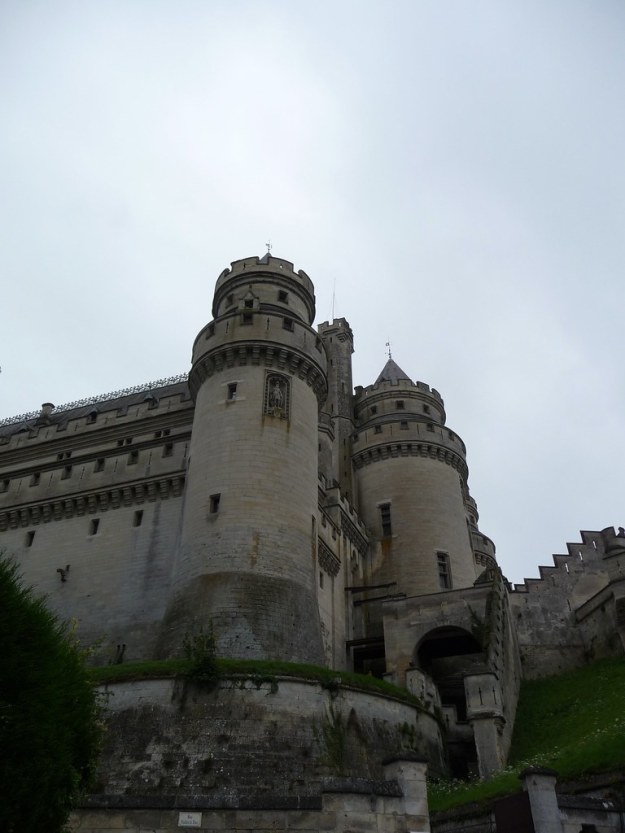
P1010102

(Photo: Castle by epredator)

From under low clouds spreading from the south
The red sun drops slow to night’s waiting mouth.
Rush lamps are lit; the guards changed on the walls;
Supper will not be served in the Great Halls
With Arthur still away. Each in their room,
The members of the Court leave books or loom
To say their Vespers in the encroaching gloom.

Lancelot, up in his tower,
Sees the sunset storm clouds glower,
Feels his blood’s full tidal power,
Knows he has to go.
In her bower, Gwenivere
Puts a ruby to her ear,
Brushes firelight through her hair,
Feels her heartbeat grow.

Guard, guard, watch well:
For the daylight thickens
And the low cloud blackens
And the hot heart quickens
To rebel.

From his tower, caring not
For consequences, Lancelot
Crosses courts of Camelot,
Pitying his King.
In her bower, Gwenivere
Feels his presence coming near,
Waits for footfalls on the stair,
Lets her will take wing.

Guard, guard, watch well:
If attention slackens
When the deep bond beckons,
Evil knows Pendragon’s
In its spell.

And as the storm clouds, rubbing out the stars,
Deafened the castle and carved lightning scars,
Drenched Arthur rode for flash-lit Camelot
Where he, by Queen and Knight, was all forgot.

“Camelot at Dusk” was originally published by Candelabrum, a now-defunct poetry magazine in the UK which appeared twice-yearly from April 1970 to October 2010. Candelabrum provided what, in the 1970s, was a very rare platform for British poets working in metrical and rhymed verse.

Technically, the poem uses a variety of forms. The opening and closing passages use iambic pentameter with simple sequential rhyme for a level of detachment (and the only times Arthur is mentioned by name). The passages with Lancelot and Gwenivere use shorter trochaic lines with denser rhymes for more intensity. The passages of warnings to the guards… well, they have a shifting but repeating structure all their own.

Because of the bracketing of the more emotional passages by the more detached opening and closing, the piece feels very complete. As a whole, it is a nonce form. Whether I can ever repeat it successfully, I don’t know. I have tried, but not been as satisfied with the result.

“Camelot at Dusk” can also now be found in The Hypertexts, which thereby gives it a very respectable Seal of Approval.

Poem: “Eight Legs”

Eight Legs

Odin had a spider
In a web above his throne.
“Out!” he said; it came to him.
“And up!” he said; it grew.
“Legs go this way, legs go that!”
The wind began to moan.
Odin touched a spur to Sleipnir,
Through the storm they flew.

This little poem was published in Anima, a magazine of “Poems of Soul and Spirit” which is now, as they say, quiescent (though it continues to publish books). Odin is very much a god of magic, transformation, journeys, knowledge and poetry – as well as of war and death.

To get hold of the Mead of Poetry, which was in three vats guarded in a mountain cave by a giant’s daughter, Odin changed into a snake to get inside the cave; changed into a handsome young man to persuade the giantess to give him three sips in exchange for sleeping with her for three nights; drank each vat in a single sip; and changed into an eagle to fly back to Asgard where the other gods had prepared a big cauldron for the mead. Chased by the angry giant (also in the form of an eagle) and slowed down by all the mead inside him, Odin was so scared that he shitted some of it out as he flew – but he made it to Asgard, and disgorged the bulk of the mead into the cauldron. This is the gift that the gods give when they want to make someone a good poet. And  bad poetry? That’s when you’ve been consuming the stuff Odin shitted out.

Technically, you could discuss whether “Eight Legs” is in flawed trochaics, and whether the line break between the first two lines is in the right place, and so on… But if you read it aloud, I think you’ll find it has strong stresses, weak stresses, and unstressed syllables – or else consider it as quadrisyllabics (one stressed and three unstressed syllables). I would read it as:

Odin had a spider in a web above his throne. (pause)
“Out!” he said; it came to him. “And up!” he said; it grew. (pause)
Legs go this way, legs go that!” The wind began to moan. (pause)
Odin touched a spur to Sleipnir, through the storm they flew.

Not too different from

I had a duck-billed platypus when I was up at Trinity
With whom I soon discovered a remarkable affinity
– Patrick Barrington, The Diplomatic Platypus

or

I am the very model of a modern major-general
– W.S. Gilbert, The Pirates of Penzance

or

Not always was the kangaroo as now we do behold him
– Rudyard Kipling, The Sing-Song of Old Man Kangaroo, in The Just So Stories

Poetry is very close to song; or, song is the bridge between poetry and music. Reading poetry aloud is very important for its appreciation, to bring out its rhythm (and sometimes even musical notes that flow into it naturally). That’s why poetry can be set to music, and why songs are invariably printed out in poem format.

In that context, even the line of spondees in Samuel Coleridge’s “Metrical Feet” has, like all the other lines, four stresses:

Trochee trips from long to short.
From long to long in solemn sort
Slow spondee stalks; strong foot yet ill able
Ever to run with the dactyl trisyllable.
Iambics march from short to long.
With a leap and a bound the swift anapests throng.

… because poetry in its origins (in the preliterate times of both the tribal fire and modern nursery) is designed to be memorised, so it can be chanted or sung or otherwise recited.

Sonnet: “Driving Rain”

We drive through West Virginia’s driving rain
And even I turn down the cruise control
And stay below the limit. At the toll
We count coins, ask how many tolls remain.
One sleeps, one drives, to get back home tonight.
Wendy’s is closed “because of rain”? That sucks.
The waterfalls look lovely on the rocks.
A bridge has lots of people, flashing lights.
We’ll reach home 1 a.m. if Google’s right.
The wipers go full speed; fog-free a/c.
You have to watch for mud – what’s that, a tree?
Oblivious to all but road, all night.
We make it home and fall into our bed.
And next day hear about the dozens dead.

This sonnet was originally published in Better Than Starbucks in the formal poetry section that Vera Ignatowitsch edits. I wrote it after Eliza and I drove from Toronto to Chapel Hill, NC, on 23 June 2016. It’s a 12-hour haul, a little under 800 miles, but doable in a day. The weather wasn’t great when we started out, and got worse as we came down the I-79 past Pittsburgh. By early evening in West Virginia it was really pouring, but we made it home that night. How dangerous and disastrous the night had been, we didn’t know at the time.

Technically, the sonnet is passable but not perfect. It rhymes abba cddc effe gg, which is neither Petrarchan nor Shakespearean but a hybrid. This structure is referred to as a Bowlesian or Australian sonnet, but giving it a name doesn’t elevate it to the level of the other two. However, as after the intro each line is a separate thought and a separate sentence (mimicking the bitty thought process when having to concentrate in difficult driving conditions), the structures of octet and sestet, or of three quatrains and a closing couplet, are irrelevant and the rhyming is sufficient. Even if one of the rhyme pairs is poor.

Poem: “Roughing It In Europe”

One two three four
Is OK, but you need more:

Un deux trois quat’
If you want a welcome mat

En to tre fire
With the krone getting dearer,

Bir iki uç dirt
Selling off your jeans or shirt

Wahid zoozh teleta arba
In a cafe by the harbour

Üks kaks kolm neli
For some food to fill your belly;

Jeden dwa trzy cztery
Language may be shaky, very,

Uno dos tres cuatro
But they’ll love you if you’re up to

Eins zwei drei vier
Trying freely, laughing freer.

This poem, more fully titled “(On the value of learning languages, when) Roughing It In Europe”, was originally published in Unsplendid, actually a splendid magazine that unfortunately has been quiet for the past couple of years. The poem dates back to my early hitchhiking days, when I was based in Copenhagen but wandering around Europe, North Africa and North America. My experience was that you could wander into any country without any plans, prior contacts or knowledge of the language, and survive so long as you quickly learned to say Yes, No, Please, Thank you, Hello, Goodbye and to count from zero to ten – and so long as you smiled, and were comfortable being laughed at for all kinds of mistakes. Case in point: the word “zoozh” that I learned for “two” in Morocco won’t get you very far in most Arabic-speaking countries… So it goes.

Technically, this poem written in a simple form, 11 rhymed couplets, four feet to a line. The second line of each couplet has mostly trochaic feet (i.e. with two syllables, a stressed or accented one followed by an unstressed one). But the first line of each couplet is simply counting out 1-2-3-4 in different languages, and therefore the feet vary with the words of the language. But as we are used to counting to four in a steady rhythm, everything sounds rhythmic regardless of the number of syllables.

So this shows another type of “form”: each couplet is structured the same in the sense of the first line counting 1-2-3-4, always in a new language, and the second line having four feet and rhyming with its first line’s “four”. And therefore the poem has a “nonce” form – I created this form for this specific poem; it was created “for the nonce”.


Poem: “Jam Jar” (was “Fireflies”)

In the night’s jam jar of my memory
My long-dead parents live as fireflies.
My thoughts of them worn by time’s emery,
Their faint light still suggests where my path lies.


“Jam Jar” was published last year in the September issue of
Amsterdam Quarterly (as well as in the AQ 2018 Yearbook). I originally titled it “Fireflies”, but AQ editor Bryan Monte had published a piece with that name in the previous issue, and naturally requested a change. Such are the vagaries of the publishing world.

Catching fireflies in a jar is such a childlike activity. And that’s appropriate here: no matter how old you become, you will always be the child of your parents.

Technically: it’s a short, simple poem. Iambic pentameter suits the meditative mood, the ABAB rhyme scheme is a natural for four lines.

Sonnet: “And Then You Die”

And then you die. So what have you achieved?
Your house, your place of work, both turn to dust.
You’re honoured? But who’s on a marble bust
none knows or cares, or if the honour’s thieved.
You cheated? Centuries later, none’s aggrieved.
You fought for Freedom? But in history’s dust
no war is seen as necessary or just.
You were a saint? None cares what you believed.
Why all this striving, more than to survive?
Millennia hence a random rubbish heap
will be more studied than your claimed success.
So find a sunny sea, be calm, alive,
swim, then float on your back and fall asleep.
Life can be no more perfect; death no less.

This sonnet was published in Snakeskin a couple of weeks ago. I was very happy with its formal Petrarchan rhyme scheme, until I suddenly noticed, reading it for the umpteenth time, that I had used the word “dust” twice in the rhymes. Given the enormous number of alternatives I could have chosen from, I’m a little embarrassed. All I can say is, the word just seemed so natural, in both places…

But, in the spirit of the poem, so what? The swimming is lovely today!

Poem: “I Started Out Alone”

I started out alone
with no numbers and no words.
The people gave me food and clothes.
I loved the sun and birds.

And when I reach the end,
numbers and words all done,
have to be fed and dressed again,
I’ll love the birds and sun.

This little poem was published recently in Bewildering Stories, and I like it for a couple of reasons: its simplicity (echoing the simplicity of the states of beginning and end of life, the simplicity of the basics of being human); and its completeness – it covers an entire life, and I can’t think of more words that could be added; and the formality, not only of the simple rhythm and simple rhymes, but of the structure, the line-by-line echoing of the beginning of life in the end of life.

For all these reasons it is an easy little poem to remember and recite, and that is satisfying in itself.

Poem: “Carefree Youths”

Carefree Youths

Like fishing boats sailing a landless sea,
an edgeless game-board for an endless game,
hauling their random catch from wide-spread nets,
hunting without the hunter’s hunt and aim,
but sailing, drifting, without cares or frets,
so carefree youths under the bowl of sky
will chance their drifting lives on random lips.
And then the Kraken rises, sinking ships.

“Carefree Youths” was published a couple of days ago in Bewildering Stories. It is in iambic pentameter with irregular rhyme. After the meandering start to the poem (about the youths’ meandering lifestyle), the last line is a hard punchline (reflecting the brutal ending of that lifestyle). There are no sequential rhymes until the last two lines, which thereby become the clear ending of the poem. The form of the poem accentuates the poem’s meaning. That is what form should do.

Final rhyming couplets were used extensively by Shakespeare in various ways. In his sonnets they provide a very strong ending after four quatrains, and is a reason for preferring the Shakespearean sonnet’s ABAB CDCD EFEF GG over the Petrarchan sonnet’s more mannered but less forceful ABBA ABBA CDE CDE. Many of his final couplets are well known – such as:

If this be error and upon me prov’d,
I never writ, nor no man ever lov’d.

Shakespeare did the same sort of thing throughout his plays, in which a scene or a soliloquy will be in blank verse but often terminate in a rhyme. Some of the best-known examples being:

the play ‘s the thing
Wherein I’ll catch the conscience of the king. (Hamlet)

Fair is foul and foul is fair:
Hover through the fog and filthy air. (Macbeth)

Good night! Good night! Parting is such sweet sorrow
That I shall say goodnight till it be morrow. (Romeo and Juliet)

The rhymed sentence helps sum up the scene, and signals that the scene is ending and that a new scene is about to begin – particularly useful since in Shakespeare’s time there were no stage curtains and no real sets to speak of.

Ah, formal verse! So many uses!

Poem: “From the Heart of Europe”

Warning, it’s long: 140 lines. And it’s a rant, a chant, with formal passages only towards the end. It is published in the current issue of Snakeskin, whose editor George Simmers expressed reservations, calling it “your monster of a poem. It’ll be interesting to see if there are indications that anyone gets to the end of it. My suspicion is that 24 lines is about the maximum most people are willing to read online. But I like having an occasional long poem in Snakeskin – gives readers a challenge.

So here it is… “From the Heart of Europe

Europe

I am the Celt, westering across Doggerland
Into the wilds – in me live
The stories of the monsters, dragons, ogres
I found as I struggled through trackless wilderness
Fighting off the wolves, bears and cavemen.
If you would see me, look to Ireland and to France,
To Scotland, Wales, Cornwall and Brittany.
When verbs are forming complicated trains you’re seeing my Gaelic grammar.

And I am the Roman, bringing engineers,
Underfloor heating, square buildings and straight roads.
Ten generations of the Middle Sea –
Italians, Greeks, Egyptians, Libyans –
Braving the cold and damp, our children British…
Until the Empire falls, and some go “home”
To warmer seas, to citrus trees, and Rome.
Look for me in the priestly words,
As in the black Irish who fled the Saxons.

For I am the Angle, Saxon, Jutlander,
Displacing Britons, making Angle-land.
Like ours, all tribes move west and south as Rome succumbs.
Clearing the forests, making free men’s farms,
Avoiding ruins of the Roman towns,
Avoiding ruins of the great square buildings.
Look for me in the fields and farms
Of Essex, Sussex, Saxony,
Of Anglia in England and Anglia in Germany,
And in the daily words of common folk.

Then I am the Viking, avenging Christian slaughter,
Avenging Verden’s massacre, five thousand dead.
Looting and raiding for slaves and wives, and –
Hey, that’s nice land on a quiet river…
Let’s stay here with our meetings and our laws.
Look for me in the Yorkshireman of the Danelaw
And all across the north lands to the east.

I am also the Northman who settled in France –
Where Romans had ruled Celts 500 years –
And now claim the rights of the Viking,
The rights of the Saxon,
Under Roman religion
To rule Angle-land.
I come with the Conqueror, follow the Bastard,
The Builder of Castles and Cities,
With renaissance of learning,
Enlightenment, Parliament,
Even including the poor, and then even women…
Look for me where I continued to conquer –
Where I fought other Europeans to control the world –
My branches spread everywhere – North America, India –
Hong Kong, Australia, Kenya, Jamaica –
But my roots… my roots are in Europe,
From Northlands to Rome and from Ireland to Greece.
You can prune back the branches,
But don’t think of cutting the roots.

When I see a wishing well – my roots
When I see an aqueduct – my roots
When I see men wear trousers – my roots
When I see women’s braids – my roots
When I eat bread and cheese – my roots
When I drink wine and beer – my roots
When I see people vote – my roots
When I hear legal judgement – my roots
When I smell farms and forests – my roots
When I hear waves and seagulls – my roots

And my roots are not without warfare.

In the Great War my grandfather died, so too both his brothers, all in their 20s.
This was not unusual in that war.
Then came a second world war. Europe said “Enough!”
The end of the war. Twin towns were an answer, building links.
Their history begins with Paderborn, Germany, and Le Mans, France.. in 836.
(The UK was a little late to the table, its first twin town was in 1905…)
Coventry now twinned with Dresden and Stalingrad.
The end of the war. The Treaty of Paris of ’51 for the European Coal and Steel Community,
The Treaty of Rome, the EEC of the western 6.
(The UK joined a little late in ’73.)
With Denmark and Ireland in the north, then adding 3 more in the south,
Then 3 more in the north, then 14 in the east,
Until almost Turkey, almost Russia, almost Morocco, Israel…
The Eurovision Song Contest, building links from ’56
(The UK joined late, ’57).
The It’s A Knockout! silly sports on TV (De Gaulle’s idea) from ’65
(The UK joined late, ’67).

Ah, that Europe of 50, 60 years ago…
When north and west and south worked to build links,
And you could wander freely, even go
Into the east (with bureaucratic waits and stamps and inks)…

And I have stood
Under the Transylvanian full moon
And eaten moon-green apples in a smooth wet field
And the lorry-driver spoke no English.

I have hitched
A ride from a Cologne motorway stop
With a limping German who spoke no English
In a fine car with leather seats
Over 250 miles to Hamburg in 2½ hours! – as if he said
“You only think you won the war.”

I have sat
In front of Goya’s Cowherds – Duel with Cudgels –
In the Prado in Madrid, and cried
For me, for us, for Europe, for the world.

I have slept
On the top steps of a Greco-Roman amphitheatre
In the tourist-Turkey fishing village summer nights,
And tourists took my picture.

I have eaten
In the impounded lorries of the smuggling Swiss
At the Turkish-Bulgarian customs zone
And got a ride to Munich.

I have seen
There is one street in Copenhagen no one knows but I.
Invisible, unless you watch those using it go by;
It winds above the buildings, up and down about the sky,
In single file ten thousand go by each day, and no lie! –
(The seagulls heading for the City Dump from out at sea.)

I have walked
South from Glasgow illegally on the motorway
With my thumb out as the snow began to fall.
The Police said “Get in”. They drove in silence 30 miles
And dropped me at a service station.

And still I think of that long night
When through and through the lorry-park
Rutted six inches deep in mud
The madman prowled, distraught and barefoot
Under the full moon, running his fingers through his hair,
Muttering and complaining, shouting aloud,
And the lorry-driver talked with him,
Explained to me
(And I through sparse Spanish guessed at his Romanian)
That the madman in the mud
Had killed someone
Or run him over
Or was on the verge of suicide,
Perhaps all three together…
And the madman muttered barefoot through the mud
Until the sun rose and we went our way.

That was my Europe, yesterday,
as still the British Isles today:
we are where the world meets.
We came, long past, from far away –
and more still come, some go, some stay…
the heart of Europe beats.

-.-.-.-.-

For what it’s worth, instead of those last 6 lines the poem originally had six 4-line stanzas. George Simmers was kind enough to critique them, attacking them from several directions and giving me the opportunity to write something better. They were the most formal section of the entire piece, and in being rejected they help people like Mike Burch make the case that “formal” isn’t the be-all and end-all of poetry.  🙂

Here is the original ending, giving a slightly different meaning and direction to the poem… Anyway, better or worse? What do you think?

But now England may
(Yes, I say May)
Go, with Wales, its own way –
(Though Scotland and Northern Ireland said stay.)

The peace we’ve been blest
With, the growth we’ve possessed
Has led the obsessed
To stoke enmity. Laws were transgressed

In winning the vote.
Weasel words, like a stoat
Changing colour of coat,
Were all lies. May they stick in their throat.

Our Europe is one:
Celt, Roman and Hun
May be how it’s begun,
But now, like the UK, everyone

From all round the globe,
In a suit, in a thobe,
In blue jeans, in a robe,
Has their place – each distinct as in strobe

Light, is lit as a part
Of the waves of fresh start
That newcomers impart
With, like all Europeans, their heart.
Poem: Sonnet: “From Cavemen to Post-Human”

This sonnet looks at the way humans have deliberately explored into challenging new

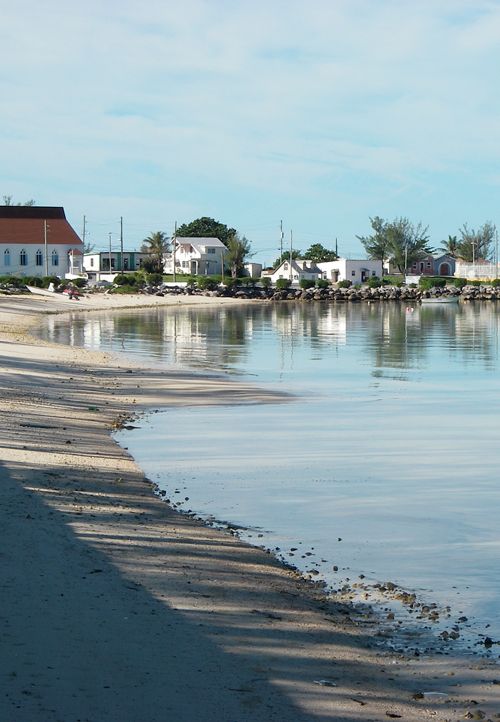
Girl on Log.jpg

“Mary, river daredevil” by magnetbox

environments, and suggests we will keep doing this until we’re human no longer. Not that this is necessarily a bad thing, any more than our past changes appear bad to us now.

The poem was published last week in Bewildering Stories, the online science fiction (or speculative fiction) magazine which has been running for some 18 years. And with poetry, of course!

The link that I have given to the poem takes you to a further link where the editor solicits opinions about the meaning of some of the poem’s statements. The Challenge questions are an interesting addition.


From Cavemen to Post-Human

From the first cavemen clinging to some logs,
escaping with their lives from flood or slaughter,
to mega-palaces that cruise the water,
humans became amphibious as frogs.
Then into space: hostile environment,
no barrier to ways to stay alive,
no worse in Mars domes, modules at L5
than in an igloo or a desert tent.
Next, thought balloons by tech cut free of place,
drifting connecting through ethereal skies,
where we upload ourselves as thought and rise
into the cloud as a post-human race
in new non-human landscapes without land,
pure energy as a new tribal band.