Category Archives: Magazines

Sonnet: ‘The Poem’

Poems are merely words you can remember
word for word. Question: What makes them so?
Think of the earliest nursery rhymes you know,
held from child’s January to old December:
rhymes, rhythms, imagery—rich as meringues.
Then complicate discussion, don’t reduce
odd imagery, words foolish, strange, diffuse—
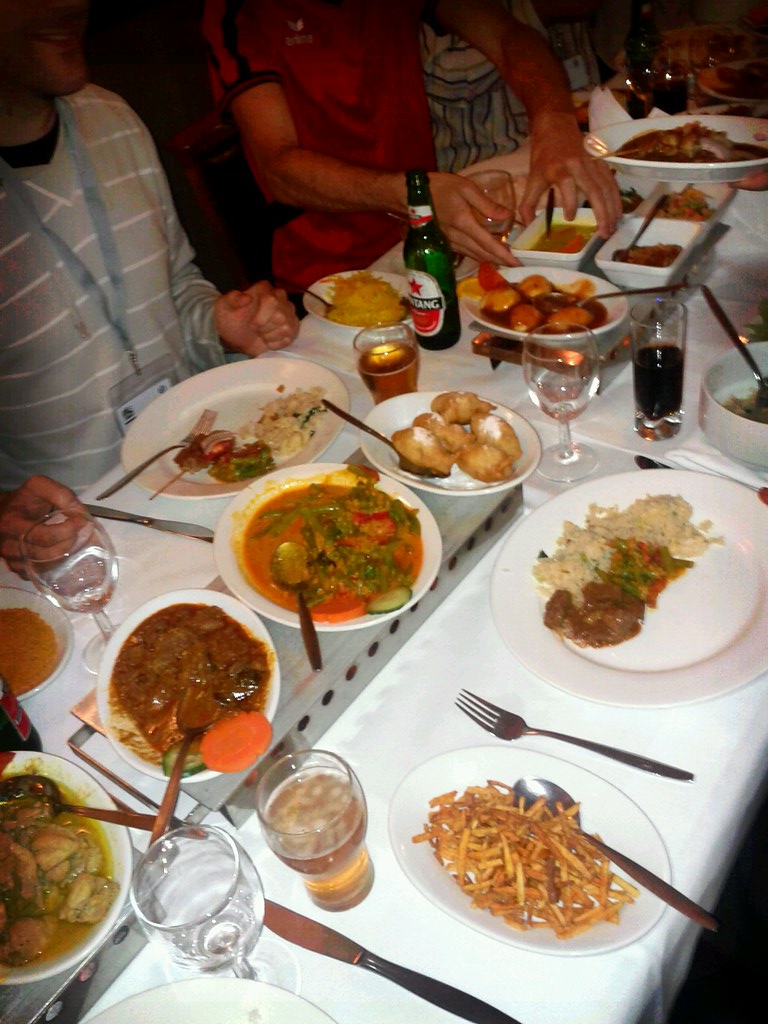
aim for rijsttafel with tongue-tingling tangs.
Use richness to engage the memory:
conflicting quotes from Bible, Shakespeare, Yeats,
with Bach-like sense of heaven’s opening gates
or hall of mirrors, or sun-scattering sea…
Mesmerized readers have to puzzle out
in memory mazes what it’s all about.

My firm belief is that poetic structures originate as nothing more than memory aids, so that a work can be recited word for word. This was invaluable in preliterate societies and was used for tribal histories and spiritual revelations (Muhammad was illiterate, and the most powerful passages of the Quran are in strongly rhythmical rhyme) as well as for lullabyes and love songs. But the use of our human love of rhythmic beat, and our enjoyment of rhyme and wordplay, have helped verse develop into elaborate, engaging, memorable forms, varying by culture because of the different opportunities of the different languages. Enjoy the diversity, and the complexity!

This sonnet, like ‘The Four Duties‘, has just been published in the Winter 2020 edition of The Orchards magazine of formal poetry.

Photo: “Indonesisch Rijstafel” by johl is licensed under CC BY 2.0

Sonnet: ‘Where Are The Lightning Bolts’

Where are the lightning bolts of poetry?
The rolls of thunder and the shattered oaks?
Where, beyond anger, is the ecstasy?
There must be more than parodies, kitsch, jokes–
Elvis-on-velvet, kittens in a room,
jibes at the Lords, the House, the Holy See,
unmetered waffling on a flower in bloom…
Come now, tap Earth’s potential energy!

Our planet on which tens of millions die
from some war, ’flu, government famine, plague–
we pillage land and sea, yet learn to fly
while stories, music, art, reshape the vague
into sublime, emotional or vatic…
Humans can’t last – so be brief, be ecstatic!

Here we are, putting the chaos of 2020 behind us, moving optimistically into the forever-changed and forever-changing future. The storm gods appear to rule our lives: our ape cousins respond in their way, and we should respond to the bigger forces we feel with the wider range of creative outlets that we have–dance, poetry and ecstasy are all appropriate!

This sonnet was first published in The Orchards Poetry Journal, edited by Karen Kelsay Davies who also heads up the four imprints of Kelsay Books. Technically it’s a Shakespearean sonnet by the rhyme scheme, but there is no particular significance in that. Sonnets of all kinds share the compression to 14 lines, and the volta, the redirection of discussion after the halfway mark, and, typically, the sonorous rhetoric of the iambic pentameter. But the driving need of the argument and the near inevitability of the best words will tend to move the rhyme scheme into one form or another. It is better to say powerfully what the poem demands, rather than to weaken the words by trying to strengthen a preconceived rhyme scheme. As elsewhere, “Go with the flow” has a logic to it here.

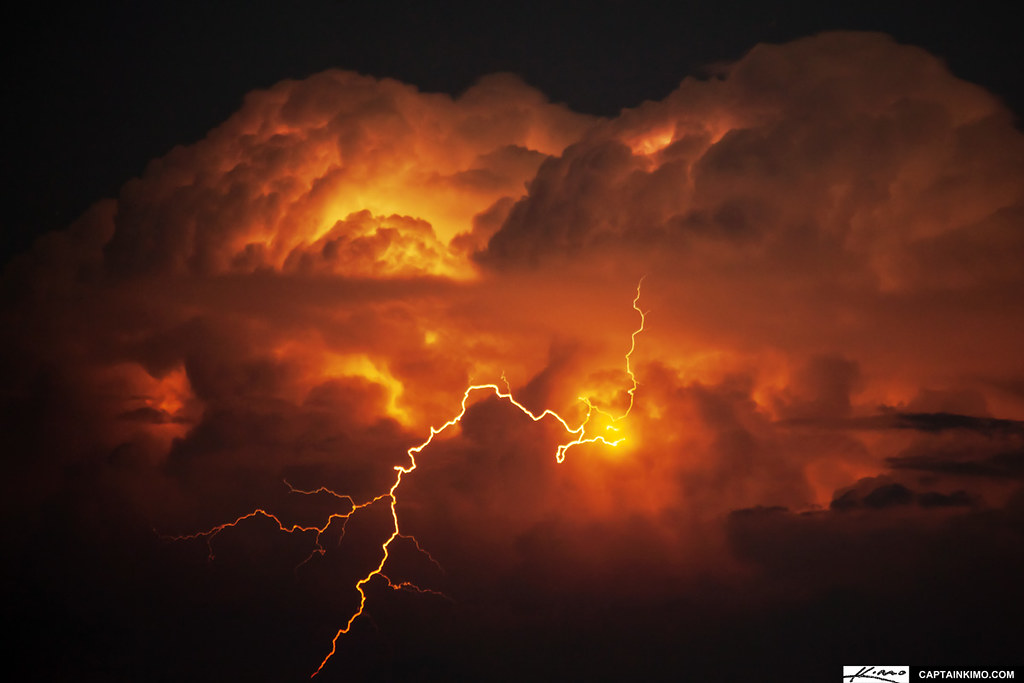
Photo: “Lightning Bolt Over Atlantic Ocean from Jupiter Coast” by Captain Kimo is licensed under CC BY-NC-ND 2.0

Poem: ‘Hobo’

Come you young gunsel and sit by my fire of old skids.
They don’t like you in school, not the teachers and not other kids.
You’re different, I know it, you’re wise in that body of yours
that has grown past their rules and your parents’ commandments and chores.
Have a smoke, have a drink, you can tell me of pills that are new.
Here you’re safe in the open, I’m staying a night, maybe two.
We can share all you want, for the sadness you know I have known,
and the paths that you fear are the strictures that I have outgrown
and the dreams in your mind I now live on the paths that I roam,
for the life that I live is a life where the world is my home.
So go home, go to school, and come back in the evening again.
I’ll be here for a while, until I get on the next train
and you’ll stay, more mature, and experienced in a new world –
or you’ll come on that train, and you’ll see the whole country unfurled –
and you’ll end up like me, and your friends will be such as you were.

This poem was originally published in Rat’s Ass Review, a long string of poems both formal and free, ordered alphabetically by author. As suggested by its name, the magazine’s editors don’t give a rat’s ass for anyone’s opinions or objections, they publish whatever appeals to them. You will find a random mix of work, much of it edgy, much of it about sex and love and death.

I don’t think of myself as a hobo–although, yes, I have jumped a freight train as part of my hitchhiking 25,000 miles on four continents, back before I became a respectable management consultant… But I have great affection for W.H. Davies, a fine nature poet and the author of the superb ‘Autobiography of a Super-Tramp‘.

‘Hobo’ has elements of anti-establishment and counter-culture; and they in turn are part of the human social animal’s constant dialogue between alienation and the search for community. Or, say, about wanting to be free but still have friends. Technically it is written in anapaestic pentameter–each line having five feet of da-da-DUM (with casual exceptions, of course). I don’t have a strong sense of this being the most appropriate metre for this piece, but it feels conversational and flowing. It’s comparatively unusual for me, I normally write in iambics. But the form of a poem is determined for me by the first phrases that occur to me, and that is presumably what happened here.

Photo: “Hobo sitting on a fence, ca.1920 (CHS-1428)” by  is licensed under CC BY 2.0

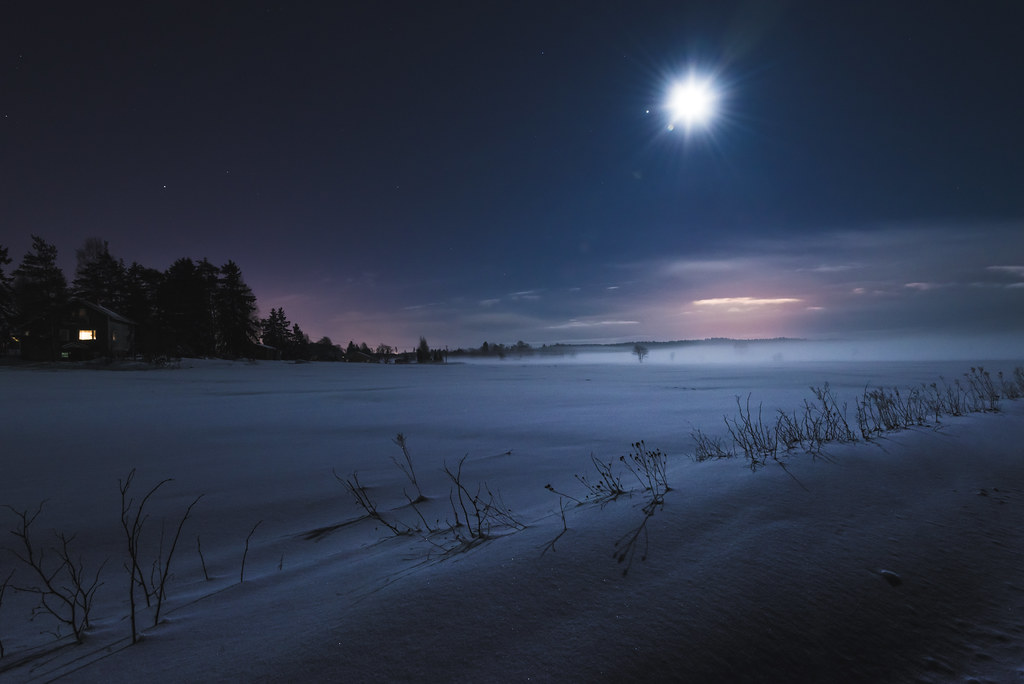
Poem: ‘Winter Night Roads’

Full midnight moon on fields that yield but snows,
Air apple-clean, crisp, sweet
In lungs and nose,
The only sound your feet
Past silent woods –
Inhaling moods and modes
Of midnight roads.

In twenty minutes, you hear only this:
A dog bark twice. An owl hoot once.
A horse snort by a fence.
Some heavy breath behind a hedge: a cow.
A mile away a car’s lights show, then go.
You walk unknown, alone, towards some place
With light and life, perhaps a warm cafe
To make a break in travelling towards day.

This quiet little winter poem (sorry about the timing, Australia…) was first published in The Orchards Poetry Journal. The editors tend toward the bucolic and the formal… but they make exceptions, thank goodness, because this piece is not quite formal. It may be in iambics, but without a pattern to the line length or to what rhyme there is.

But it’s true to the winter outdoor experience–and pleasant enough, so long as you have good boots and adequate clothes!

Photo: “Moonlight” by Jyrki Salmi is licensed under CC BY-NC-SA 2.0

Poem: ‘Politics’

He played the game and loved its vicious tricks,
deceit, despair, all power-politics;
and made good progress, never in retreat,
with no despair at politics’ deceit…
and now still climbs that endless rain-slick stair
of power-politics, deceit, despair.

If you search for photos of politicians, this is the kind of thing you get… There are (occasionally) really, really good people who devote their lives to trying to improve their part of the world; but… Anyway, it seems like a good time to blog this poem!

This short piece was originally published in Snakeskin. Couplets of iambic pentameter, with politics, deceit and despair in the second line of every couplet and providing the rhymes. But you could see that.

Photo: “President Trump at the Israel Museum. Jerusalem May 23, 2017 President Trump at the Israel Museum. Jerusalem May 23, 2017” by U.S. Embassy Jerusalem is licensed under CC BY 2.0

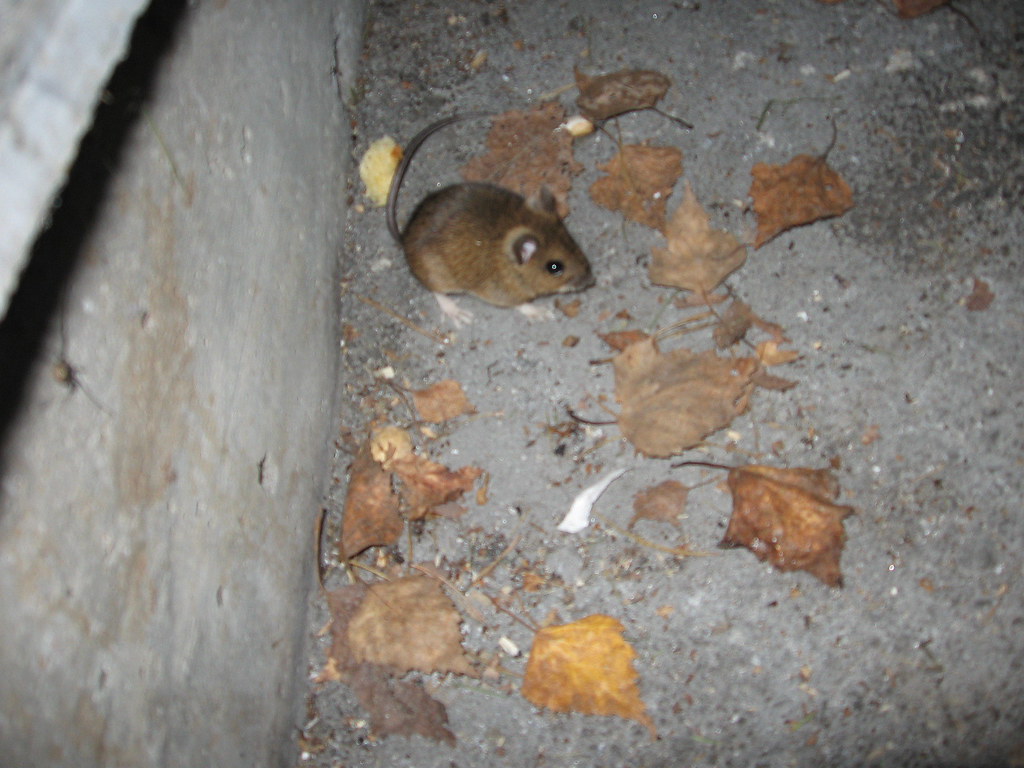
Poem: ‘Poems Like Mice’

Poems should be concise:
quick, small, like mice.
Then one day you find
they’ve made a nest in your mind.

I seem to be writing shorter, more epigrammatic verse recently. Probably influenced by reading too much FitzGerald/Khayyam.

This little poem was published in the December 2020 issue of Snakeskin–which celebrates 25 years as a monthly online poetry magazine, presumably the oldest (or rather “the most venerable”) such magazine in the world. Congratulations to its creator and sustainer, George Simmers!

Photo: “Look at the cute mouse ^^” by letmehearyousaydeskomdeskom is licensed under CC BY-SA 2.0

Poem: ‘Sandcastles’

We’re only children, making castles in the sand.
Enjoy the day.
Night comes, and tides wash all away.

The northern summer is over. Snowy places have snow. Even in the Bahamas and Florida the water temperature is dropping below what locals will swim in (though it doesn’t bother tourists). The day ages towards dark. The year ages towards winter. And we age too. But we know this when we sign up for morning, for spring, for life–and we sign up for everything because there is so much joy, beauty, discovery and love to be experienced.

In Kipling’s ‘Just So Stories‘ one of my favourite passages is the beginning of the story, ‘The Crab That Played With The Sea’:

Before the High and Far-Off Times, O my Best Beloved, came the Time of the Very Beginnings; and that was in the days when the Eldest Magician was getting Things ready. First he got the Earth ready; then he got the Sea ready; and then he told all the Animals that they could come out and play. And the Animals said, ‘O Eldest Magician, what shall we play at?’ and he said, ‘I will show you.’ He took the Elephant—All-the-Elephant-there-was—and said, ‘Play at being an Elephant,’ and All-the-Elephant-there-was played. He took the Beaver—All-the-Beaver-there-was and said, ‘Play at being a Beaver,’ and All-the Beaver-there-was played. He took the Cow—All-the Cow-there-was—and said, ‘Play at being a Cow,’ and All-the-Cow-there-was played. He took the Turtle—All-the-Turtle there-was and said, ‘Play at being a Turtle,’ and All-the-Turtle-there-was played. One by one he took all the beasts and birds and fishes and told them what to play at.

To me this is one of the great secrets of happiness: Play! Play at being who you are, what you are. That includes all your dreams and aspirations, because they are part of who you are. So play at them, as part of playing at what is to be done today. Just play. Play at being yourself.

‘Sandcastles’ was originally published in The Asses of Parnassus, a Tumblr site of “short, witty, formal poems”. This poem isn’t particularly formal, but it has iambics and a rhyme… and it’s short.

Photo: “Sandcastles” by RobW_ is licensed under CC BY-NC-ND 2.0

Poem: ‘Poetic Themes’

You wake and see dew on the grass in spring
But I see futures present changes bring:
Global warming replacing dew with drought,
Nanotech replacing grass with grout,
A.I. replacing people’s minds and thought,
Genetic mods replacing us—with what?
In other words, our world’s about to pass.
Poetry must be more than dew on grass.

I was honestly a little surprised when Light Poetry Magazine told me they would publish this poem. I mostly associate them with their snippy, jokey little poems that appear weekly on topical subjects, Poems Of The Week. Maybe this is unfair, as their full twice-yearly magazine profiles individual poets and has useful book reviews as well as poetry from a couple of dozen formal poets. Be that as it may, I felt this poem might be a little more Dark than Light.

Not that I’m pessimistic about the future. I’m intrigued, and resigned. Just as in William Golding’s ‘The Inheritors’ in which a tribe of early humans finds modern humans moving in and displacing them, so modern humans look like being displaced by something we can’t yet identify. We are like Native Americans when the Europeans started arriving, like White America as the demographic shifts to a more globally representative population, or like every generation that finds the children and grandchildren listening to unrecognisable music and using incomprehensible technology. Is any of this bad? It can be handled well or badly, but it is a natural and unending process.

And now we’re facing a variety of technologies that together can completely remake the human: genetic engineering, A.I., robotics, infinite data-crunching, nanotechnology… Will we casually and irresponsibly start remaking humans? Of course. It’s inevitable. If one country clamps down on it, it will simply happen elsewhere. And what is the likely outcome? I haven’t a clue, but I’m intrigued.

Photo: “morning dew” by haglundc is licensed under CC BY-NC 2.0

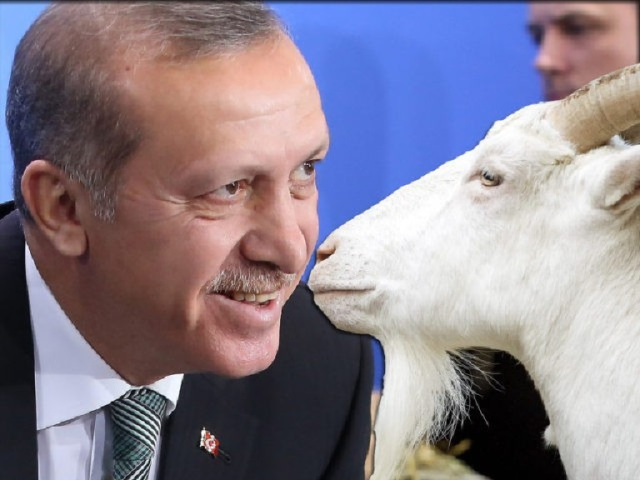
Odd poem: prize-winning limerick by Boris Johnson

There was a young fellow from Ankara,

Who was a terrific wankerer.

Till he sowed his wild oats,

With the help of a goat,

But he didn’t even stop to thankera.

To make sense of this limerick, and why Boris Johnson wrote it, and the various reasons that it won a £1,000 prize, we have to poke around the politics of a few years ago. It started when a German video mildly mocked the authoritarian and repressive President of Turkey, Recep Tayyip Erdoğan. The Turkish government summoned the German ambassador to “explain and justify” the video. As Turkey had become extremely repressive to journalists, German TV comedian Jan Böhmermann then decided to show Erdoğan what free speech meant, by broadcasting a deliberately offensive poem.

On a set with a Turkish flag and portrait of Erdoğan, and with subtitles in Turkish, Böhmermann read his poem of twelve rhyming couplets. Here is a rough translation:

Defamatory Poem, by Jan Böhmermann

Stupid as fuck, cowardly and uptight,
Is Erdoğan, the president,
His gob smells of bad döner,
Even a pig’s fart smells better,
He’s the man who hits girls,
While wearing a rubber mask,
But goat-fucking he likes the best,
And having minorities repressed,

Kicking Kurds and beating Christians
While watching kiddie porn,
And even at night, instead of sleep,
It’s time for fellatio with a hundred sheep,

Yep, Erdoğan is definitely
The president with a tiny dick,
Every Turk will tell you all,
The stupid fool has wrinkly balls,
From Ankara to Istanbul,
They all know the man is gay,
Perverted, louse-infested, a zoophile,
Recep Fritzl Priklopil

Head as empty as his balls,
Of every gang-bang party he’s the star,
Till his cock burns when he has a piss,
That’s Recep Erdoğan, Turkish president.

Erdoğan filed complaints with German prosecutors in a bid to have the poem suppressed, and Chancellor Angela Merkel agreed to investigate, which led to a court injunction, but also to the poem being read out in the German parliament.

Boris Johnson–at the time a backbench Conservative MP as well as former Mayor of London–was interviewed shortly after by The Spectator and a conservative Swiss paper, on immigration, Brexit and related issues. The subject of the poem came up. Johnson–one of whose great-grandfathers was Turkish–called it a scandal that a German court had issued an injunction against the poem being repeated. He said “If somebody wants to make a joke about the love that flowers between the Turkish president and a goat, he should be able to do so, in any European country, including Turkey.” As The Spectator had issued a £1,000 ‘President Erdogan Offensive Poetry’ challenge, Johnson was asked if he had entered. He said no, but when pressed, came up with his apparently spontaneous limerick.

Poetry judge Douglas Murray said the competition received thousands of entries, and he tweeted: “Can I remind entrants that you cannot just make up words. ‘Wankerer’ does indeed rhyme with Turkey’s capital. But it is not a word.” (For non-Brits: “wank” = masturbate, and “wanker” = stupid jerk.) However, Boris Johnson ended up with the £1,000 prize. Perhaps the fact that he is a former editor of The Spectator had something to do with it. (And technically, this is a very poor limerick.)
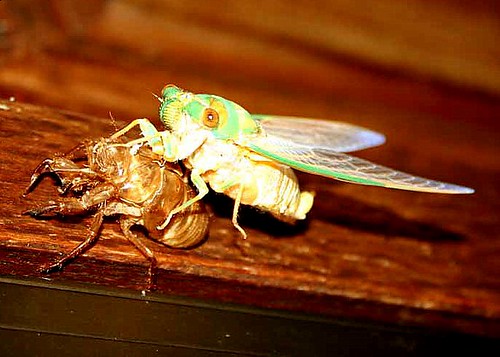
Poem: ‘Chrysalis’

After a billion years of larval hit-and-miss
humans emerged, stood up, and fed, and grew,
started to build their city chrysalis
from which, 3,000 years entombed, now formed anew,
they burst in wild bright flight with wings deployed
out to the stars. The egg case of this final birth,
the Earth,
was, naturally, destroyed.

We have good news and bad news. The bad news is that the rate of change is ever-increasing in all aspects of human life–from our bodies to our planet–and we will never return to the old normal. The good news is that this is the process by which life advantages to higher levels of organisation and intelligence.

This poem was originally published in Star*Line, one of the two magazines of the Science Fiction and Fantasy Poetry Association (SFPA). The other magazine is Eye to the Telescope (ETTT).

The poem rhymes and is written in iambics; but the rhymes are not structured to a pattern, and the lines are of uneven length. This casual form is used by Matthew Arnold and T.S. Eliot among others, in some of my favourite poems such as A Summer Night (I have always loved the three paragraphs beginning with:

For most men in a brazen prison live,
Where, in the sun’s hot eye,
With heads bent o’er their toil, they languidly
Their lives to some unmeaning taskwork give,
Dreaming of naught beyond their prison wall.
)

and The Love Song of J. Alfred Prufrock. The form doesn’t have the musicality of more regular forms like the sonnet or limerick, but it provides all the memorising strength of rhythm and rhyme within a more conversational flow, and facilitates different lengths of thought including, if wanted, a punchline.

We live in difficult times, what with the unprecedented challenges of climate change, mass migration, infectious diseases, unpredictable technological advances in weaponry, and more. And the problems will continue to multiply and get larger, even as we develop solutions to the smaller, simpler ones. And from the inevitable destruction of our form of life will emerge… what? We cannot know, we probably cannot even imagine.

Photo credit: “Cicada emerging from old exoskeleton” by Shek Graham is licensed under CC BY-NC 2.0