Tag Archives: formal verse

Sonnet: “The Word”

“In the beginning was the Word.” What word?
Said by what tongue? Indeed, said in what tongue?
And by what consciousness was the Word flung
Out into Nothing, as from Ark a bird?
Nothing will come of nothing, we’ve concurred.
A billion galaxies, from Nothing sprung?
How “the beginning,” if a lowest rung
Requires both ground and ladder? It’s absurd.
Religions, sects, philosophies and schools,
Simple or complex, always come to grief
Because our grasp of Nothingness is flawed.
The atheist rightly shows all gods are fools;
The agnostic claims that any held belief —
Including one in Nothing — is a fraud.

I’ve written poems for and against various religions, depending on my mood and on whatever idea I was exploring. But in the end I come back to disbelief. I’m a militant agnostic: “I don’t know, and neither do you!” And this acknowledgement of ignorance of where the Universe comes from is emphatically NOT an endorsement of any religion. It is an endorsement of the (probably hopeless) search by science for all the answers.

This sonnet, with Petrarchan rhyme scheme ABBA ABBA CDE CDE, was originally published in Bewildering Stories, issue 789. I’ve tinkered with the penultimate line since then, trying to improve the metre.

Photo: “WORDS” by Pierre Metivier is licensed under CC BY-NC 2.0

Sonnet: ‘The Poem’

Poems are merely words you can remember
word for word. Question: What makes them so?
Think of the earliest nursery rhymes you know,
held from child’s January to old December:
rhymes, rhythms, imagery—rich as meringues.
Then complicate discussion, don’t reduce
odd imagery, words foolish, strange, diffuse—
aim for rijsttafel with tongue-tingling tangs.
Use richness to engage the memory:
conflicting quotes from Bible, Shakespeare, Yeats,
with Bach-like sense of heaven’s opening gates
or hall of mirrors, or sun-scattering sea…
Mesmerized readers have to puzzle out
in memory mazes what it’s all about.

My firm belief is that poetic structures originate as nothing more than memory aids, so that a work can be recited word for word. This was invaluable in preliterate societies and was used for tribal histories and spiritual revelations (Muhammad was illiterate, and the most powerful passages of the Quran are in strongly rhythmical rhyme) as well as for lullabyes and love songs. But the use of our human love of rhythmic beat, and our enjoyment of rhyme and wordplay, have helped verse develop into elaborate, engaging, memorable forms, varying by culture because of the different opportunities of the different languages. Enjoy the diversity, and the complexity!

This sonnet, like ‘The Four Duties‘, has just been published in the Winter 2020 edition of The Orchards magazine of formal poetry.

Photo: “Indonesisch Rijstafel” by johl is licensed under CC BY 2.0

Sonnet: ‘Where Are The Lightning Bolts’

Where are the lightning bolts of poetry?
The rolls of thunder and the shattered oaks?
Where, beyond anger, is the ecstasy?
There must be more than parodies, kitsch, jokes–
Elvis-on-velvet, kittens in a room,
jibes at the Lords, the House, the Holy See,
unmetered waffling on a flower in bloom…
Come now, tap Earth’s potential energy!

Our planet on which tens of millions die
from some war, ’flu, government famine, plague–
we pillage land and sea, yet learn to fly
while stories, music, art, reshape the vague
into sublime, emotional or vatic…
Humans can’t last – so be brief, be ecstatic!

Here we are, putting the chaos of 2020 behind us, moving optimistically into the forever-changed and forever-changing future. The storm gods appear to rule our lives: our ape cousins respond in their way, and we should respond to the bigger forces we feel with the wider range of creative outlets that we have–dance, poetry and ecstasy are all appropriate!

This sonnet was first published in The Orchards Poetry Journal, edited by Karen Kelsay Davies who also heads up the four imprints of Kelsay Books. Technically it’s a Shakespearean sonnet by the rhyme scheme, but there is no particular significance in that. Sonnets of all kinds share the compression to 14 lines, and the volta, the redirection of discussion after the halfway mark, and, typically, the sonorous rhetoric of the iambic pentameter. But the driving need of the argument and the near inevitability of the best words will tend to move the rhyme scheme into one form or another. It is better to say powerfully what the poem demands, rather than to weaken the words by trying to strengthen a preconceived rhyme scheme. As elsewhere, “Go with the flow” has a logic to it here.

Photo: “Lightning Bolt Over Atlantic Ocean from Jupiter Coast” by Captain Kimo is licensed under CC BY-NC-ND 2.0

Teaching ESL with Songs and Poems

Babies learn by play and imitation. Children learn by play and imitation. There is no reason this isn’t the easiest way for adults to learn, as well (and I speak as someone who has made a successful career of using board games to teach business finance rapidly and enjoyably).

The imitation of language, with a baby learning to speak, is enhanced by repetition–not just simple sentences and phrases used again and again, but also lullabyes and nursery rhymes. The advantages to songs and poems are that they are engaging to the ear (even if the words are not understood); that they are repeated virtually identically each time the same person sings or recites them; that the repetition and music, the rhythm and rhyme, make it easy to learn; learning then moves from passive (understanding) vocabulary to active (speaking) vocabulary; and the word-for-word learning teaches the structure of the language, the syntax, the grammar, as well as basic vocabulary and playful other words.

The principles are no different for someone learning a second language, whether as a child or an adult. To make the process engaging, to develop active use of the language with a confident vocabulary and grammar, there is nothing better for the beginner than songs and poems. Recorded music is fine–then the repetition will always be exact, and learning to sing simple songs (The Beatles’ ‘Hello Goodbye’ comes to mind) will contribute to developing a native speaker’s accent. With ESL–English as a Second Language–you may need to decide if you want the Queen’s English, or Liverpool, or Nashville, or what.

But singing isn’t always a practical solution. In that case, look at the resources developed for ESL teachers. Here is a webpage developed by the British Council and the BBC. And here for teens and adults is an excellent website with ‘Popular Poems to Teach‘. Note that most of the poems (though not all) whether British or American are using rhyme and metre. And this, again, is because those factors make it easier to learn things by heart–and that is what songs and poems will achieve: learning not just words and rules, but rather entire sentences with their grammar and vocabulary, learnt by singing or reciting, far more enjoyably than by studying lists and charts.

And the advantage is universal. Songs and poetry are part of the human experience, whether you come from China, India, Saudi Arabia, Nigeria or Brazil. Learning to sing or recite in English is not to start again from scratch, but to enjoyably refresh a childhood experience, a skill that has already been mastered.

Photo: “Wittenberg International Student Party” by Matt Cline is licensed under CC BY-NC-ND 2.0

Poem: ‘Humankind at Dusk’

It’s in your newsfeed update every day:
The AI obsolescence on its way,
Replacing all tasks, everything we do.
There’ll be no need for people. That means you.
How much is merely existential dread
And how much knowledge of a road ahead:
Unlit, black ice, and your tires have no tread?

With the world stage held by strutters
While the UN talks and mutters.
They’re all out of date tut-tutters.
People in the street
Stand there angry, with lips pursed,
Feeling they’ve been conned, coerced,
Life has gone from best to worst.
Blame the rich elite.

Man, man, think fast:
With the AI racing
And our genes debasing,
Basic humans’ place in
Life won’t last.

Warnings now the TV utters:
Hurricane! But we’ve no shutters,
Power is out, the candle gutters,
Roofs are blown away.
Thrown into the storm head-first
No response can be rehearsed,
Save yourself though you be cursed:
Everything’s in play.

Man, man, think fast:
With the Hive replacing
Every human trace in
Life, be self-effacing
Or be past.

The rest ride the AI-bombs down the sky,
Waving their Stetsons: “We’re all going to die!”
Life always moves on from the old to new.
There’ll be no need for people. That means you.

‘Humankind at Dusk’ was originally published in the Speculative Fiction & Verse zine Bewildering Stories. It reflects my serious concern that we have no idea where we’re going as a species, with everything from genetic modification to brain implants now becoming a reality. Not that I object to it, any more than I object to hurricanes or earthquakes; they’re all part of the nature of things. As humans, we tinker, experiment, explore, run into problems, seek solutions, create all kinds of new problems, and so on. That’s just the way it is.

Technically, I was trying to replicate the nonce structure of a much earlier poem I wrote, ‘Camelot at Dusk‘, to see if this was a form that I could use when trying to create a sense of urgency and disaster bracketed within more reflective and dispassionate statements. So the opening and closing stanzas are in that nice and boring, meditative iambic pentameter; while the middle pieces switch back and forth between two other forms, with shorter, choppier lines and more repetitive rhyme. I created the form to meet the needs of the earlier poem, where I think it worked very well. I’m still (years later) pondering whether it was appropriate to try to reuse the form for this piece. I think I like it, but I’m not entirely sure.

Photo: “silence” by Cornelia Kopp is licensed under CC BY-ND 2.0

Political poem: Hilaire Belloc, on elections

The accursed power which stands on Privilege
(And goes with Women, and Champagne, and Bridge)
Broke–and Democracy resumed her reign:
(Which goes with Bridge, and Women and Champagne).

The precise phrasing of Hilaire Belloc‘s little squib may have been outdated by the likes of Margaret Thatcher, Angela Merkel and Kamala Harris… but the complaint by the common voter (or disillusioned non-voter) is valid, that professional politicians live in a very comfortable club that takes care of all its members regardless of who actually wins an election; and no fundamental change occurs.

A nice little quatrain, iambic pentameter, the simplicity strengthened by the bite of the repetition contradicting the idea of change. Easy to remember and quote because – of course – it rhymes and scans.

“2009 Five Presidents, President George W. Bush, President Elect Barack Obama, Former Presidents George H W Bush, Bill Clinton & Jimmy Carter, Standing” by Beverly & Pack is marked with CC PDM 1.0

Political poem: Hilaire Belloc’s epitaph on a politician

Here richly, with ridiculous display,
The Politician’s corpse was laid away.
While all of his acquaintance sneered and slanged
I wept: for I had longed to see him hanged.

The US and UK have been so polarised for the past several years that it seems everyone has a politician they would like to see executed–or jailed at the very least. But this is neither a recent phenomenon nor a merely Anglo-American one. All round the world notorious pillagers of their countries go to the grave with great pomp, while most of their countrymen and -women are simply glad that they are finally going.

This sarcastic little poem by Anglo-French writer Hilaire Belloc suggests two things: that all successful political leaders are loathed by a large percentage of the population; and that to make your sarcastic comment truly memorable if it is more than five or six words long, you do well to put it in verse. The rhyme and meter not only make the words easier to remember, they also lend a magical impression of inevitability and authenticity to the idea expressed. Well-constructed verse provides a fraudulent but powerful proof that the idea expressed is valid. Rhetoric and oratory inhabit this area also. Well-expressed ideas have more credibility than badly expressed ones, regardless of the relative merits of the ideas themselves.

Perhaps we should count ourselves lucky that few politicians exhibit much interest in poetry…

November 2023 update: I’ve been quoting this poem with reference to the death of Henry Kissinger.

Photo: “President Cyril Ramaphosa attends former President Robert Mugabé’s State Funeral in Harare” by GovernmentZA is licensed under CC BY-ND 2.0

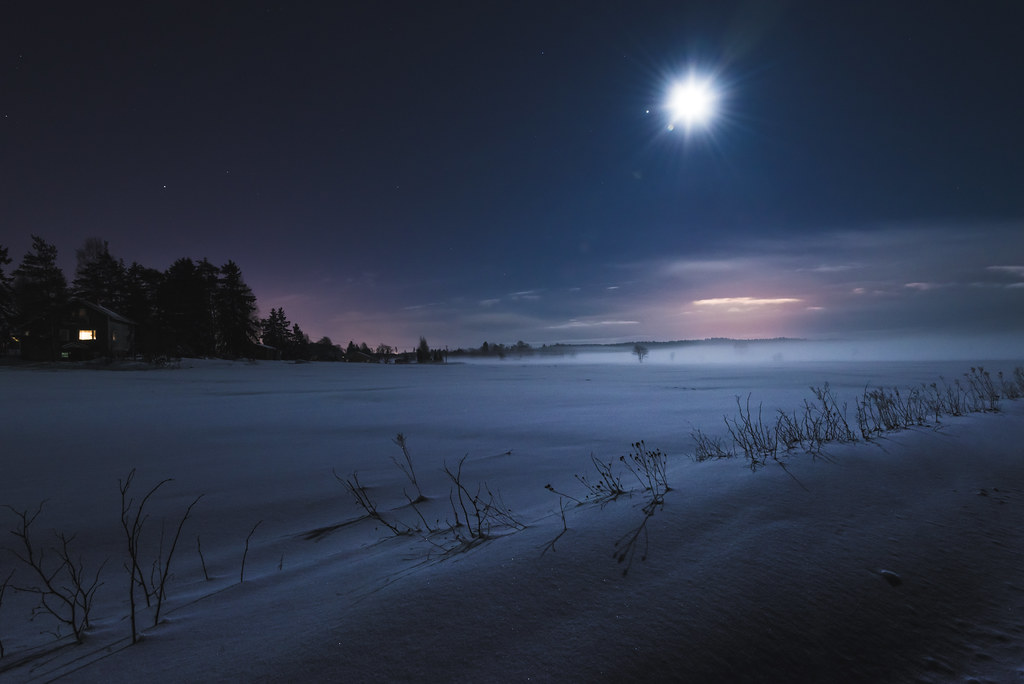
Poem: ‘Winter Night Roads’

Full midnight moon on fields that yield but snows,
Air apple-clean, crisp, sweet
In lungs and nose,
The only sound your feet
Past silent woods –
Inhaling moods and modes
Of midnight roads.

In twenty minutes, you hear only this:
A dog bark twice. An owl hoot once.
A horse snort by a fence.
Some heavy breath behind a hedge: a cow.
A mile away a car’s lights show, then go.
You walk unknown, alone, towards some place
With light and life, perhaps a warm cafe
To make a break in travelling towards day.

This quiet little winter poem (sorry about the timing, Australia…) was first published in The Orchards Poetry Journal. The editors tend toward the bucolic and the formal… but they make exceptions, thank goodness, because this piece is not quite formal. It may be in iambics, but without a pattern to the line length or to what rhyme there is.

But it’s true to the winter outdoor experience–and pleasant enough, so long as you have good boots and adequate clothes!

Photo: “Moonlight” by Jyrki Salmi is licensed under CC BY-NC-SA 2.0

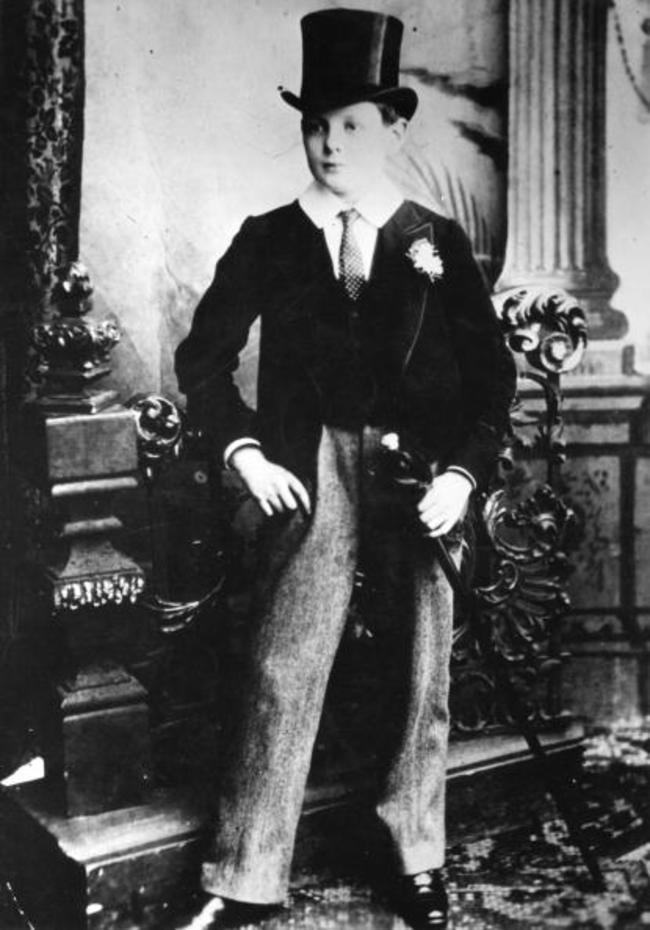
Odd poem: ‘The Influenza’ by Winston Churchill, age 15

Oh how shall I its deeds recount
        Or measure the untold amount
        Of ills that it has done?
        From China’s bright celestial land
        E’en to Arabia’s thirsty sand
        It journeyed with the sun.

I omit the next nine stanzas, as the influenza makes its way to Britain. The poem ends:

        For though it ravaged far and wide
        Both village, town and countryside,
        Its power to kill was o’er;
        And with the favouring winds of Spring
        (Blest is the time of which I sing)
        It left our native shore.

        God shield our Empire from the might
        Of war or famine, plague or blight
        And all the power of Hell,
        And keep it ever in the hands
        Of those who fought ‘gainst other lands,
        Who fought and conquered well.

Written in 1890 when he was a lazy 15-year-old Harrow schoolboy who did badly at everything except English, Winston Churchill partially redeemed himself with this prizewinning poem on the global influenza epidemic (which may have been a Coronavirus) of his day. This “Asiatic Flu” or “Russian Flu” killed about a million people worldwide.

The photograph shows Churchill in his school clothes at age 14.

So there you have him: a teenage Churchill, with excellent control of English and an early exposition of his oratory, bombast, nationalism, imperialism, and enjoyment of warfare. And fifty years later he did brilliantly for Britain in the Second World War (but thank goodness for Clement Attlee picking up the pieces afterwards).

Potcake Chapbooks: Updated Call for Submissions

The “Potcake Chapbook” series is named for the dogs of the Bahamas and the Caribbean – strays that live off the burnt scrapings of cooking pots. The poems in the series are a mixed bunch – but the potcake of our logo wears a bow tie to show that he and all the poems are formal. These poems are memorable in part because they rhyme and scan, as all truly memorable (i.e. easily memorisable) poetry does. We subscribe to the use of form, no matter how formless the times in which we live.

Potcakes hunt around the back streets and beaches, looking for something unguarded to eat. Like a potcake, I’m always looking to see if there is some good poem to carry off. The plans for the chapbooks are a bit sketchy, always changing–everything depends on what I run across and what Alban Low would like to illustrate. Perhaps half the poems we have published have come from my poking around back issues of online poetry magazines; and the other half have come from material that has been sent for me to look at.

When there is enough good material on a single theme to fill 13 pages of a chapbook (still leaving room for Alban’s work, of course), then it may become the next project. But until a chapbook actually goes to print everything is subject to change. An even better poem may show up and displace one tentatively placed. A slew (or slough) of poems on a new theme may cause a reprioritisation of planned chapbooks.

This is one of the reasons that I prefer to consider only poems that have already been published–so that I don’t feel guilty about having a bunch of poems that will sit with me for months, years, and may or may not be included in the Potcake series. I have flagged a thousand poems that interest me; but I can only publish a dozen in a chapbook, and only a few chapbooks will get produced in a year.

However I am always keen to read and consider rhymed and metered verse that has already been published. There are several chapbooks that are jostling in the queue for completion and publication:

Travels and Travails (travel)
City! O city! (urban life)
Just a Little Naughty
Portraits Unpleasant
Various Heresies (religion)
Lost Loves
The Horror of Spring! (seasons)

and there are more; but the next one in the series, to come out early in 2021, will be one of science fiction, tentatively ‘Rockets and Robots’. Like all the chapbooks listed above, it is nearly full already. As with all of them, if I run across another poem I really like, I’ll include it.

Poems in the chapbooks run from two or three lines to some 40 lines in length–obviously, with space at a premium, poems over 20 lines and running over one page are less likely to be included… but it does happen. Other criteria: I’m looking for wit, elegance, a variety of traditional and nonce forms, a variety of voices and moods: happy, sad, angry, sardonic, meditative… anything interesting I can scrounge. If you have something you think I might like, on any topic, please send it along to robinhelweglarsen@gmail.com

I can’t promise to use it, but I will read it and reply!