Tag Archives: Robin Helweg-Larsen

Poem: ‘We Dreamed’

We dreamed we could fly to the moon
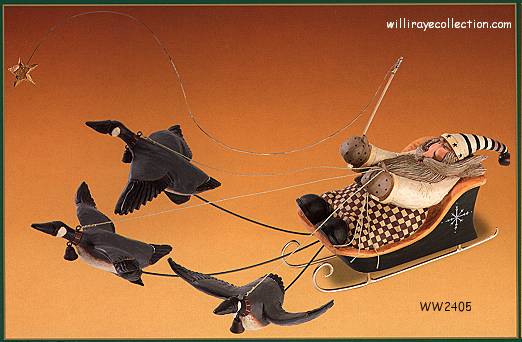
With six grey geese pulling our sleigh.
We dreamed we could fly to the moon –
We can, but not in that way.

We dreamed we could see round the world
With a magical mirror display.
We dreamed we could see round the world –
We can, but not in that way.

We dreamed we could live forever
By doing whatever gods say.
We dreamed we could live forever –
We can, but not in that way.

It seems to me that anything that humans can imagine, some of them will try to achieve. Further, that the fairytale and fantasy dreams of preliterate days still continue, and they are indeed being achieved–though not necessarily as was originally imagined. Can we (or our descendants) attain indefinite lifespans? I think so, but probably not as the kind of human that we are today. After all, if you could halt ageing, if you could rejuvenate the body, what else would you think of tinkering with?

This poem was originally published in The Road Not Taken – the Journal of Formal Verse.

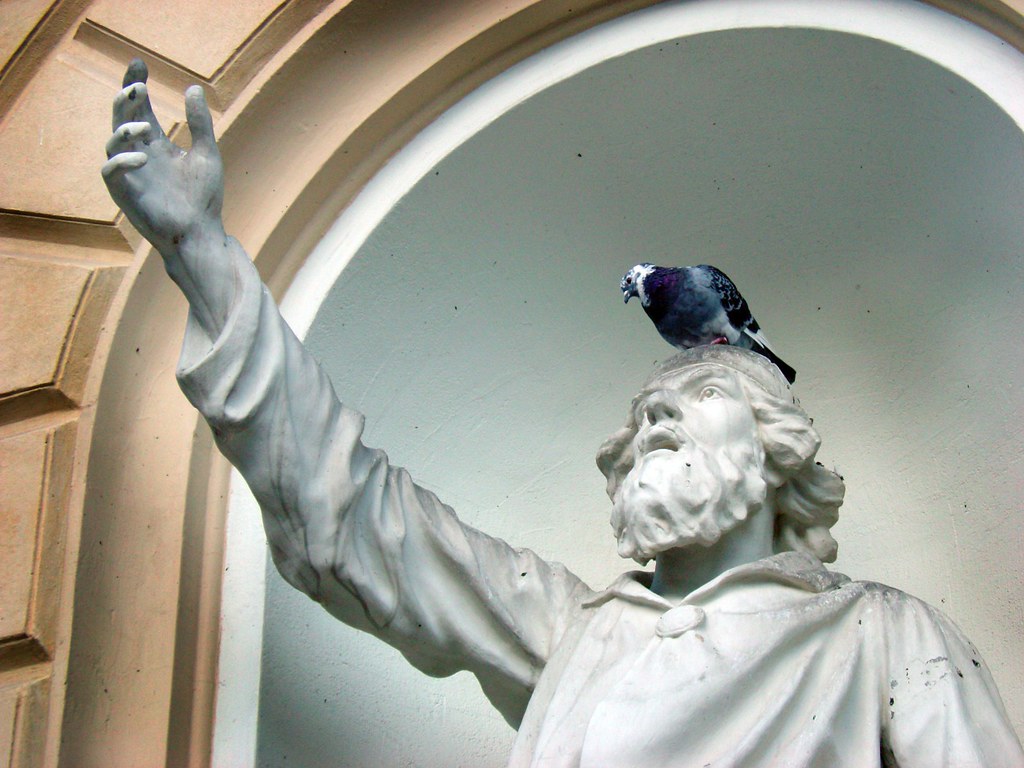
Photo: Southern Flight, Williraye Studio

Poem: “Bee”

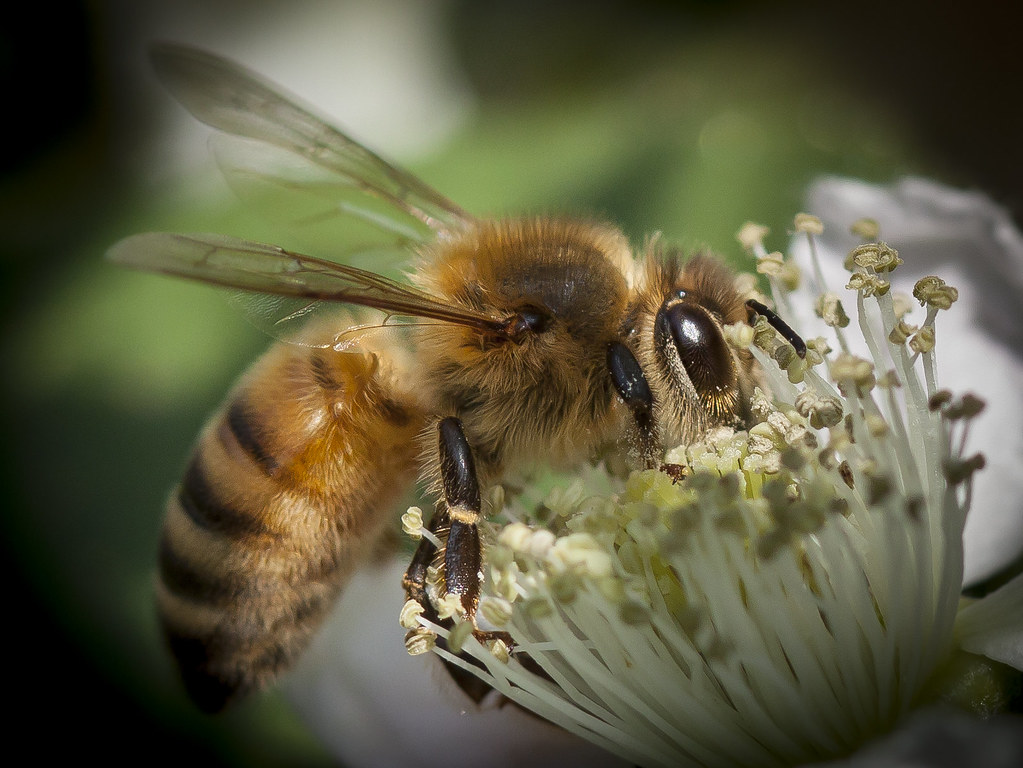
“July Honey Bee” by MattX27 
Through the honeyed halls of Autumn
Hums the angry ageing bee;
As its work faces fruition,
And its life, redundancy.

This little poem was originally published in Candelabrum, a 1970 formalist hold-out that ran for forty years in the UK under Leonard McCarthy. More recently, it was just republished in Jerome Betts’ latest Lighten-Up Online.

Epigrammatic couplets and quatrains, being rhyme- and stress-based, are common throughout Indo-European languages. They hold the same natural place that haiku, senryu and tanka have in syllable-counting Japanese. It is easier to learn by heart a poem whose form uses the natural strengths of the language, rather than something written in a language-inappropriate form.

Similarly, when reading a poem in translation, you get the ideas and the imagery but you normally lose the enhancement of mood caused by the metre, the rhythm of the verse, as well as by the rhyme. So ideas and imagery alone give you prose, not poetry.

Consider the differences in tone of gravity or levity set by rhythm in these opening lines (and you need to read them aloud–in your head if you can do that, otherwise really aloud, in order to hear the rhythm, the beat of the lines):

Let us go then, you and I,
When the evening is spread out against the sky...

I sprang to the stirrup, and Joris, and he;
I galloped, Dirck galloped, we galloped all three...

On the top of the Crumpetty Tree
The Quangle Wangle sat...

The first is meditative, the second full of action, the third is casual, informal… and those moods are set by the rhythm alone.

Metre is an essential component of English poetry. Make the metre-rule your yardstick. Don’t leave home without it.

Poem: “The Silence”

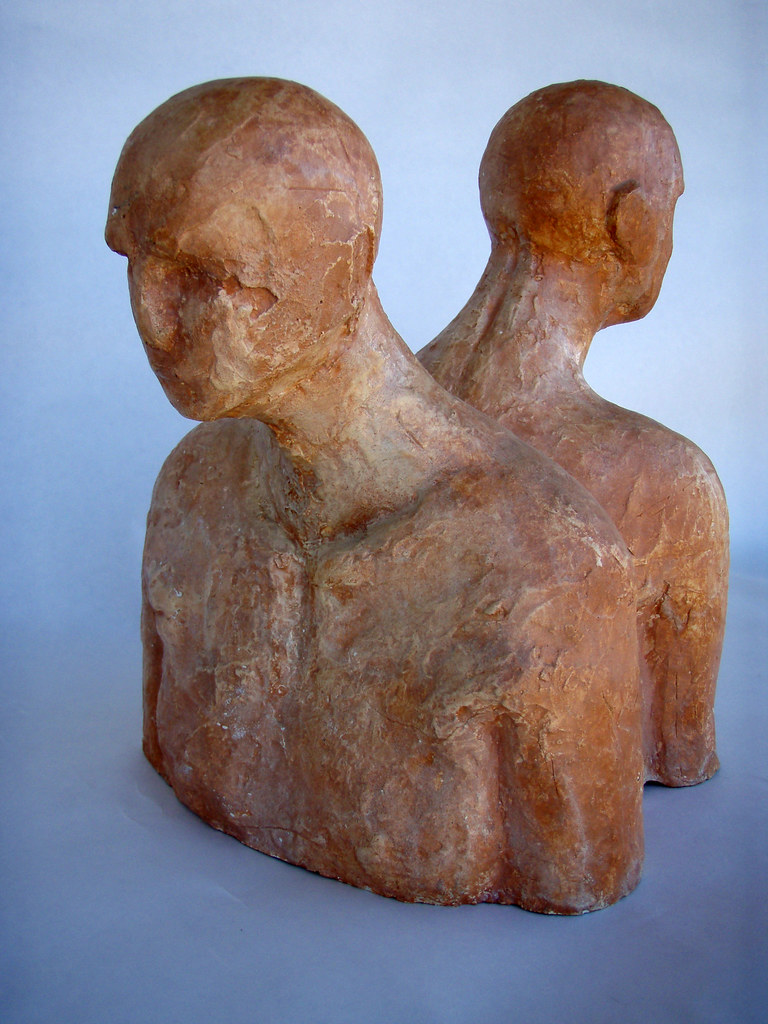
“Pareja (Couple)” by Daquella manera 

On those days when, because you felt attacked,
you just won’t speak, it’s like a dress rehearsal
for one of us being dead. (So, a prehearsal?)
Can’t speak for you, how you’d react,
but for myself, if you die, I know only:
I’d be lonely.

After the slow dispersal
of the acquisitions of the years
from yard sales, impulses, unfinished plans–
after the children’s and grandchildren’s tears,
(their own mortality foretold in Gran’s)
there’d be an emptiness.

Routine unravels:
I’d need an act of will to even shave–
the dogs don’t care how I behave.
All I need’s here in cupboards, shelves, on line.
I’d be just fine…
apart from growing restlessness.

I guess I’d restart travels.
Meanwhile I’ve learned how it will be
to live without you, just your memory,
a silent apparition in this room and that,
the ghost of one who used to laugh and chat.

Think of this as a melancholy love poem, written in a temporary (thank goodness) state of being that can occur in any relationship.

This poem was published this month in Snakeskin No. (or #) 276. I feel proud to be in the issue, as I rate it as one of the best ever in the 20+ years that George Simmers has been putting the magazine out. Though much of the poetry is formless (but still worth reading!), there is some truly impressive work by Tom Vaughan and Scott Woodland, with well-structured work by Robert West, Nick Browne and Jerome Betts, and with interesting innovations in form by Marjorie Sadin, Claudia Gary and George himself–in this last, the character of the verse becomes more lively as the character in the verse becomes more alive.

Technically the form of the poem–uneven lengths of iambics, all lines rhyming but not in a structured way–is one that allows the line breaks to echo your intact chunks of thought as well as the rhythms of speech. It is the form of Eliot’s Prufrock and, earlier, of Arnold’s A Summer Night:

And the rest, a few,
Escape their prison and depart
On the wide ocean of life anew.
There the freed prisoner, where’er his heart
Listeth will sail;

It is a casual form, but it retains enough of the hooks of more formal verse to make it easy to memorise and recite.

Limerick: On a Hopeless Romantic


Like Jesus, she felt God-forsaken,
like Joan of Arc, wanted a stake in
     a life full of meaning,
     a life undemeaning—
like Jung, she was simply myth-taken.

This limerick was originally published in Light. As far as I remember, I didn’t have anyone in mind when writing it, it was done for the pure wordplay of the rhythm and rhyme, the repetition of the J-names in the long lines and the near-identical nature of the short lines, and of course the final pun.

Formal verse covers a lot of territory from limericks at one extreme to Paradise Lost at the other. Personally, I’ll take Lear over Milton any day.

Launch: Potcake Chapbook 7, ‘Murder ! – poems of killings past and present’

07 Murder!

Potcake Chapbook 7: ‘Murder!’

Murder needs no formality of gats,
violin cases or fedora hats
or any other long-outdated memes.
Murder is merely social discord that’s
taken to interpersonal extremes.

Murder. Here we present victims ranging from the unidentifiably unknown to the rich and powerful, and from the time of the Emperor Constantine to the present day. It appears to be something with which we humans are permanently infected. 

The poems–all formal, of course!–are as usual in a variety of forms. This chapbook contains sonnets, a double dactyl, quatrains, rubaiyat, parody and nonce forms. They were authored by Potcake newcomers A.M. Juster, Marilyn L. Taylor, LindaAnn LoSchiavo and Frank Hubeny, and old-timers Chris O’Carroll, Marcus Bales, Vera Ignatowitsch, Noam D. Plum, Michael R. Burch and myself. And powerfully illustrated, as always, by Alban Low.

For the price of a fancy greeting card you can, through the wonders of PayPal, get this 16-page chapbook online for £2.60 + £1.20 P&P to a UK or European address, or £2.60 + £2.20 P&P to a Worldwide address.

Or you might prefer to browse themes and poets here, and photos and bios here, and choose between poems on travel, or love affairs, or the working life… or relatives, or modern life, or poems to amuse and amaze. Life, after all, is more than just Murder!

Poem: “Time”

Time takes the young child by the hand
and leads it through a golden land
so timeless it will never note
Time’s other hand is at its throat.

This little poem was just published in Snakeskin, in one of its richest issues ever. I’m glad to have been included, along with several others–Claudia Gary, Tom Vaughan, George Simmers, Marcus Bales–of the formalist poets who appear in the Potcake Chapbooks. And a shout-out to Nikolai Usack, who made me clear up clumsy pronouns in the original draft.

Poem: “Prose and Poetry”

I long for Prose – but darkly, distantly,
She looks at far-off lands.
It’s Poetry who brings persistently
Small gifts in small white hands.

I confess that I have always wanted to be a novelist rather than a poet… but when, over the years, several novels remain as unpublished manuscripts but the poetry contributes to bubble up and find a home, what can you do? Smile ruefully and accept the gifts you are offered, and be grateful.

This poem was originally published in Lighten Up Online. And my only published novel is The Gospel According to the Romans… self-published, of course. The publishing score so far: Poetry, 300 – Prose, 1. “You can’t always get what you want… but…

How You Can't Always Get What You Want became Donald Trump's ...

you get what you need.”


Poem: “Preparing for Post-Humanity”

Here’s a series of tough queries for your superstitious theories,
For I find your ancient mindset very strange:

Will it still be incest if you don’t recognize each other,
Haven’t seen each other for a thousand years?
Ten thousand years?
If you’re blended into other people
Without an individual body?

Will it still be bestiality if the animal is smarter than you?
Talks to and seduces you?

Will it still be necrophilia if the death’s intentional,
By someone who will be revived, wants to enjoy
The random insults and dissolution of
The body after death?

I’ve no quarrels with your morals or your self-awarded laurels,
But review your preconceptions. Life will change!

The subject of transhumanism and post-humanism is endlessly fascinating to me. We are very early in the discovery stage of how the body works, how genes work, what causes aging, how we can successfully tinker with our physical structure in order to increase our capabilities and, more importantly, live healthily for as long as we want. But then what happens in the rest of society?

My personal opinion is that anything that anyone has ever thought of, someone has tried to make reality, even if they failed miserably at the time. Even in ancient times people tried to find ways to live forever, to fly to the moon, and to see what others were doing in distant lands. And any grotesque personal activity that you can imagine has already been tried. So as our capabilities expand, things are going to get very, very weird.

This poem was too bizarre in both form and content for most of the places I get my work published. Therefore a natural, perhaps, for Bewildering Stories: Don Webb published it in early 2019.

Technically, of course, this stretches the definition of formal poetry… which matters to me, but not to Bewildering Stories. In effect, the first two and last two lines are a formal poem, but the meat of the speculative discussion is in the central passage which is, honestly, prose. But I still like the poem. If it is a poem.


Sonnet: “From the Sudden Sun”

Life bioengineers its seamless rounds
with green leaves scarleting in fierce blue skies,
falling from sudden sun or winds that rise
with violin-sad sighing, dying, sounds.
Toddlers in pointlessly expensive clothes
with pregnant women breadily approach
some non-migrating geese which with reproach
lift in unfrantic flight to lake’s repose.
Despite such fertile life, the living leaves
blaze with the imminence of winter’s touch
and dead leaves blow beyond the groundsman’s clutch
in a wind chilled for one who disbelieves
that life entails the sudden cutting short
of your expression flowering in mid

Another of my existential sonnets, first published by Bewildering Stories (thanks, Don Webb). And, again, Don gave it a crisper title than my original “The Interplay of Life and Death in Fall”. I wrote this in Chapel Hill, North Carolina, watching the Canada geese at a small lake behind an upscale not-really-rural office building. Fall is, like every season, intensely evocative of human life.

I admit the ending involves a cheap trick–but leaving off the last word is designed to drive home the thought of mortality, and the missing rhyme is a perfect one… at least with an English accent, if not an American one…


Poem: “The Trendy”

In the future when your bioluminescent pet
Provides controllable lighting to your house from mine
In the Zero Light Pollution of night’s jet,
The Trendy flip on inefficient retro lights and pay their fine…

In the future when the media’s fight
Is over whether you should spray on clothes
Or blowing them on instead’s more right,
The Trendy grow them overnight from scalp to toes…

In the future when the Parking lots
Reserve the easiest, convenient spots
For Normals, called the Unenhanced (or Dead),
The Trendy disassemble their aircars instead,
Grow new wings to get home…

In the future when a thought
Will activate your airjets, wings and wheels
(Charged while you sat in sun)
To move a mile or two to friends or meals,
The Trendy paleolocomote, they “walk”,
Even relearn to “run”…

In the future when direct mind-linking 
Lets your band of friends share feeling, thinking,
“Anyone with telekinesis, raise my hand”
Becomes a daily battle for control of prey;
A Natural Leader manages subordinates –
Whole groups of Zombies which one man coordinates –
The Trendy dare to live offlinked, un-band,
As though alone as in the Olden Days…

In the future when Earth’s overcrowded
And you turn on AI, AR, AV
And instead of crowds and concrete, see a tree,
And follow a manipulated path, alone as Truman,
And mole-like tunnel, blind, controlled, enshrouded,
The Trendy leave the Earth for Mars and stars,
Wrapped in themselves and their AIs, ARs,
Sublimate selves into the posthuman,
Are never seen again alive…
But they see all. They are become the Hive.

“The Trendy” is yet another SF poem, this one first published in Bewildering Stories. The editor, Don Webb, commented that “The syntax in ‘Trendy’ is hair-raising at times, but I figure it goes with the humour. And I am fond of humour!” Very tolerant of him. But then, he’s Canadian, eh?

The formality of the poetry is also somewhat questionable, but for the most part it’s in iambics and rhymes. No different from some of Matthew Arnold’s work:

And the rest, a few,
Escape their prison, and depart
On the wide ocean of life anew.
There the freed prisoner, where’er his heart
Listeth, will sail;
Nor doth he know how there prevail,
Despotic on that sea,
Trade-winds which cross it from eternity.
Awhile he holds some false way, undebarred
By thwarting signs, and braves
The freshening wind and blackening waves.
And then the tempest strikes him…

From ‘A Summer Night’, which I learnt by heart in school and have been inspired by ever after. That’s my excuse, anyway.